Saudi-led coalition says it struck Hodeidah port as Houthis threaten Jeddah and Saudi Red Sea ports
 Adel Haddad

HODEIDAH, Yemen — The Saudi-led coalition said it struck Yemen’s Hodeidah port on Friday, hours after the Houthis threatened to attack Saudi Red Sea ports if it did so.
Maj. Gen. Turki al-Malki, the coalition’s official spokesperson, said the operation targeted operational capabilities at the port used for smuggling and for moving weapons and ballistic missiles, Asharq Al-Awsat reported.
The coalition had urged civilians to leave areas of the port for their safety before the strikes, according to Al Jazeera, which said a targeted operation was announced shortly afterwards.
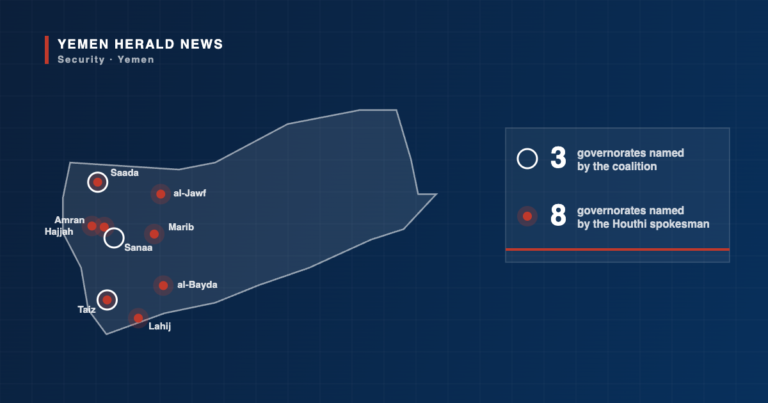
Al-Malki said operations were also under way in Sanaa, Saada and Taiz governorates. In Sanaa, the coalition said it struck ballistic missile and drone capabilities.
No casualty figure has been published for Friday’s strikes on the port. Middle East Eye reported that the number of casualties remained unknown.
Reuters reported that the Houthis made no immediate comment on the attack on the port.
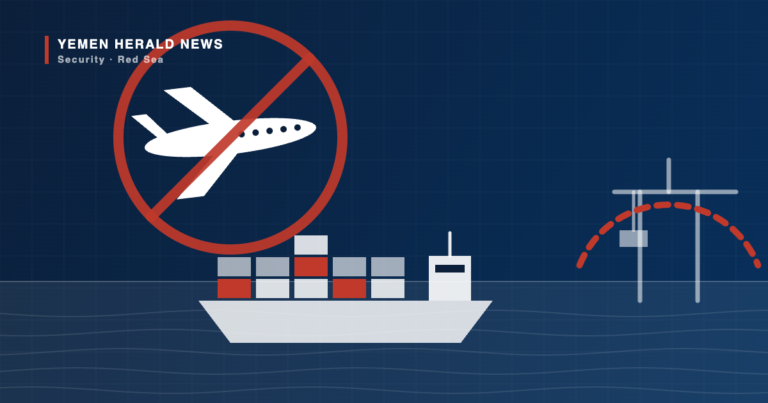
Earlier on Friday, the Houthi military spokesman, Yahya Saree, said Jeddah port and all Saudi ports on the Red Sea coast would become targets if the coalition carried out its threat to bomb Hodeidah.
Saree, writing on X, told port employees, workers and people living nearby to evacuate immediately and stay away. He urged shipping companies to move their vessels out of those ports.
In a separate post, he told airlines to avoid Saudi airspace, which he said would be the scene of the group’s operations in the coming hours. He excluded the airspace over Mecca and Medina.
Saree said the group would also target a power station at Shuqaiq, in southern Saudi Arabia.
No attack on a Saudi Red Sea port was reported in the accounts published on Friday. Yemen Herald could not establish whether any of the warnings were acted on.
The internationally recognized Yemeni government said the strikes were carried out in line with international law and hit sites the Houthis used to receive smuggled Iranian weapons, Asharq Al-Awsat reported.
The government said the coalition had given an advance evacuation warning, and held the Houthis fully accountable for militarizing the port.
It said members of Iran’s General Staff had been present in Hodeidah and had operated from some port facilities, an assertion it has made before. Yemen Herald found no Houthi response to it in Friday’s reporting.
The government said ports and land, sea and air crossings in areas under its control were operating regularly and at sufficient capacity.
Yemen’s information minister said the port remained fully operational and that the flow of goods would continue, Reuters reported. The minister was not named in that account.
Salem al-Awalqi told the state news agency Saba that the operation hit specific components of the port facilities used to move smuggled weapons, particularly ballistic missiles, from smuggling vessels, Middle East Eye reported. His title was not given.
Al-Awalqi said essential goods, humanitarian aid and commercial activity would continue under established arrangements.
The two accounts of the port’s condition do not agree. The coalition says it destroyed operational capabilities there; the Yemeni government says the port is working normally.
Neither account has been tested by an independent party on the ground. No damage assessment naming berths, cranes, warehouses or vessels has been published.
Al Jazeera’s correspondent in Sanaa, Yousef Mawry, reported that coalition air strikes and drones hit the city on Friday morning. He said the coalition described the targets as military sites and workshops producing ballistic missiles and drones.
Hodeidah is the main port bringing food and other supplies into Houthi-controlled northern Yemen, according to Reuters.
The port handles about 70 percent of Yemen’s commercial imports and 80 percent of its humanitarian assistance, according to a review of the UN Mission to Support the Hodeidah Agreement issued by the UN secretary-general on June 10, 2025, as cited by Security Council Report.
The United Nations no longer keeps a presence at the port to monitor it.
The Security Council created that mission, known as UNMHA, through resolution 2452 on Jan. 16, 2019, to support the agreement covering Hodeidah city and the ports of Hodeidah, Salif and Ras Issa.
The agreement formed part of the Stockholm Agreement, signed on Dec. 13, 2018, by the Yemeni government and the Houthis. Security Council Report says it was never fully implemented.
On Jan. 27, 2026, the Council adopted resolution 2813 by 13 votes to none, with China and Russia abstaining.
The resolution renewed the mission for a final two months, to March 31, 2026, and decided to close it and end the UN’s physical presence in Hodeidah.
The mission began liquidating on April 1, 2026, and its remaining functions passed to the Office of the UN Special Envoy for Yemen.
Houthi representatives said at the time that withdrawing the mission would amount to cancelling the Hodeidah agreement, according to Security Council Report.
The Houthis struck Riyadh’s tallest tower on Thursday, Al Jazeera reported.
Earlier in November the group said it had attacked Saudi oil installations. Saree said on Nov. 12 that a drone targeted Pumping Station No. 7 on the East-West pipeline and that a ballistic missile targeted the Yanbu oil facility, The New Arab reported.
Saudi Arabia did not confirm those two claims at the time, according to Middle East Eye.
Saudi civil defense reported missile debris in the village of Sabouha, about 35 kilometers from Mecca, after an exchange of fire on Nov. 12, The New Arab reported.
About the Author