Three accounts describe a divided defence of Aden and disagree on how close Houthi forces are
 Adel Haddad
ADEN, Yemen — Government forces preparing to defend Aden from advancing Houthi fighters do not share the same political objectives, Reuters reported Friday from the city.
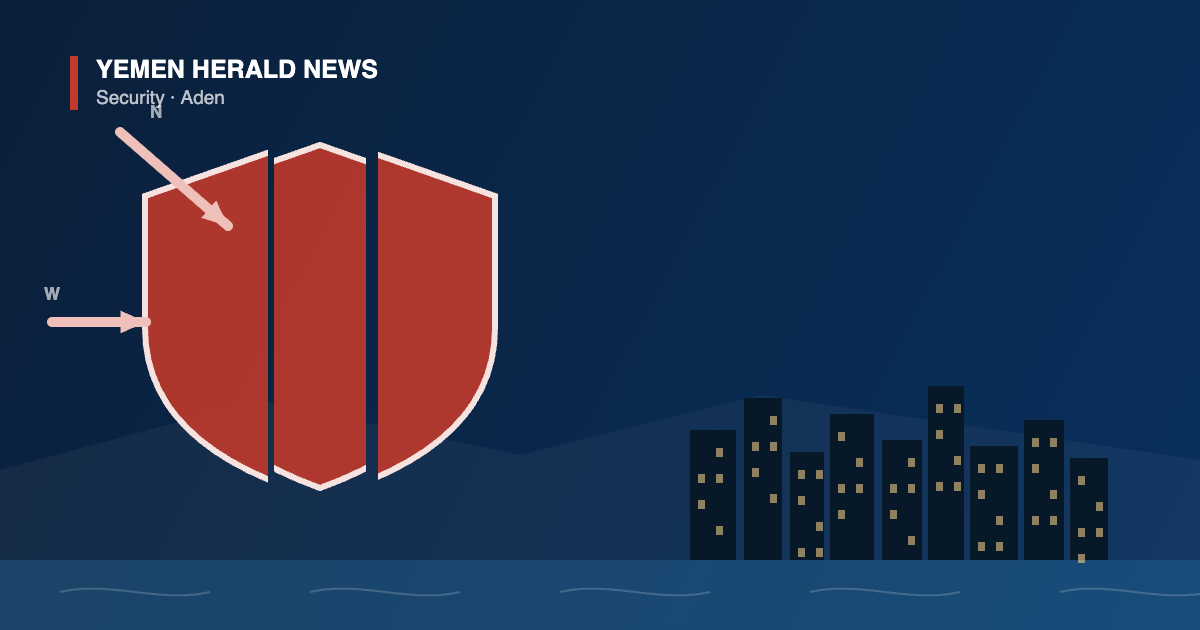
The agency said Houthi forces stand 80 kilometres from Aden on the northern highland front and 110 kilometres to the west along a desert road.
Mohammed al-Basha, a Yemen analyst at the Royal United Services Institute in Britain, told Reuters the forces hold an enemy in common and little else.
“These forces may share a common enemy in the Houthis, but they do not share the same political objectives,” he said.
The Institute for the Study of War reached a similar reading earlier in the week.
Government-aligned forces are “a fragmented coalition of rival factions” that have not coordinated beyond short-term tactical operations, the institute said in an analysis cited by The National, which said the institute found this had undermined Aden’s defence.
The Southern Transitional Council, the main southern separatist movement, set a condition on its part in the fighting.
“What we won’t do is send our soldiers into an offensive with no strategy and no route to a political settlement,” Anwar al-Tamimi, a spokesperson for the council, told Reuters.
He said the council would continue coordinating with others on the ground to defend the south.
The council had put its position differently three days earlier.
Amr al-Bidh, special representative for the council’s president, told Al Jazeera on Nov. 17 that the movement was ready to commit everything it had to the city’s defence.
“We’re ready to put every capacity we have towards defending Aden,” he said then.
Accounts of the advance differ.
The National reported on Nov. 18 that the group had advanced to the coastal area of Khor Omeir and was about 100 kilometres west of Aden, citing a Yemeni security official it did not name.
Security sources and experts told that newspaper a land assault might not be as imminent as the advance suggested.
Ali Al Shaabani, a security and political expert quoted by The National, said a siege rather than an occupation could follow, as in Taiz.
“Taking Aden would threaten international shipping, and would set their sights on Socotra Island,” he said.
He said the group could instead fight anti-Houthi forces in Hadramawt and Shabwa, or on the northern Saudi border, and that the choice hinged on whether the war between the United States and Iran resumed.
The Houthis have said they are not interested in attacking Aden, according to The National.
A source in Sanaa told the newspaper the coastal operation was not aimed at seizing the Bab al-Mandab strait, but at securing it rather than closing it. The newspaper did not name the source.
The Maritime Executive said on Friday that the group had consolidated its recapture of the Ras Menhali peninsula and Perim Island, which overlook the entrance to the strait.
It said Houthi forces had taken heavy casualties advancing along the N2 highway on the open coastal strip, where they were exposed to Saudi and government air attacks. It gave no figures.
The publication said the main truck routes into Taiz were probably severed, while the defence of Taiz city itself held.
It also described a Houthi advance toward Aden from the direction of Al Bayda, which it said would threaten government links with Marib and with Hadramawt and Al Mahra in the east.
Saudi air attacks have increased since Lt. Gen. Fayyad al-Ruwaili took charge of the war, the publication said.
Al-Ruwaili, chief of staff of the Saudi armed forces, replaced Fahd al-Salman as coalition commander and took on direct responsibility as chief of the joint forces command, The National and The Maritime Executive said.
Aden is the temporary seat of Yemen’s internationally recognised government.
The city had seen no major warfare since street battles in 2015, Reuters said. Missile and drone strikes now reach it.
A ballistic missile struck the outskirts of Aden on Nov. 13, according to a Reuters photograph caption from the scene.
Tariq Abdul Rahman, a former soldier of 30 years who lives in Aden with his family, described the shelling to the agency.
“Rockets are being fired into this city in a frightening way,” he said.
“Shells are falling randomly on streets, markets, and homes.”
He said he did not know whether to stay in the city or try to return to the countryside. Nine people share his three-room house.
Khaled Abdo, a day labourer on construction sites in Aden, told Reuters he had not worked for more than a week. He has 10 children.
“We want security and stability and Yemen to go back to being a state,” Abdo said.
The civil war reignited this summer after a four-year truce, Reuters said.
Last winter, Saudi-backed factions and the Southern Transitional Council fought each other for weeks, the agency said. The United Arab Emirates then withdrew from the coalition, and a Saudi-backed faction split from the council.
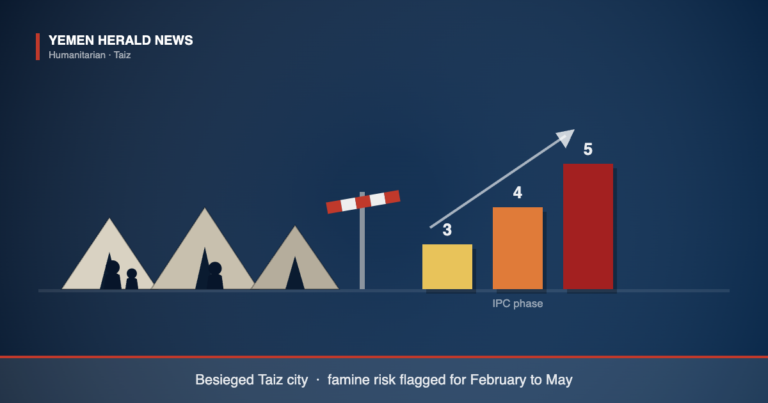
Taiz, Yemen’s third largest city, is under Houthi siege and hundreds of thousands of people have been displaced since the war restarted, Reuters said.
The Houthis took the port of Mokha in a September offensive and have surrounded Taiz since October, The National said.
A map published with the Maritime Executive assessment, credited to Google Earth and CJRC, marked three areas where Houthi advances threaten the city as of Friday.
About the Author