UN says Yemen’s Red Sea ports must keep running as coalition defends Hodeidah strikes
 Adel Haddad

NEW YORK, United States — The United Nations said Yemen’s Red Sea ports must stay open after Saudi-led air strikes on Hodeidah port, warning against further escalation.
Farhan Haq, deputy spokesman for the UN secretary-general, told reporters in New York on Friday that the organisation was following reports of the strikes.
“We remain deeply concerned about the ongoing military escalation in and around Yemen,” Haq said.
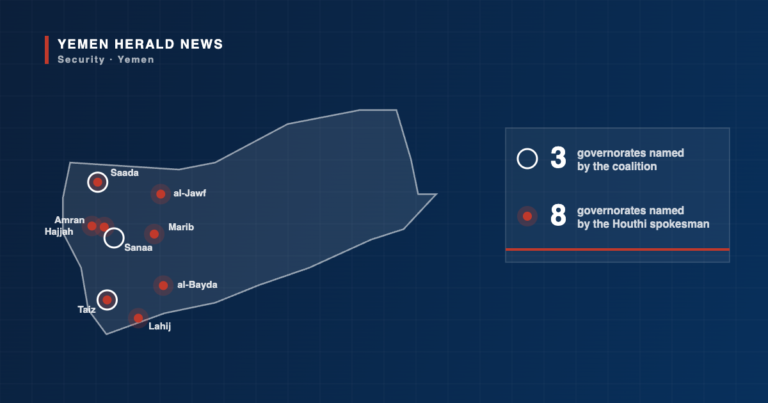
He said the United Nations was also tracking military operations in the governorates of Sanaa, Saada and Taiz, along with continued Houthi attacks on Saudi Arabia.
Haq said Yemen’s Red Sea ports had to keep running because millions of people depend on the supplies that enter the country through them.
He called on all parties to comply with international humanitarian law, including the prohibition on attacks directed at civilians and civilian infrastructure.
“We reiterate that ultimately there is no military solution to the conflict,” Haq said, urging the parties back to political negotiations.
His remarks were reported from UN headquarters by The National and carried by the Anadolu news agency.
Neither account included a figure for how much of Yemen’s food or fuel passes through Hodeidah. Haq described the ports as a lifeline for millions without quantifying the traffic.
The Saudi-led coalition gave a different account of what it had struck.
Coalition spokesman Maj. Gen. Turki al-Malki said on X that the operation hit operational capabilities at Hodeidah port used for smuggling and for moving weapons and ballistic missiles.
Al-Malki described it as a special operation to neutralise the sources of threats used against civilians in Yemen and in Saudi Arabia.
He said the operation was continuing against military targets and ballistic missile capabilities in Sanaa, Saada and Taiz governorates.
In Sanaa, the coalition said it struck seven military targets and six workshops that it said the Houthis used to build ballistic missile launchers and drones.
The strikes followed a warning to civilians and port workers to leave the area, The National reported.
The coalition has issued such warnings before. It ordered the evacuation of the Yemen Petroleum Company’s Al Sabahah station in Sanaa last month, according to the same outlet.
The Houthis issued warnings of their own.
The Houthi armed forces told workers at Hodeidah port and people nearby to stay away, and told ships to leave the port urgently.
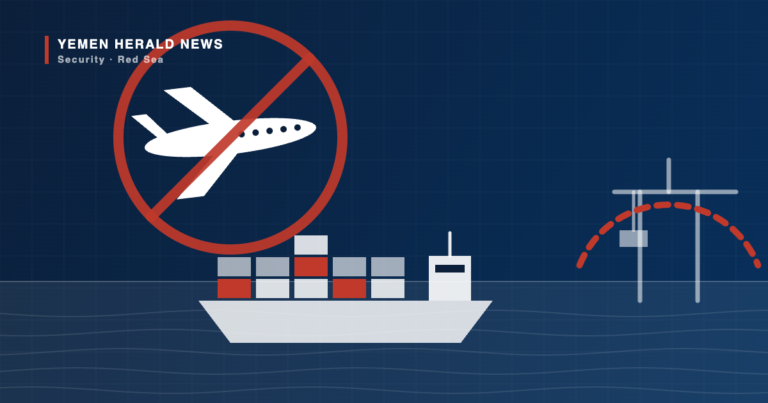
Yahya Saree, the Houthi military spokesman, said on Telegram that airlines should avoid Saudi airspace in the hours ahead, except over Mecca and Medina.
Saree also urged people to leave Riyadh’s financial district, which he said a missile attack had damaged on Thursday.
Before Friday’s strikes the Houthis had said Jeddah and other Saudi Red Sea ports would become targets if Hodeidah port was hit.
The Houthi military spokesman said the group struck the Al Shuqaiq power station and Jizan port, describing the strikes as accurate and direct and saying they caused extensive damage, Agence France-Presse reported.
Al Masirah, the Houthi-run television channel, broadcast images of a damaged power station in Mocha, on Yemen’s Red Sea coast, which it said followed a coalition air raid.
Houthi media put the death toll from coalition strikes at 41 in the 24 hours to Saturday. AFP reported the claim and said figures of that kind were impossible to verify independently.
Yemen Herald found no second origin for the figure, and the coalition has published no casualty count for Friday’s strikes on the port.
Yemen’s Saudi-backed armed forces said dozens of air strikes and drone attacks, along with hundreds of artillery attacks, had killed or wounded 193 Houthi fighters. AFP said that claim could not be verified either.
The port was struck earlier in the week. Saudi forces hit Hodeidah on Tuesday, killing at least 14 people according to the Houthis, The National reported, in an attack that Al Masirah linked to a sponge factory.
That toll also rests on a single origin.
Hodeidah has been under Houthi control since October 2014, and the coalition imposed a blockade on Yemeni ports in 2015, according to The National.
The port was the subject of the Hodeidah Agreement, which Yemen’s warring parties reached in Sweden in December 2018 and which also covered the smaller Red Sea ports of Salif and Ras Issa.
Humanitarian need was already high before this month’s fighting. The UN Office for the Coordination of Humanitarian Affairs counted more than 22 million people in need of assistance in its 2026 response plan.
That plan recorded 18.3 million people as acutely food insecure and more than 2.2 million children under five as acutely malnourished, 516,157 of them severely.
OCHA sought $2.16 billion for the year to reach 12 million people.
The International Organization for Migration said this week that nearly 357,000 people had been displaced inside Yemen since August.
Saudi authorities issued an air-raid alert in Riyadh saying the capital was under a hostile aerial threat, and lifted it later. AFP reporters heard two explosions shortly after the alert.
Fuel traffic through the Houthi-held Red Sea ports had already fallen before the current round of strikes.
UN data cited by The New Arab showed fuel imports through Hodeidah, Salif and Ras Issa dropped 76 percent in the first quarter of 2026 against the same period a year earlier.
No fuel imports were recorded through the three ports in March, according to the same data.
About the Author