The recent comments by U.S. Vice President JD Vance regarding Iran’s position in the ongoing ceasefire negotiations highlight a critical juncture in Middle Eastern geopolitics. The implications of these discussions extend far beyond the immediate conflict in Lebanon, potentially reshaping regional alliances and power dynamics.
The geopolitical landscape of the Middle East has long been characterized by a complex web of alliances and hostilities, with Lebanon serving as a focal point for regional tensions. The ongoing conflict between Israel and Hezbollah, exacerbated by Iranian support for the latter, has drawn in various international actors, including the United States and Pakistan, which has recently played a mediating role. The ceasefire brokered by Pakistan was intended to halt hostilities, yet the inclusion of Lebanon in these discussions has sparked significant controversy. Iran’s interpretation of the ceasefire terms, as articulated by Foreign Minister Abbas Araghchi, suggests a belief that Lebanon was included, a notion vehemently rejected by U.S. officials.
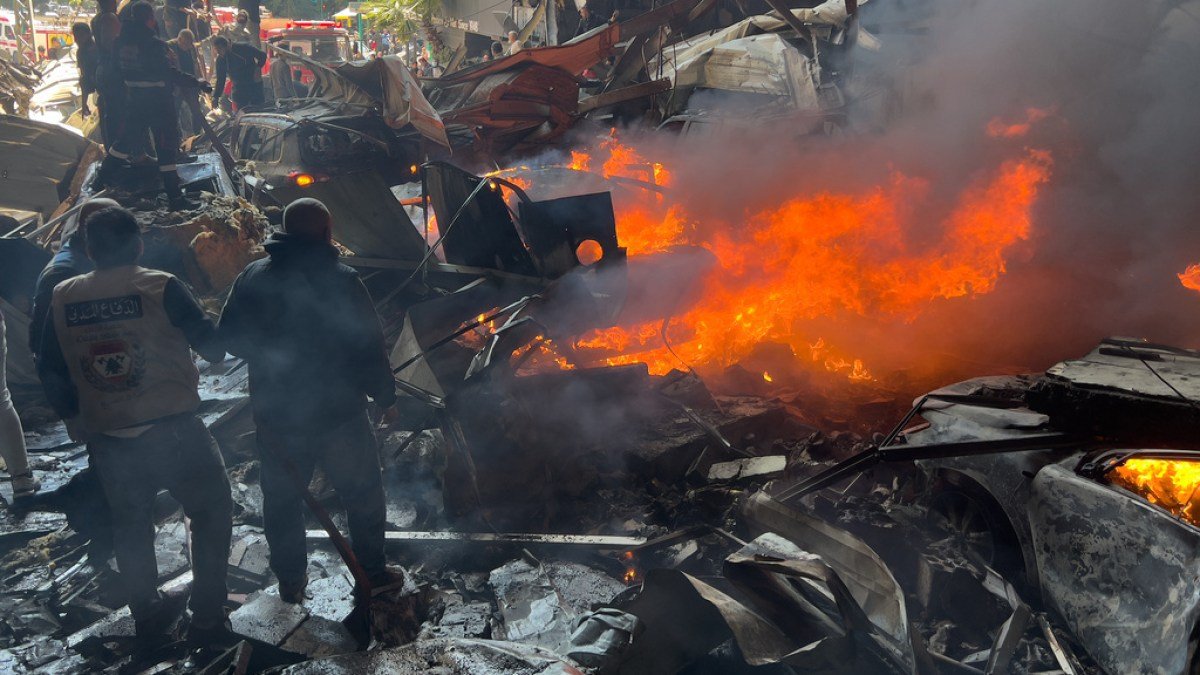
In a striking statement, Vice President Vance warned Iran against allowing the negotiations to collapse over what he termed a “legitimate misunderstanding” regarding Lebanon’s status in the ceasefire. This assertion underscores the fragility of the current diplomatic efforts, as Iran’s Foreign Minister has publicly emphasized the necessity for the U.S. to choose between a ceasefire or continued conflict. The U.S. administration’s insistence that Lebanon is not part of the ceasefire agreement raises questions about the clarity and coherence of the negotiations. Meanwhile, Israel’s recent military actions in Lebanon, including a devastating series of airstrikes that resulted in significant casualties, further complicate the situation, illustrating the ongoing volatility in the region.
The ramifications of these developments are profound. Politically, the U.S. stance could alienate Iran further, pushing it to adopt a more aggressive posture in support of Hezbollah and other allied groups. Economically, the instability in Lebanon, coupled with the threat of renewed conflict, could deter foreign investment and exacerbate the already dire humanitarian situation. Security-wise, the potential for escalation remains high, particularly if Iran perceives that its interests are being undermined by U.S. actions or Israeli aggression. The situation is further complicated by Hezbollah’s internal challenges, as it faces mounting pressure from rival factions within Lebanon, questioning its role in the conflict and its allegiance to Iranian directives.
From a strategic perspective, the current standoff presents significant risks for all parties involved. For Iran, allowing the negotiations to falter could lead to increased isolation and a potential military confrontation with Israel, which has historically shown a willingness to act decisively against perceived threats. Conversely, the U.S. must navigate the delicate balance of supporting its ally Israel while maintaining a diplomatic channel with Iran. The notion that Israel has agreed to exercise restraint in Lebanon, as suggested by Vance, is fraught with uncertainty, given Israel’s historical pattern of military engagement in the region. The Iranian Revolutionary Guard Corps’ threats to resume hostilities if Israeli aggression continues signal a readiness to escalate the conflict, which could have dire consequences for regional stability.
Looking ahead, several scenarios could unfold. If Iran chooses to adhere to the ceasefire and engage in constructive dialogue, there may be a temporary alleviation of tensions, allowing for humanitarian aid to flow into Lebanon and a potential easing of the economic crisis. However, should Iran decide to escalate its support for Hezbollah in response to continued Israeli attacks, the region could witness a significant uptick in violence, drawing in other actors and potentially leading to a broader conflict. The U.S. must also consider its long-term strategy in the region, as continued military support for Israel without addressing the underlying grievances of Iran and its allies could perpetuate a cycle of violence.
The stakes in the current U.S.-Iran negotiations are extraordinarily high, with Lebanon at the center of a geopolitical chess game that could redefine power dynamics in the Middle East. The potential for misunderstanding and miscalculation looms large, and the choices made in the coming days will have lasting implications for regional stability. As the situation evolves, it is imperative for all parties to approach the negotiations with clarity and a commitment to de-escalation, lest they find themselves embroiled in a conflict that could spiral out of control.
About the Author