Strategic Implications of Al-Khanbashi’s Initiatives in Hadramout: Fuel Supply and Governance
 Yemen Herald News
The recent developments in Hadramout, particularly the initiatives led by Governor Salem Ahmed Al-Khanbashi, underscore a pivotal moment in Yemen’s ongoing struggle for stability and governance. The focus on enhancing government-local authority partnerships and ensuring fuel supply is not merely administrative; it is a strategic maneuver that could reshape the region’s political landscape.
Context and Background
Yemen is embroiled in a protracted conflict that has exacerbated its already fragile governance structures. The Presidential Leadership Council, established to unify the various factions and restore some semblance of order, faces the daunting task of rebuilding trust between the central government and local authorities. Hadramout, a governorate rich in resources yet plagued by instability, represents both a challenge and an opportunity for the Yemeni government. The region’s strategic location along the Arabian Sea and its oil reserves make it a focal point for both local governance and international interest. Al-Khanbashi’s recent initiatives reflect an understanding that effective local governance is crucial to national stability.
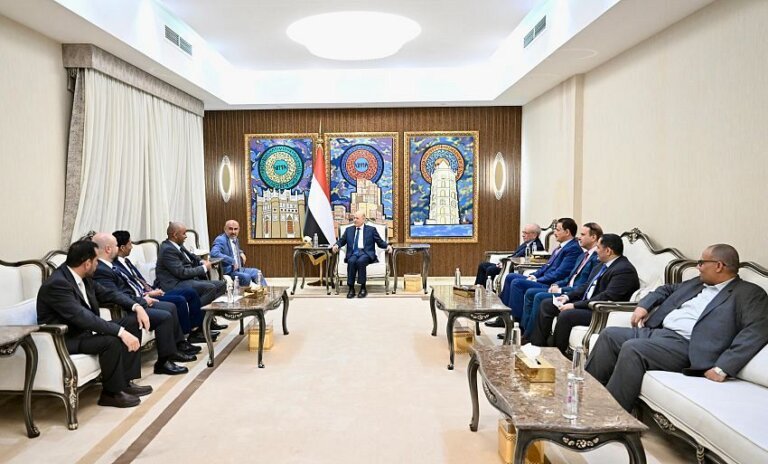
During a recent meeting in Mukalla, Al-Khanbashi reviewed preparations for a national conference aimed at strengthening cooperation between the government and local authorities. This conference, organized in collaboration with the Ministry of Local Administration and various development partners, seeks to address critical themes such as unifying visions between central and local authorities and improving resource allocation. The emphasis on enhancing public service and institutional performance is particularly noteworthy, as it signals a shift towards a more integrated governance model. Furthermore, Al-Khanbashi’s discussions on fuel supply logistics underscore the urgency of meeting basic needs in the region, especially in light of the upcoming Hajj season, which is vital for both religious and economic reasons.
The implications of these developments are profound. First, a focus on local governance could lead to a more resilient political structure in Yemen. By fostering partnerships between the government and local authorities, there is potential for increased accountability and responsiveness to the needs of the populace. This could, in turn, enhance public trust in state institutions, which have been severely eroded during years of conflict. Economically, ensuring a stable fuel supply is critical not only for transportation but also for broader market stability in Hadramout. The logistical challenges faced in fuel distribution have far-reaching consequences, affecting everything from local businesses to the ability of citizens to access essential services. Al-Khanbashi’s proactive approach in addressing these issues could mitigate some of the economic hardships faced by the population.
From a strategic perspective, al-Khanbashi’s initiatives represent a calculated effort to consolidate power and influence in Hadramout. By prioritizing local governance and fuel supply, he is positioning himself as a key player in Yemen’s political landscape. This could lead to a shift in power dynamics, particularly if successful governance in Hadramout serves as a model for other regions. However, the risks are significant. The ongoing conflict and the presence of various armed groups complicate the implementation of these initiatives. Moreover, reliance on external development partners for support could create vulnerabilities, particularly if geopolitical interests shift. The delicate balance of power in Yemen means that any misstep could have cascading effects throughout the region.
Looking ahead, several scenarios could unfold. If Al-Khanbashi successfully implements the proposed initiatives, we may see a gradual stabilization of Hadramout, potentially serving as a blueprint for governance in other regions. This could attract further investment and support from international partners, bolstering Yemen’s recovery efforts. Conversely, failure to address the logistical challenges and ensure effective governance could exacerbate tensions, leading to increased unrest and further destabilization. The upcoming conference will be a critical juncture; its outcomes could either reinforce Al-Khanbashi’s position or expose the fragility of the current governance model.
In conclusion, the initiatives led by Governor Al-Khanbashi in Hadramout are emblematic of a broader struggle for governance and stability in Yemen. The focus on enhancing partnerships between the government and local authorities, coupled with efforts to secure fuel supplies, reflects a strategic approach to addressing the region’s pressing challenges. However, the path forward is fraught with risks, and the success of these initiatives will depend on the ability to navigate the complex political landscape. As Yemen stands at a crossroads, the implications of these developments will resonate far beyond Hadramout, influencing the future of governance and stability across the entire country.
About the Author