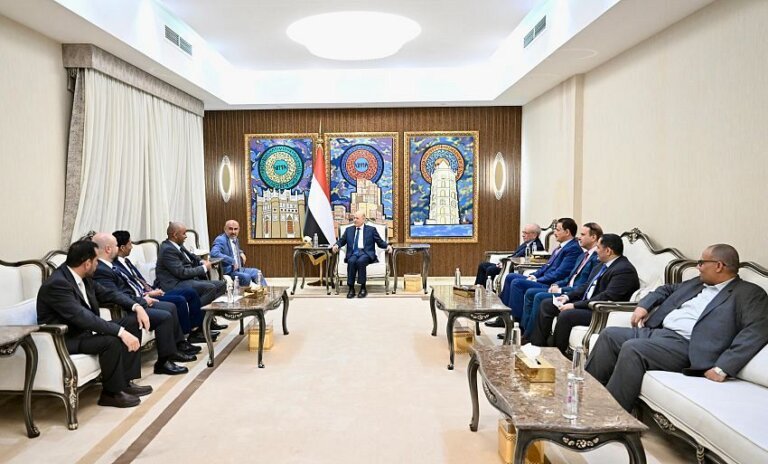
Yemen’s Southern Transitional Council: A Defiant Stand for Sovereignty and Identity
 Yemen Herald News
The Southern Transitional Council’s (STC) recent declaration of popular support for Major General Aidarous Al-Zubaidi is not merely a political statement; it is a clarion call for the southern Yemeni identity and autonomy in a region fraught with instability and external influences. This development underscores the profound implications for Yemen’s future and the broader geopolitical landscape of the Middle East.
Yemen has been embroiled in a multifaceted civil war since 2014, with various factions vying for control and influence. The STC emerged as a significant player in the southern regions, advocating for the restoration of a federal southern state, a goal that resonates deeply with many southerners who feel marginalized by the central government in Sana’a. Historical grievances stemming from the unification of North and South Yemen in 1990 have fueled a resurgence of southern nationalism, particularly in light of the ongoing conflict and the perceived failures of the Yemeni state to address the needs of its citizens. The STC’s recent statement reflects a consolidation of this sentiment, positioning itself as the legitimate representative of southern aspirations.
The STC’s statement, following mass rallies across southern governorates, serves as a powerful reaffirmation of its mandate. The council’s condemnation of arrest warrants against its leaders highlights the escalating tensions between the STC and the Yemeni government, which it accuses of undermining southern autonomy. Furthermore, the STC’s critique of the electricity crisis as a form of collective punishment underscores the dire humanitarian situation in southern Yemen, where basic services have deteriorated dramatically. The council’s emphasis on the role of southern armed forces in countering Houthi aggression and securing vital maritime routes illustrates its strategic importance in regional security dynamics, particularly in the Red Sea and Bab al-Mandab Strait.
The ramifications of the STC’s assertive stance are profound. Politically, the council’s declaration solidifies its position as a key actor in Yemen’s fragmented landscape, potentially complicating peace negotiations that often overlook southern grievances. Economically, the ongoing electricity crisis and the STC’s portrayal of it as a punitive measure could galvanize further public support, leading to increased pressure on the Yemeni government and international stakeholders to address the humanitarian needs of the south. Security-wise, the STC’s commitment to countering Houthi militias positions it as a critical ally for regional powers concerned about Iranian influence in Yemen, thereby enhancing its leverage in both domestic and international arenas.
The STC’s recent actions signal a pivotal shift in Yemen’s power dynamics. As the council asserts its authority, it risks alienating potential allies within the broader Yemeni coalition, particularly those who advocate for a unified Yemen. However, the STC’s unwavering commitment to southern independence may also attract support from regional actors who view a stable southern Yemen as a bulwark against Iranian expansionism. The warning against commemorating the “dead unity day” reflects a growing sentiment of disillusionment with the current political framework, suggesting that any future attempts at reconciliation must address the deep-seated aspirations for autonomy and self-determination among southern Yemenis.
Looking ahead, several scenarios could unfold. The STC may continue to consolidate its power, potentially leading to a formal declaration of independence, which would further fracture Yemen’s already tenuous unity. Alternatively, increased pressure from the Yemeni government and its allies could provoke a backlash, resulting in heightened conflict in the south. The international community’s response will be crucial; if it fails to recognize the legitimate aspirations of the southern populace, it risks exacerbating the conflict and undermining any prospects for lasting peace. The STC’s call for unity among southern factions could either lead to a strengthened front or further fragmentation, depending on how various groups respond to the council’s leadership.
The STC’s recent statement is a significant marker in Yemen’s ongoing struggle for identity and autonomy. It encapsulates the aspirations of a population that has long felt marginalized and underscores the complexities of Yemen’s geopolitical landscape. As the STC positions itself as the defender of southern interests, the implications for Yemen’s future—and the broader Middle East—are profound. The international community must engage with these developments thoughtfully, recognizing that the path to peace in Yemen is inextricably linked to the recognition of the southern cause.
About the Author