IOM Reports Highest African Migrant Arrivals to Yemen in Eight Years by Early 2026
 Yemen Herald News
Yemen has been engulfed in a brutal civil war since 2015, which has deeply affected its social and economic fabric. The conflict has primarily been between the Houthis and various factions, including a Saudi-led coalition that intervened in support of the internationally recognized government. The war has resulted in a humanitarian disaster, with millions of people suffering from malnutrition, lack of access to healthcare, and inadequate living conditions. Over 18 million individuals are currently in dire need of assistance, while more than 4.5 million are displaced within the country, exacerbating the crisis.
The political landscape is further complicated by the involvement of various local and regional stakeholders, including the United Arab Emirates and Iran, each pursuing its strategic interests. The ongoing conflict has left Yemen vulnerable to external pressures and has contributed to a complex migration situation. As a critical transit hub for migrants from East Africa attempting to reach the Gulf states, Yemen has seen varying patterns of migration, significantly influenced by both war and economic instability.
The Bab al-Mandab Strait, which lies off the southwestern coast of Yemen, serves as a strategic maritime route connecting the Red Sea to the Gulf of Aden, pivotal for global trade. Control over this waterway and the surrounding regions significantly impacts the geopolitics of Yemen, drawing various foreign interventions and complicating local dynamics further.
Amid this chaos, the influx of migrants continues to shape Yemen’s demographic and social landscape. While many view Yemen as a transit point, the reality for those entering the country is fraught with danger and instability. Recent statistics point to a notable increase in the number of migrants arriving in Yemen, signaling a growing trend that raises questions about the factors driving this migration and the implications for both the migrants and the host community.
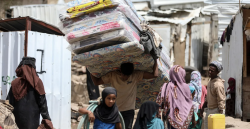
In the first three months of 2026, Yemen experienced an unprecedented influx of over 57,000 African migrants, marking the largest quarterly number witnessed since 2019. From January to March, precisely 57,414 individuals crossed into Yemen, reflecting an astounding 81 percent increase from the same period in the previous year, when 37,166 migrants arrived. This surge is all the more significant when contrasted with the mere 5,411 migrants reported in 2024.
A considerable majority of these migrants, approximately 54,643—over 95 percent—originated from Ethiopia, while 1,481, or about 3 percent, were from Somalia. The remaining 805 migrants, encompassing around 2 percent, came from various other nationalities, highlighting the diverse mix of individuals attempting to reach the Gulf region through Yemen. The vast majority of those arriving appear to be displaced by economic hardships, social turmoil, or conflict in their home countries, seeking better opportunities across borders.
Geographically, the primary migration routes were concentrated along Yemen’s southern and western coastlines. Around 41,107 individuals, which constitutes 72 percent of the total arrivals, departed from Djibouti, entering Yemen mainly through Abyan and the western coast of Taiz. The former accounted for 24,709 arrivals, while 16,398 migrants landed on Taiz’s shores. Additionally, a notable 15,004 migrants who journeyed from Somalia made landfall in Shabwa. It is also important to note that Omani authorities returned 1,303 migrants to Al-Mahra’s Shahn district, showcasing the regional responses to the migrant situation.
The migration situation in Yemen involves several key stakeholders, each with their own motivations and interests. At the forefront are the migrants themselves, primarily from Ethiopia and Somalia, fleeing dire conditions in their home countries. Economic instability, food insecurity, and the prospect of better living conditions drive these individuals to take dangerous journeys across the Red Sea and into Yemen. Their plight is compounded by the perils associated with migration, including exploitation by human traffickers and risks posed by the ongoing conflict within Yemen.
Local communities in Yemen also play a critical role in this scenario. The arrival of thousands of migrants can place considerable strain on already limited resources, especially in areas grappling with the ongoing effects of civil war and humanitarian crises. Additionally, local populations often face challenges related to their own security and livelihoods, creating potential friction as new arrivals enter their regions and seek assistance and shelter.
International organizations, such as the International Organization for Migration (IOM), are key players in addressing the challenges posed by this increased migration. They provide valuable data, coordinate humanitarian response efforts, and advocate for the rights and needs of migrants. These organizations work alongside local and regional governments in an effort to manage the implications of migration flows and provide aid to both migrants and host communities.
Finally, regional governments and international actors, including the Saudi-led coalition and the UAE, are also involved in the dynamics of migration in Yemen. Their interests often focus on politics and security in the region, influencing migration patterns and responses to the influx of individuals seeking refuge. Their involvement complicates the scenario, as political motives may overshadow humanitarian concerns.
The influx of migrants into Yemen has far-reaching implications for the region, affecting not only Yemen itself but neighboring countries and broader Gulf states as well. First and foremost, the continuous arrival of thousands of migrants exacerbates the humanitarian crisis in Yemen, already struggling due to the ongoing civil war and economic collapse. Local infrastructures—strained by years of conflict—face intensified pressure as they attempt to provide support for both displaced Yemenis and incoming migrants. Social tensions may rise as communities grapple with increased competition for limited resources.
Moreover, the situation presents a broader challenge for regional security. The migration routes through Yemen intersect with geopolitical interests in the Red Sea region, which is already a hotspot due to international naval operations and the presence of various armed groups. The movement of large numbers of people—many of whom may have fled conflict or persecution—could heighten security anxieties within Gulf states, leading to potential policy changes regarding immigration and border controls.
The presence of migrants could also reshape diplomatic relations in the region. Countries in the Gulf Cooperation Council (GCC) may find themselves reevaluating their policies toward labor migration amidst rising anti-immigrant sentiments. Coca-Cola tensions surrounding the influx of migrants could complicate cooperative regional efforts, impacting humanitarian projects and aid distribution initiatives that require concerted action from multiple states.
Lastly, this surge in migration patterns raises questions around human rights and the protection of vulnerable populations. As the conflict in Yemen persists, ensuring that the rights of migrants are upheld becomes increasingly challenging. The complexities of human mobility, intertwined with local and regional stabilizing efforts, will be a key area of focus in the coming months.
The dramatic increase in the number of migrants entering Yemen reflects deeper issues rooted in the socio-economic and political conditions in East Africa and the Middle East. Factors such as prolonged conflict, political instability, and economic hardships in countries like Ethiopia and Somalia drive individuals to seek better lives elsewhere. The situation poses a humanitarian dilemma for Yemen as a transit nation, caught in a vortex of conflict yet remaining a straightforward route for those hoping to reach more prosperous Gulf states.
Yemen’s precarious humanitarian situation complicates the reception of migrants. While Yemen remains an entry point for many, the country’s own vulnerabilities— including widespread food insecurity and health emergencies—mean that the resources for supporting the new arrivals are severely limited. International organizations continue to advocate for enhanced protection for both migrants and local communities, but the reality is that the ongoing conflict hampers effective responses.
Furthermore, the patterns emerging from this influx highlight the fragmented nature of migratory routes in the region. Migrants forced to leave their homes often rely on established smuggling networks that exploit their vulnerabilities, leading to further risks as they navigate dangerous journeys. Additionally, the coastal areas are becoming battlegrounds not only for those seeking to cross these routes but for actors looking to stake their claims in the region.
A broader analysis reveals that this migration crisis holds the potential for long-term implications, both regionally and internationally. Effective governance and humanitarian strategies will be necessary to mitigate rising tensions and support both migrants and local populations. As certain countries grapple with internal social dynamics, migrants may unknowingly become symbols of broader political struggles, absorbing blame that distracts from the actual causes of instability.
Looking ahead, the situation in Yemen regarding the influx of migrants is likely to continue evolving, with various factors influencing future flows and challenges. Firstly, it is anticipated that the conflict in Yemen may stabilize to some degree, creating variations in how migration routes are managed and perceived. However, without addressing the underlying causes that drive migration from East Africa, the numbers could remain high, regardless of Yemen’s internal circumstances.
Additionally, addressing the humanitarian crisis within Yemen will be critical in determining how both local communities and incoming migrants cope with the continuing pressure on resources. The international community will need to enhance its focus on supporting Yemen’s infrastructure, healthcare, and food security, creating an environment where both migrants and locals can coexist without escalating tensions. This may entail increasing aid to both local populations and migrants to ensure the sustenance of livelihoods and the promotion of stability.
Furthermore, regional governments will need to take a proactive approach in developing cooperative strategies for managing migration. This could involve enhancing border security measures while also facilitating legitimate forms of migration that align with regional labor needs. Greater collaboration between GCC countries and transit nations like Yemen could lead to more developed policies allowing for safe migration pathways and enhanced protections for vulnerable individuals.
In conclusion, addressing the complexities of migration into Yemen will require multifaceted approaches that encompass not only humanitarian assistance but also diplomatic engagement and political stability across the region. As the situation develops, monitoring these trends and adapting responses will be essential in shaping more effective pathways for all involved.
About the Author