Yemeni Ambassador and Moroccan Solidarity Minister Discuss Social Protection Cooperation
 Yemen Herald News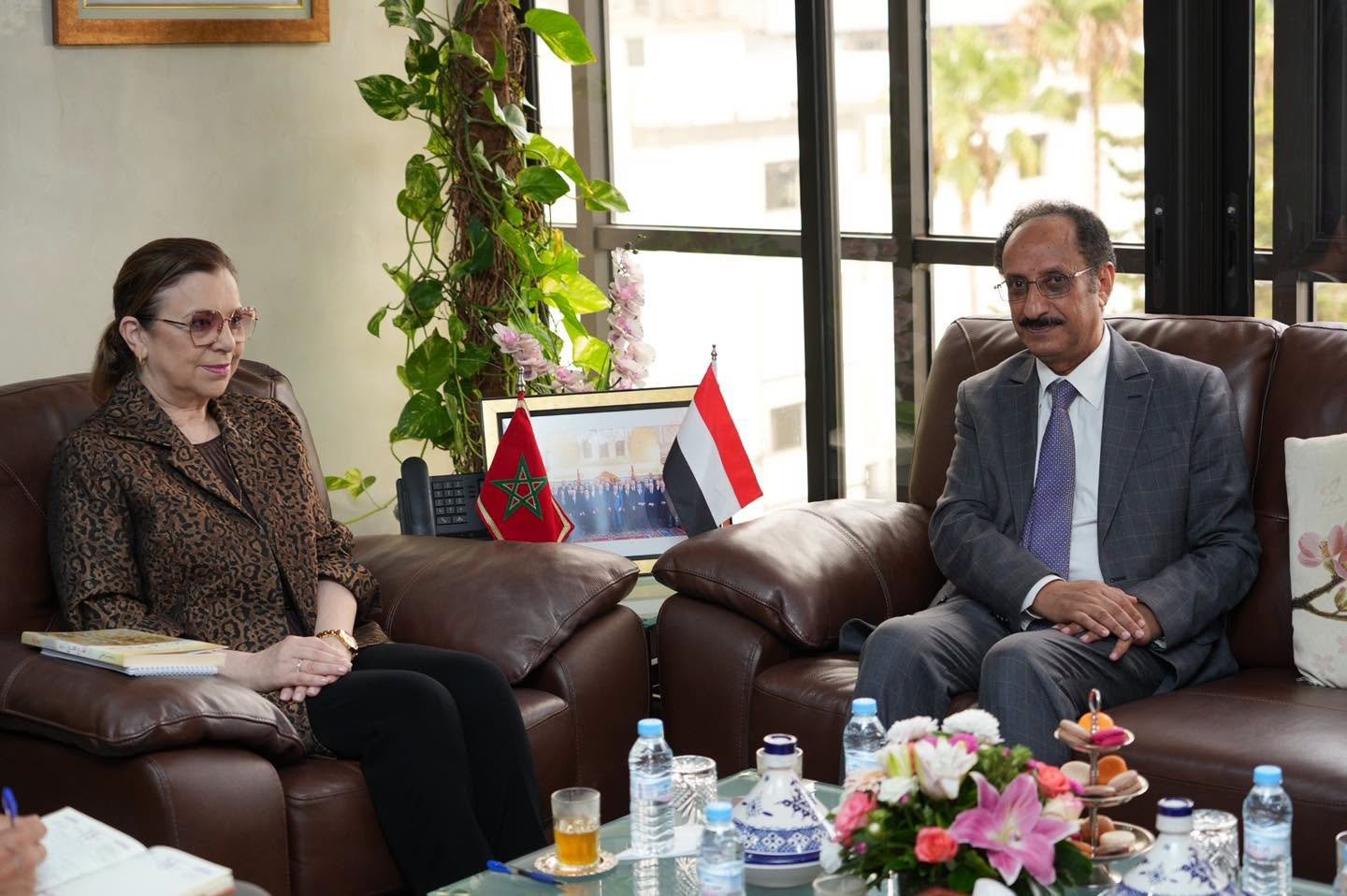
The Ambassador of Yemen to Morocco, Ezzedine al-Asbahi, met Morocco’s Minister of Solidarity, Social Integration and the Family, Naima Ben Yahia, in Rabat on Saturday. The two officials reviewed how their governments might work together more closely on social protection and social development, an area where Yemeni needs have grown sharply over more than a decade of war.
Their conversation centred on areas where the two administrations share an interest: building social protection systems that reach the poorest households, strengthening programmes aimed at families, and improving services for the groups most exposed to hardship, among them women, children and people with disabilities. Both sides framed these as common priorities rather than a one-way transfer of charity from Rabat to Aden.
Al-Asbahi pointed to the long history of fraternal relations between the two countries and said Yemen wants to turn that goodwill into working arrangements that produce measurable results. He argued that partnerships of this kind help each government understand problems it faces in common with the other, from youth unemployment to the strain that mass displacement places on family structures and community networks.
Ben Yahia responded by reaffirming Morocco’s readiness to expand cooperation with Yemen. She noted that Morocco has spent years building its own social development machinery, and said her ministry is willing to share that experience with Yemeni counterparts, particularly the administrative and technical side of running assistance programmes at national scale.
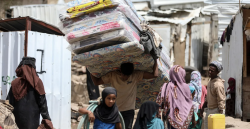
The talks carry weight because of the scale of the emergency the Yemeni side is trying to manage. The United Nations estimates that more than 22 million people in Yemen will need humanitarian assistance and protection during 2026, a figure that includes roughly 5.2 million people displaced inside the country. About 18.3 million Yemenis are acutely food insecure, and more than 2.2 million children under the age of five are acutely malnourished, with over half a million of those cases classified as severe.
Those numbers help explain why social protection has climbed the agenda of Yemen’s internationally recognised government. Emergency relief distributed by international agencies keeps households alive from one month to the next, but it does not rebuild the ministries, registries and payment systems that a functioning welfare state requires. Officials in Aden have increasingly sought partners able to help with that slower institutional work, and Morocco is one of several Arab states they have approached.
Morocco, for its part, has spent recent years presenting itself in international forums as an advocate of social integration and sustainable development. Ben Yahia’s ministry oversees family support schemes, disability services and social assistance programmes, and Moroccan officials have treated cooperation with countries in crisis as a natural extension of that record. Engagement with Yemen also fits a wider Moroccan effort to build diplomatic weight across the Arab world.
Neither side announced a signed agreement. No timetable, budget or list of specific projects emerged from the meeting, and contacts of this type frequently precede a formal memorandum of understanding by many months, if one materialises at all. The value of the Rabat encounter therefore lies mainly in the areas it identified for future work: technical training, exchanges of policy expertise and, potentially, financial or in-kind support for Yemeni institutions.
Yemeni diplomats in Rabat have pursued a broader agenda in parallel, holding separate talks in recent months on educational, cultural and economic cooperation. The social affairs portfolio is the newest addition to that list, and it reflects a shift in emphasis: where earlier contacts sought scholarships and trade openings, this one addressed the machinery of caring for people whom the war has left without income, shelter or reliable access to services.
Any practical cooperation would run into difficulties inside Yemen itself. Authority over the country is divided, with the recognised government administering Aden and much of the south and east while the Houthi movement controls the capital and the densely populated northern highlands. Programmes designed in Rabat and delivered through government ministries would reach only part of the population, and the currency crisis and fiscal pressures facing the Aden authorities limit what they can co-finance.
There is also a diplomatic function to meetings of this kind that goes beyond their stated subject. Yemen’s embassies have worked to keep the country on the agenda of Arab and international capitals at a moment when attention across the region has shifted towards other crises. Each meeting with a serving minister, whatever its immediate outcome, helps sustain the recognised government’s standing as Yemen’s legitimate representative abroad.
Whether the Rabat discussion becomes more than a courteous exchange will depend on follow-up. Programmes that survive from announcement to delivery in Yemen tend to be those with identified funding, a named implementing partner and realistic assumptions about what can be achieved amid conflict. Neither government has yet said which of the ideas raised on Saturday, if any, will be carried forward into that stage.
For now, the meeting stands as a signal of intent. Both delegations left describing social development as a field where cooperation is possible without waiting for a political settlement in Yemen, and where relatively modest investments in training and system design could pay off over time. Yemenis living through the crisis will judge the outcome by whether assistance eventually reaches households, not by the warmth of the language used in Rabat.
About the Author