Yemen PM Hosts Departing U.S. Envoy for Final Talks
 Yemen Herald News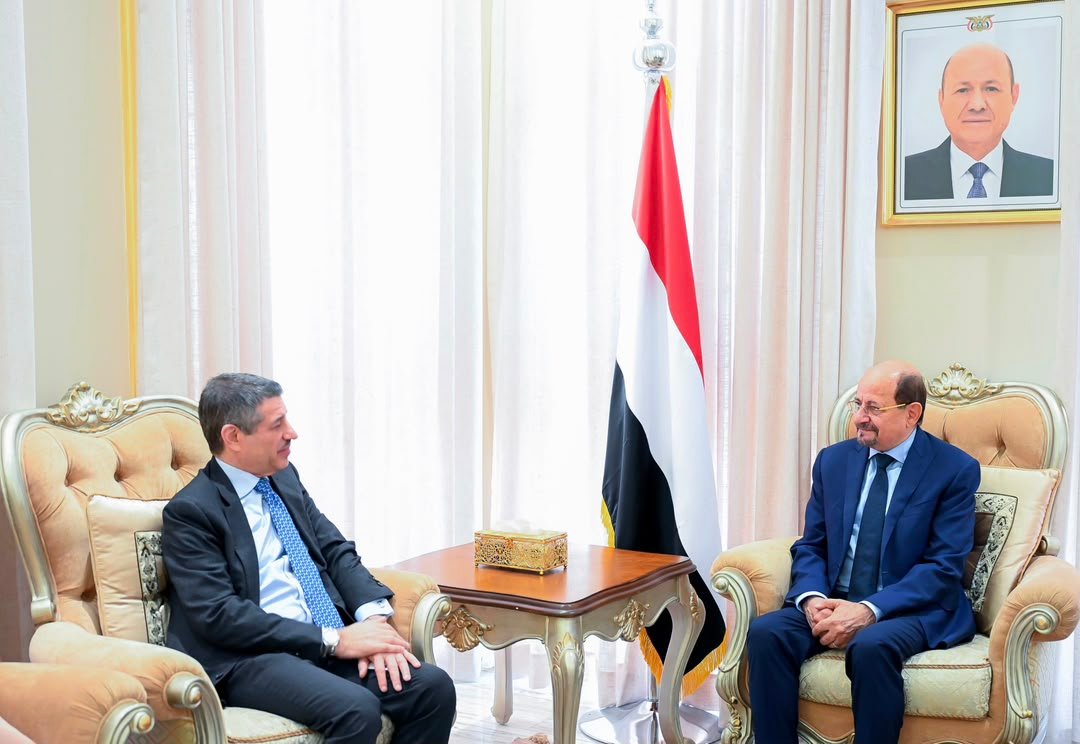
The ongoing civil war in Yemen, which has persisted since 2015, has been characterized by a complex power struggle primarily between the internationally recognized government and the Iran-backed Houthis. This conflict escalated after the Houthis took control of the capital, Sanaa, prompting a violent response from a Saudi-led coalition seeking to restore the Yemeni government. The war has led to severe humanitarian consequences, with estimates showing that over 18 million people require urgent assistance amidst a backdrop of widespread poverty, food insecurity, and disease outbreaks.
The political landscape in Yemen has continued to evolve, particularly with the establishment of the Presidential Leadership Council. This entity represents a coalition aimed at governing the country and addressing the pressing issues faced due to the prolonged conflict. Currently based in the southern port city of Aden, this government is recognized internationally but struggles against various internal factions and the persistent threats posed by the Houthis.
In this tumultuous environment, international relations play a crucial role. The United States has maintained its support for the Yemeni government during this crisis, emphasizing the importance of restoring state institutions and encouraging efforts toward political reform. As conflicts in the region are often intertwined, the U.S. presence and diplomatic efforts are seen as critical in stabilizing Yemen and curtailing the influence of regional adversaries such as Iran.
Recently, Dr. Shaya Zindani, Yemen’s Prime Minister and Foreign Minister, held a meeting with Steven Fagin, the U.S. Ambassador to Yemen, marking the conclusion of Fagin’s diplomatic mission in the country. In this encounter, Zindani expressed his gratitude for the ambassador’s contributions throughout his tenure, highlighting the positive impact of his efforts on enhancing bilateral relations between Yemen and the United States.
Fagin’s term in Yemen included active engagement with the Yemeni government to address the significant challenges posed by ongoing conflicts, particularly those stemming from the Houthi insurgency. The ambassador acknowledged the cooperative spirit from the Yemeni authorities, which he credited with facilitating his work and allowing for meaningful progress during his time in office. He emphasized the U.S.’s commitment to fostering stability, security, and developmental initiatives in Yemen.
During their discussion, Prime Minister Zindani reiterated the crucial assistance provided by the U.S. in aiding Yemen through its multifaceted crises. He recognized the support in strengthening governance and response efforts that aim to meet the humanitarian needs exacerbated by the war. The focus on restoring state institutions has been a central theme in U.S.-Yemen relations, as both sides seek to lay the groundwork for a pathway toward eventual peace and recovery.
The stakeholders in Yemen’s ongoing crisis span a wide array of actors, each with distinct interests and objectives. The Yemeni government, represented by the Presidential Leadership Council in Aden, seeks to regain control and rebuild the nation’s institutions amidst the devastation caused by years of warfare. This government garners international recognition and support but faces immense challenges from various internal factions and external pressures.
The Houthi movement, officially known as Ansar Allah, represents the opposing faction, having solidified its grip over many areas in Yemen, including the capital. As a group with backing from Iran, the Houthis play a pivotal role in shaping the conflict’s trajectory, often engaging in military actions that complicate peace efforts. Their continued resistance to the Yemeni government and international mediation initiatives prolongs the humanitarian crisis and complicates prospects for stability.
International actors, including the United States, play an influential role in Yemen’s future. U.S. support, through diplomatic engagement and humanitarian assistance, aims to provide relief to millions affected by the conflict while also addressing concerns regarding regional security and Iranian influence. Neighboring countries, particularly those within the Gulf Cooperation Council, such as Saudi Arabia and the UAE, are deeply involved in the conflict, either militarily or politically, and their interests are intricately tied to the outcomes in Yemen.
The implications of the Yemeni conflict extend well beyond its borders, affecting the geopolitical landscape of the Middle East. The ongoing struggle for power and influence has heightened tensions among regional powers, primarily between Saudi Arabia and Iran. The civil war has become a proxy battleground, with Iran supporting the Houthis and Saudi Arabia leading the coalition against them. This dynamic has significant ramifications for regional stability, impacting trade routes and diplomatic relations.
Bab al-Mandab Strait, a critical maritime chokepoint connecting the Red Sea to the Gulf of Aden, is of strategic importance not only for the countries directly involved in the conflict but for global trade as well. The ongoing conflict raises concerns about the safety of maritime navigation and the potential for regional escalation should any of the involved parties perceive a threat to their interests.
Moreover, the humanitarian crisis in Yemen presents challenges that resonate across the region. The influx of refugees fleeing conflict, the spread of diseases, and the dire need for humanitarian assistance have the potential to destabilize neighboring countries, exacerbating existing tensions and socioeconomic challenges. The international community recognizes the urgent need for a collaborative approach to address these issues, emphasizing the importance of stability for both Yemen and the broader region.
The recent meeting between Prime Minister Zindani and U.S. Ambassador Fagin presents a snapshot of the complex interplay between Yemen’s internal politics and international diplomacy. As Ambassador Fagin concludes his tenure, it becomes evident that his efforts have aimed at reinforcing U.S.-Yemeni ties amidst a challenging backdrop dominated by strife and humanitarian needs. The positive acknowledgment from both parties during their farewell discussions signifies a mutual understanding of shared challenges.
However, the path forward remains fraught with difficulties. While international support is crucial to Yemen’s recovery, the inherent issues within the national framework continue to undermine those efforts. The ongoing conflict necessitates a coherent strategy that not only addresses immediate humanitarian concerns but also fosters long-term stability and security. Without addressing the root causes of the conflict, any progress achieved may be temporary.
Additionally, the involvement of neighboring powers and their vested interests complicates the confrontation further. The intertwined nature of regional politics often exacerbates tensions rather than alleviating them. The enduring rivalry between Saudi Arabia and Iran serves to amplify local grievances and enflame hostilities, making any resolutions more complex.
Looking ahead, the future of Yemen will largely depend on the international community’s response and the willingness of its internal factions to engage in meaningful dialogue. The transition of diplomatic personnel, as evidenced by the departure of Ambassador Fagin, underscores an evolving political landscape that could lead to new avenues for influence or conflict. The coming months may see attempts at reinvigorating peace negotiations, especially as humanitarian needs become increasingly urgent.
The role of the United States will remain pivotal, particularly in fostering a political solution that embraces various stakeholders within Yemen. Challenges such as the ongoing military engagements by the Houthis and the humanitarian crises will demand an adaptive approach from the U.S. and its allies. It will be critical to maintain pressure on all parties to participate in peace initiatives while also providing the necessary humanitarian aid to alleviate the suffering of millions.
Furthermore, the likelihood of increased regional tensions cannot be overlooked. As various factions recalibrate their strategies in response to external support and internal pressures, the potential for escalation exists. It will be essential for the international community, including regional partners, to proactively engage to de-escalate confrontations and build toward a framework that can sustainably address Yemen’s myriad crises.
In summary, Yemen stands at a crossroads where the convergence of internal strife and external influences shapes its fate. As stakeholders grapple with this complex tapestry of interests, the prospect for peace, stability, and recovery will hinge on concerted efforts to navigate these turbulent waters, address the humanitarian plight, and foster genuine dialogue among all parties involved.
About the Author