Tariq Saleh Accuses Houthis of Fighting Iran’s Battles in Address to Taiz Tribal Leaders
 Yemen Herald News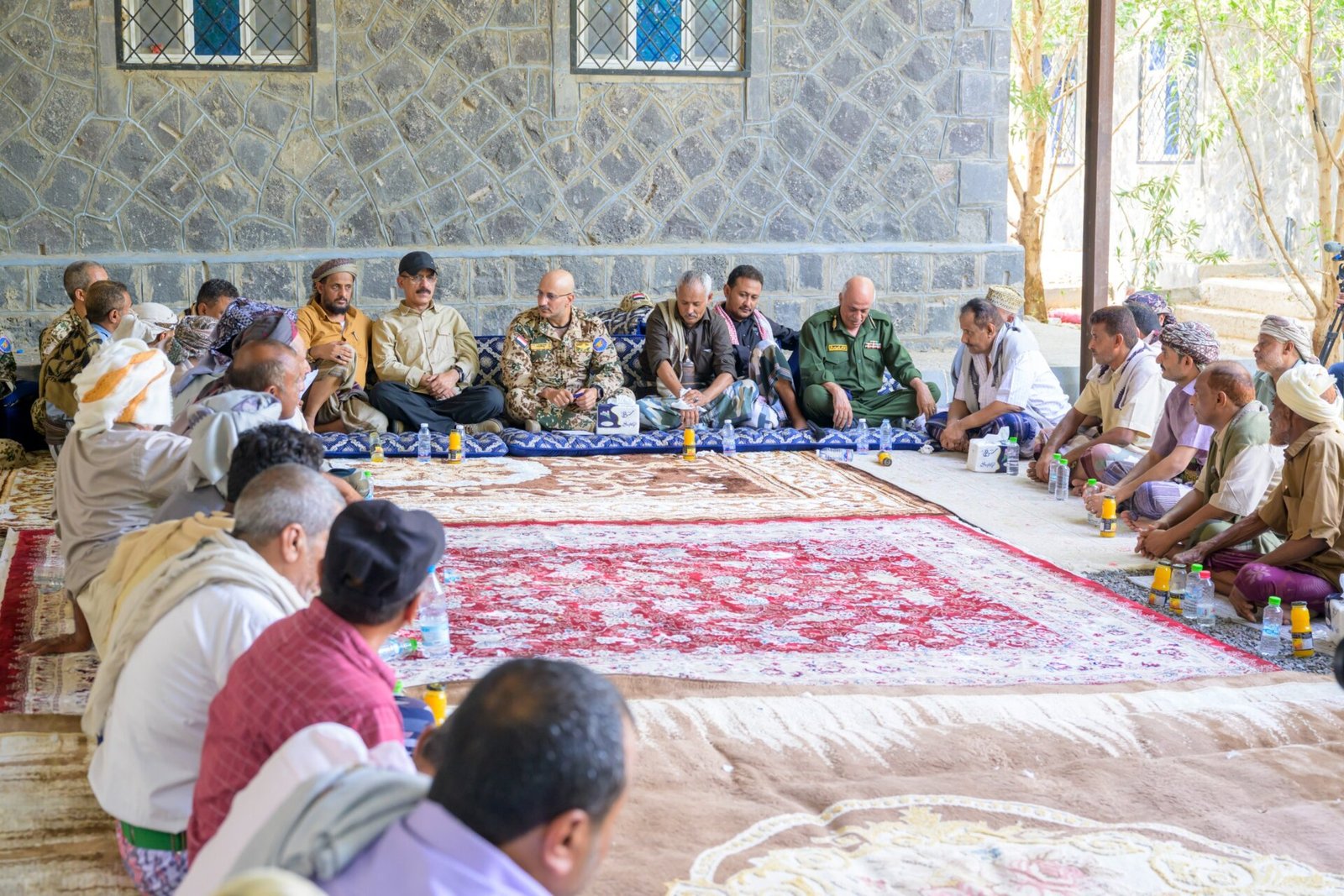
Lieutenant General Tariq Saleh, a member of Yemen’s Presidential Leadership Council, told tribal sheikhs and dignitaries from al-Waze’ayah District in Taiz governorate that the Houthi movement is pursuing an agenda tied to Iran’s Islamic Revolutionary Guard Corps rather than any Yemeni interest. The state news agency Saba, reporting from al-Mukha on 23 July 2026, quoted him saying the Houthi militias are frequently seeking to drag Yemen into battles that serve the Iranian regime rather than Yemenis or the Palestinian cause. The Houthis reject that description and insist they act on their own account.
Saleh’s position gives the remarks weight beyond the routine exchange of accusations. A nephew of former president Ali Abdullah Saleh, he commands the National Resistance Forces from al-Mukha on the Red Sea coast of Taiz governorate and joined the eight-member Presidential Leadership Council when it was formed in April 2022. His area of control sits close to the Bab al-Mandab Strait, the waterway at the centre of the current escalation, which makes his forces among the ground formations most directly exposed to any widening of the maritime conflict.
He spoke as that escalation reached its sharpest point in years. On 20 July the Houthis declared a naval blockade on Saudi Arabia, saying they would maintain it until Riyadh lifted restrictions on Yemeni ports and airports. Two days later the group claimed missile and drone attacks on two Saudi oil tankers in the Red Sea, the Encelia and the Layla. The Saudi Press Agency confirmed that the Encelia had been struck and said, citing an official at the kingdom’s Transport General Authority, that all crew members were safe. Saudi Arabia then suspended oil shipments through the lane.
Much of what Saleh told the assembled sheikhs concerned money rather than missiles. He accused the Houthis of inflicting severe damage on the national economy and of blocking oil exports, the single largest source of government revenue. Crude sales through the terminals at Al-Dhabba in Hadramawt and Al-Nashima in Shabwa stopped in late 2022 after drone attacks on both ports, removing roughly 70,000 barrels a day from the market and cutting off income that had covered most of the state budget. Cumulative losses run into billions of dollars, showing up in unpaid public salaries, a weakening rial and thinning services.
That picture has begun to change. In July 2026 the internationally recognised government announced the resumption of crude exports from the Al-Dhabba terminal at Ash Shihr in Hadramawt, ending a suspension of almost four years. Council chairman Rashad al-Alimi has said the revenues will go towards the state budget, public sector salaries and basic services. Authorities raised security levels across Hadramawt ahead of the first shipments, deploying forces around oil fields, the ports of Mukalla and Ash Shihr and the roads linking them.
The humanitarian backdrop is graver than the figures usually quoted. The United Nations humanitarian plan for 2026 estimates that more than 22 million Yemenis, close to two thirds of the population, need assistance and protection, among them 5.2 million internally displaced people. Some 18.3 million face acute food insecurity, with the most recent classification showing districts sliding from crisis into emergency conditions, and more than 2.2 million children under five are acutely malnourished. Aid agencies have appealed for $2.16 billion and expect to reach around 12 million people, prioritising the 9.4 million in the worst-affected areas.
The Iranian connection Saleh described is contested but not new. Washington describes the Houthis as an Iranian proxy, while the group says it makes its own decisions. Earlier this month the Presidential Leadership Council objected to a Mahan Air flight from Tehran to Sanaa International Airport carrying Houthi figures, calling it a violation of Yemeni sovereignty and a breach of Security Council resolutions. The government cites episodes of that kind as evidence of operational coordination between Sanaa and Tehran.
Taiz supplies its own argument for Saleh’s case. The governorate has been split by front lines for a decade, and Taiz city has spent years under partial siege. The Yemeni justice ministry said this week that Houthi forces had shelled the judicial complex in the centre of the city, one of several strikes the government has reported on civilian buildings there. Residents of rural districts such as al-Waze’ayah live with the practical consequences: closed roads, interrupted water and power, and a local economy with little room to recover while the fighting continues.
The wider stakes are maritime. The Bab al-Mandab Strait, which links the Red Sea to the Gulf of Aden, is the southern gateway to a Suez route that normally carries about 12 percent of world trade and close to a third of global container traffic. Shipowners have already begun rerouting vessels around southern Africa, adding weeks and cost to voyages, and any prolonged closure would compound Yemen’s own dependence on food and fuel arriving through Red Sea ports.
None of this points towards a settlement. The roadmap brokered by the United Nations, covering salary payments, port and airport access and a path to political negotiations, has never been implemented, and no new round of talks is scheduled. Saleh’s message to the sheikhs was that Yemen’s war is being prolonged for reasons that have little to do with Yemen itself. Whether that argument changes anything will depend less on Taiz than on the outcome of a confrontation now being fought across the Gulf, the Red Sea and the skies over Iran.
About the Author