Yemen’s envoy in Geneva says the Houthis advance Iran’s regional agenda
 Yemen Herald News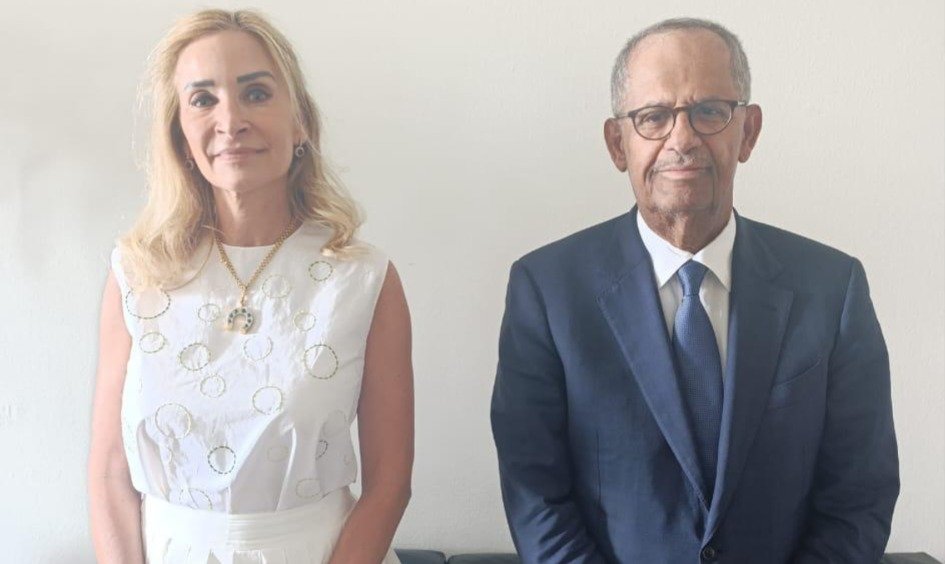
Yemen’s ambassador to Switzerland, Ali Mujawar, has told a senior Swiss diplomat in Geneva that the Houthi movement functions as an extension of Iran’s regional strategy rather than as a Yemeni national force, in talks covering the political, security and humanitarian situation in his country and the scope for closer bilateral cooperation.
Mujawar met Ambassador Monica Schmutz Kirgoz, who heads the Middle East and North Africa Division at the Swiss Federal Department of Foreign Affairs. He praised what he described as a durable relationship between the two countries and thanked Switzerland for its support for peace initiatives, its humanitarian contributions and its backing for United Nations efforts to implement Security Council resolutions on Yemen.
The ambassador said the Yemeni government, operating under the Presidential Leadership Council, remains committed to a negotiated peace and continues to support the work of the UN Secretary-General’s Special Envoy. He argued that those efforts have been repeatedly obstructed by the Houthis, whom the government designates a terrorist organisation, accusing them of escalating militarily while refusing meaningful engagement in the political process.
His central claim was that the Houthis are not an independent national movement. Mujawar told his Swiss counterpart that setbacks suffered by Iran elsewhere in the region, particularly in Syria and Lebanon, have pushed Tehran to deepen its investment in the group. That support, in his account, prolongs instability inside Yemen, stalls the peace track and raises the risk profile of the Red Sea and the Bab al-Mandab strait, through which a significant share of global shipping passes. Iran has consistently denied arming the Houthis.
Mujawar pointed to a recent episode involving Iranian aircraft as evidence of what he called direct interference in Yemeni affairs. Two flights from Iran landed at Sanaa and Hodeidah airports without authorisation from the internationally recognised government, which treated the landings as a violation of Yemeni sovereignty and of international civil aviation rules. Yemeni officials have described the episode as a dangerous precedent and an attempt to impose a fait accompli on the ground.
The first of those flights, on 3 July, drew comment well beyond Sanaa. The United States mission to the United Nations said the aircraft carried Islamic Revolutionary Guard Corps personnel, including drone and missile specialists, in support of the Houthis. Iran has rejected characterisations of its flights as military in nature. The incident was widely read in the region as a test of where the boundaries of acceptable Iranian activity in Yemen now lie.
That test matters because the wider conflict is well into its second decade. Fighting escalated after the Houthis seized Sanaa in late 2014, and a Saudi-led coalition intervened in March 2015. More than eleven years on, the front lines have shifted relatively little, the country remains divided between the Houthi-controlled north and territory held by the government and allied factions, and no comprehensive political settlement has been reached.
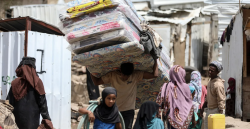
The humanitarian consequences are severe. The United Nations estimates that more than 22 million Yemenis, over two-thirds of the population, will require humanitarian assistance and protection during 2026, including some 5.2 million people displaced within the country. Around 18.3 million people are acutely food insecure and more than two million children under five are acutely malnourished. Cholera and measles continue to circulate in areas where water systems and clinics have been damaged or left without funding.
Aid agencies have appealed for 2.16 billion dollars this year to reach roughly 12 million people, and the response has been running well behind that target. Cuts to humanitarian budgets by major donors have compounded the shortfall, forcing agencies to reduce rations and close programmes in parts of the country where alternatives do not exist.
Against that backdrop, the Yemeni government has been working to keep sympathetic European states engaged. Switzerland occupies a particular place in that effort: it hosted rounds of Yemeni peace talks in the past, maintains a long humanitarian tradition and offers Geneva as neutral ground where parties who will not meet elsewhere sometimes will. Mujawar’s message was that Bern’s support should extend both to reviving negotiations and to sustaining aid delivery.
The regional picture complicates matters further. Tensions between Iran and the Gulf Cooperation Council states, Saudi Arabia in particular, continue to shape what is possible inside Yemen. Riyadh has spent recent years trying to extract itself from the war while retaining influence over its outcome, and any escalation involving Iranian activity in Yemeni airspace or waters cuts directly across that objective.
Shipping remains the most internationally visible dimension of the conflict. Attacks on commercial vessels in the Red Sea have pushed many operators onto longer routes around southern Africa, raising costs and insurance premiums and reducing traffic through the Suez Canal. Restoring confidence in the corridor would require a level of security assurance that no party currently appears able to provide.
Mujawar’s account is that of a government at war, and the Houthis reject the characterisation of themselves as an Iranian proxy, presenting their campaign as resistance to foreign intervention. What is not disputed is that the UN process has stalled, that outside actors continue to shape events, and that Yemenis are paying for the deadlock. Meetings such as the one in Geneva do not resolve any of that, but they keep a case in front of governments whose attention has been drawn elsewhere.
About the Author