Senior Spanish diplomats meet with Al-Muharrami.
 Yemen Herald News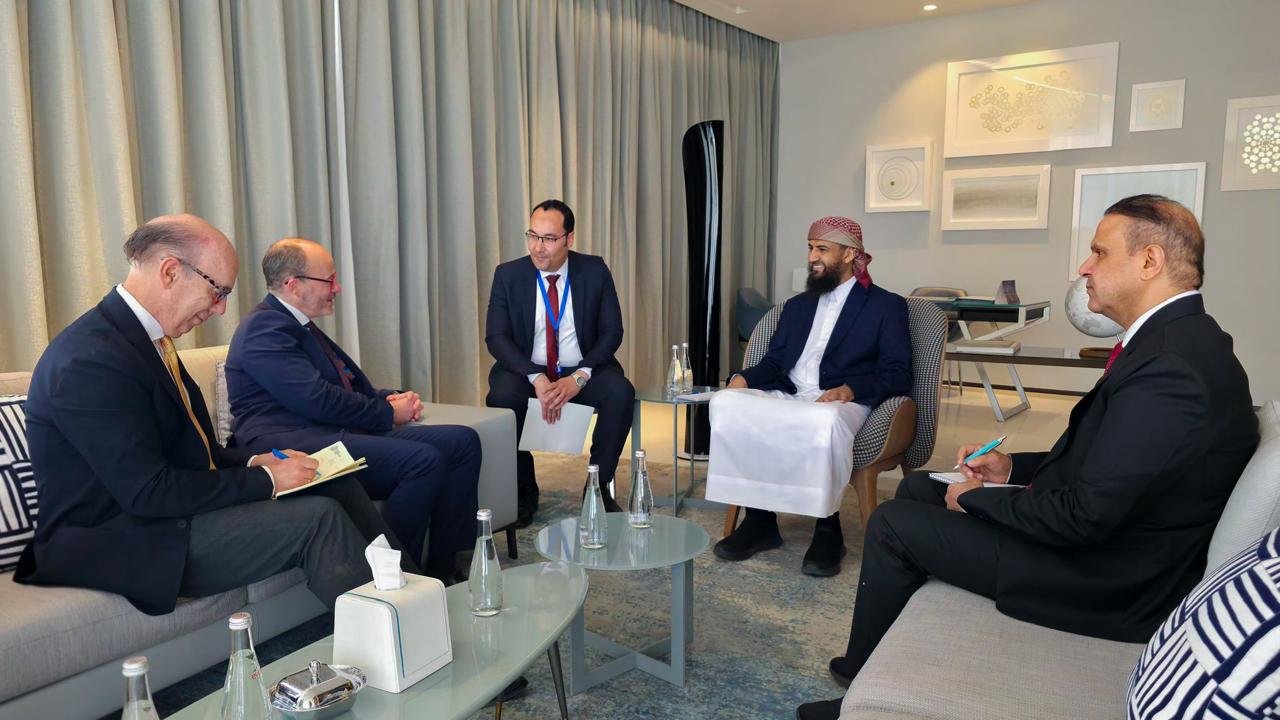
The Presidential Leadership Council (PLC), which emerged from a political reconfiguration, has played a crucial role in Yemen’s governance amid this chaos. Formed with international backing, the PLC aims to unify various factions and restore authority in areas under the government’s control, especially around the southern city of Aden. Despite these efforts, challenges remain, including opposition from Houthi forces, fragmentation among various local groups, and the ongoing struggle to manage basic services in the shadow of widespread violence.
Additionally, the geopolitical significance of Yemen’s location along the Red Sea and the Bab al-Mandab Strait cannot be overlooked. This waterway is a crucial artery for international shipping, making stability in the region a priority not only for local powers but for the global community as well. The strategic involvement of multiple actors, including regional powers and international organizations, has underscored the need for a comprehensive approach to resolving the conflict.
In a recent meeting held in Riyadh, Abdulrahman al-Muharrami, a member of the Presidential Leadership Council, engaged in discussions with a high-ranking Spanish diplomatic delegation led by Diego Martinez, the Spanish Secretary of State for Foreign Affairs. The primary focus of their discussions centered on strengthening the bilateral relationship between Yemen and Spain, encompassing various sectors, including diplomatic ties, economic partnerships, and humanitarian initiatives. This meeting reflects Spain’s growing involvement and interest in the dynamics of Yemen’s ongoing crisis.
During their talks, the two sides addressed the significance of ongoing political and humanitarian efforts to foster stability in Yemen. The Spanish delegation committed to supporting initiatives aimed at establishing peace and rebuilding the war-torn nation. The discussions also highlighted the critical importance of maintaining security in the Red Sea, a vital global shipping route that has faced considerable disruption from regional conflicts.
Al-Muharrami emphasized the necessity of regional collaborations, referencing the Saudi-sponsored Southern-Southern dialogue as a key element in promoting national unity and consensus. Spain’s endorsement of this initiative underscores a collective effort to stabilize Yemen through diplomatic discourse and cooperation among various factions.
The primary stakeholders in Yemen’s conflict include the internationally recognized government, the Houthi movement, the Saudi-led coalition, and various local factions. The PLC aims to represent and coordinate the interests of the government; its members often collaborate with international actors to facilitate recovery efforts and secure political support. Abdulrahman al-Muharrami’s recent engagement with Spanish diplomats illustrates the PLC’s strategic outreach to European nations for backing.
On the other side, the Houthi movement, which has established a de facto control over significant parts of northern Yemen, remains a potent challenge to the government’s efforts to regain control and achieve reconciliation. Their influence has drawn regional attention, particularly from Iran, which provides them with military and logistical support. This has created a complicated proxy dynamic that continues to shape the conflict and its potential resolutions.
The Saudi-led coalition, involving Gulf states and African allies, continues to be a significant player in the conflict, working to restore the government and counter Houthi encroachment. Their intervention underscores the geopolitical stakes involved in Yemen, impacting regional power balances and security considerations. The coalition’s actions and strategies significantly influence humanitarian conditions and the political landscape in Yemen.
Finally, international organizations and humanitarian agencies play a crucial role in attempting to alleviate the humanitarian crisis. With over 18 million people in need of assistance and continued reports of outbreaks of diseases like cholera, these entities strive to deliver aid while navigating the complex political landscape. Spain, as a member of the EU, has showcased its commitment to Yemen’s recovery through governmental support in diplomatic efforts and humanitarian aid.
The conflict in Yemen has profound ramifications for the broader Middle Eastern region, particularly concerning maritime security in the Red Sea and the strategic Bab al-Mandab Strait. Located at the southern entrance of the Red Sea, this narrow waterway is essential for global commerce, linking Europe and Asia. Any destabilization in this area can lead to threats against shipping routes, affecting international trade and energy supplies.
The spillover effects of Yemen’s turmoil have also led to increased tensions in neighboring countries. The involvement of Iran through its support of the Houthis has exacerbated sectarian divides and prompted Saudi Arabia and its allies to fortify their positions against what they perceive as Iranian expansionism. This dynamic complicates diplomatic efforts, as regional powers are often reluctant to engage without addressing broader geopolitical concerns.
Humanitarian struggles also impact regional stability, as the conflict has led to increased migration flows. The desperate conditions have forced many Yemenis to flee their homes, leading to a humanitarian crisis that extends beyond Yemen’s borders. Neighboring countries, especially those in the Gulf region, have had to contend with refugee influxes, which further strain their resources and become a source of political tension.
The humanitarian toll and regional implications of the crisis have caught the attention of international actors, including various NGOs and governmental organizations seeking to mediate an end to the conflict. The recent discussions between Yemeni leadership and Spanish officials indicate a recognition of the global imperative to address the situation holistically, involving both humanitarian and political solutions.
The meeting between al-Muharrami and the Spanish delegation represents a strategic effort to solidify international partnerships in Yemen’s recovery process. This kind of diplomatic engagement is essential for the PLC to navigate the complications of a multifaceted conflict. By fostering relationships with European powers like Spain, Yemen can enhance its prospects for aid, political support, and a robust backing for initiatives aimed at peace and development.
Considering the diverse challenges facing Yemen, including the need for political reform, economic recovery, and humanitarian assistance, a coordinated approach is crucial. Spain’s involvement and support can help amplify calls for peace while providing the necessary resources to tackle the humanitarian crisis. However, significant hurdles remain, including the need to bring all stakeholders to the negotiating table for effective dialogue.
The wider implications of this meeting extend beyond Yemen’s borders, reflecting a growing awareness among international actors of the geopolitical stakes involved in the conflict. If successful, diplomatic initiatives like the recent talks could help shore up support for the Yemeni government and establish a pathway towards lasting peace.
However, the observance of regional dynamics cannot be underestimated. The delicate balance of power among regional actors and their vested interests complicates the landscape significantly. It is crucial that any efforts towards stabilization in Yemen do not inadvertently sidestep the underlying issues that have fueled the conflict for years.
As a result of the recent talks, one can anticipate increased diplomatic interactions between Yemen and Spain, signaling a potential for deeper bilateral ties in the coming months. Specific agreements on humanitarian assistance or cooperation in addressing economic challenges may emerge from these discussions. Furthermore, Spain’s role could promote broader European Union engagement in Yemen, which is crucial for a multifaceted approach to reconstruction and recovery.
The focus on the Red Sea’s security underlines an urgent need for collaborative efforts to ensure safe passage in this essential trade route. As international awareness grows, it is likely that more nations will engage in discussions about maritime security and regional stability, opening avenues for coordinated action against threats from piracy or conflict-related disruptions.
Continued efforts to foster dialogue among various factions in Yemen will be necessary to achieve lasting stability. The Saudi-sponsored Southern-Southern dialogue is likely to remain central in these endeavors, and ongoing international facilitation will be paramount to ensure different Yemeni groups can find consensus and work towards shared goals.
In conclusion, the multifaceted nature of Yemen’s crisis demands sustained international attention and intervention. The commitment shown by Spain represents a broader international call to action, emphasizing the importance of collaboration among nations to support Yemen’s quest for peace, recovery, and stability amidst a persistent and complex conflict. The road ahead is undoubtedly challenging, but with concerted efforts, there lies the potential for transformation in Yemen’s future.
About the Author