EU Ambassadors Meet with Al-Mahrami, Who Urges Terrorist Designation for Houthis
 Yemen Herald News
The ongoing conflict in Yemen has deep roots, with the civil war beginning in 2015 as a power struggle involving multiple factions. Central to the conflict are the Iran-aligned Houthi movement, which controls significant portions of northern Yemen, and the internationally recognized Yemeni government, supported by a coalition led by Saudi Arabia. The Presidential Leadership Council, formed in April 2022, aims to unify various factions of the government as it seeks to stabilize the situation in the country, which has experienced a devastating humanitarian crisis. Over 18 million Yemenis face acute food insecurity, and more than 4.5 million people are displaced due to the ongoing violence.
International dynamics play a critical role in the conflict, especially with the strategic geography of Yemen. Situated at the mouth of the Red Sea, Yemen controls access to the Bab al-Mandab Strait, a crucial maritime transit point for global trade. This location has made Yemen a focal point in regional power rivalries, particularly between Saudi Arabia and Iran, which has continually supported the Houthi militias with funding and weapons. The geopolitical dimensions of the conflict complicate efforts to reach a sustainable peace, as external influences frequently exacerbate internal divisions.
Humanitarian efforts continue to struggle amid the warfare, with recurrent outbreaks of diseases like cholera and measles complicating the situation. The United Nations and various NGOs provide crucial support but face significant obstacles, both from the conflict and from restrictions imposed by the warring parties. The population’s suffering is exacerbated by a lack of access to essential services and economic instability, significantly hindering Yemen’s recovery and rebuilding efforts.
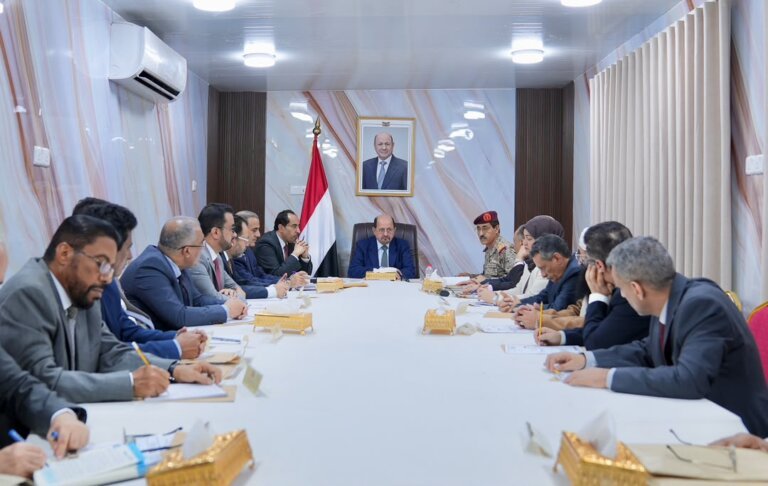
The recent meeting held in Riyadh by Abdulrahman al-Mahrami, a member of the Presidential Leadership Council, with European Union ambassadors, highlighted important issues regarding bilateral cooperation and the ongoing quest for peace in Yemen. During this meeting, officials discussed ways to enhance partnerships, specifically focusing on governmental reforms, development aid, humanitarian assistance, and building institutional capacities. These topics are essential as Yemen seeks to stabilize its political landscape amidst the chaos of war.
The peace process remains fragile, primarily due to the persisting defiance exhibited by the Houthi militias. Al-Mahrami pointed out the need to increase international pressure on the Houthis, which he believes is critical for compelling them to enter meaningful discussions aimed at achieving peace. He urged the EU to designate the Houthis as a terrorist organization, which would align more closely with the Yemeni government’s position that enduring peace depends on the rebels’ willingness to engage constructively.
Moreover, the discussion encompassed broader issues such as the security of international waterways, which are vital for global trade. Given Yemen’s strategic location, securing these maritime routes is integral not only to regional stability but also to international maritime security. Al-Mahrami also addressed economic and administrative reforms that are necessary to alleviate the hardships facing citizens and to improve basic public services. The emphasis on these reforms indicates a recognition that a stable governance structure is crucial for Yemen’s recovery.
The primary stakeholders in the Yemeni conflict include the Yemeni government and its allied forces, the Houthi militias, and various international actors, notably Saudi Arabia and Iran. The internationally recognized government, led by the Presidential Leadership Council, seeks to unify diverse political factions and foster a stable environment in the strategically significant Krab region. Its interaction with the European Union amplifies efforts to secure additional support and funding for critical reforms and humanitarian aid.
On the opposite side, the Houthi movement represents a formidable challenge, as it continues to refuse negotiations that might jeopardize its power in northern Yemen. With backing from Iran, the Houthis have managed to maintain a significant military front, complicating the diplomatic landscape. Their reluctance to engage sincerely in peace talks contributes to the ongoing cycle of violence and instability, showcasing their interest in political leverage rather than genuine settlement.
The involvement of international players like the EU and Saudi Arabia is crucial in the shaping of Yemen’s future. For the EU, the focus is on humanitarian assistance and the promotion of stability through diplomatic means. Saudi Arabia, on the other hand, remains a key regional player, influencing the conflict through direct military intervention and financial support for the Yemeni government. This multi-layered involvement by different countries forms a complex web of interests that both facilitate and hinder peace efforts in Yemen.
The conflict in Yemen not only affects its citizens but also has wide-reaching implications for the entire Middle East. The strategic significance of Yemen, controlling entry to the Red Sea, makes it a focal point in the power struggles between regional powers, particularly between Saudi Arabia and Iran. Should the Houthis maintain control over key maritime routes, the balance of power in the region could tilt, allowing Iran greater influence and potentially jeopardizing the interests of Saudi Arabia and its allies.
Moreover, the humanitarian crisis in Yemen has ramifications that extend beyond its borders. With millions of people in need of assistance, instability in Yemen can lead to increased migration, straining resources in neighboring countries. The ongoing conflict often creates a security vacuum that can be exploited by extremist groups, which presents further challenges not only regionally but also for international security.
The economic dimensions of the conflict also paint a grim picture. With the disruption of trade routes and the destruction of infrastructure, regional economies are adversely affected. Countries dependent on importing goods through the Bab al-Mandab Strait face increasing uncertainties. This has the potential to escalate tensions further, leading to broader regional destabilization if major players do not act to restore order.
Current discussions within the Yemeni government and its international partners provide a glimpse of a potential path forward, but achieving peace in such a fractious environment is a monumental task. Al-Mahrami’s call for increased pressure on the Houthis reflects a broader sentiment among international observers that a more forceful stance may be required to coax the rebels into negotiations. The designation of the Houthis as a terrorist organization could be a significant step and might alter the dynamics of the conflict, causing a recalibration in how both domestic and international players approach mediation efforts.
Furthermore, the focus on humanitarian and developmental reforms is essential in addressing the immediate needs of the Yemeni population and in establishing a foundation for lasting peace. Without addressing the economic and administrative grievances of the citizens, any peace agreement risks being unsustainable. Thus, a multifaceted approach that combines military pressure with robust humanitarian assistance appears to be crucial for advancing the peace process.
The complexity of tribal politics in Yemen also cannot be overlooked. The Southern Cause, which seeks greater autonomy for southern regions and has historically been underrepresented, plays a significant role in the dynamics of reconciliation efforts. Engaging various stakeholders from different backgrounds in meaningful dialogue is vital for reaching a comprehensive peace. The support of Saudi Arabia in facilitating South-South dialogues could bolster chances for a cohesive strategy that encompasses the varying interests throughout Yemen.
Moving forward, several steps will be crucial in progressing towards a peaceful resolution in Yemen. First, the international community, particularly the EU and the UN, should intensify diplomatic efforts, perhaps by mediating talks that bring together all factions, including the Houthis. This could create a platform for dialogue that addresses the diverse aspirations of various stakeholders while pressuring the Houthis to demonstrate a commitment to peace.
Second, reinforcing humanitarian efforts remains indispensable. Prioritizing aid delivery and support for infrastructure improvements will not only help relieve immediate suffering but also build trust among the Yemeni people in their government and international partners. Increased assistance can also provide the foundation for political legitimacy that the Yemeni government desperately needs.
Finally, close attention must be paid to the evolving geopolitical dynamics in the region, particularly concerning Iran’s influence. Should the Houthis remain empowered by Iranian support, the potential for conflict escalation increases. Addressing these aspects through united regional and international efforts will be essential in stabilizing Yemen and creating an environment for lasting peace.
In conclusion, while the road ahead is fraught with challenges, a clear strategy that involves diplomatic engagement, humanitarian assistance, and regional stability is needed to help Yemen move towards peace and recovery. The stakes are high not only for Yemen but also for the wider Middle Eastern region and the international community at large.
About the Author