Brazil 1-1 Morocco: A Tactical Analysis
 Yemen Herald News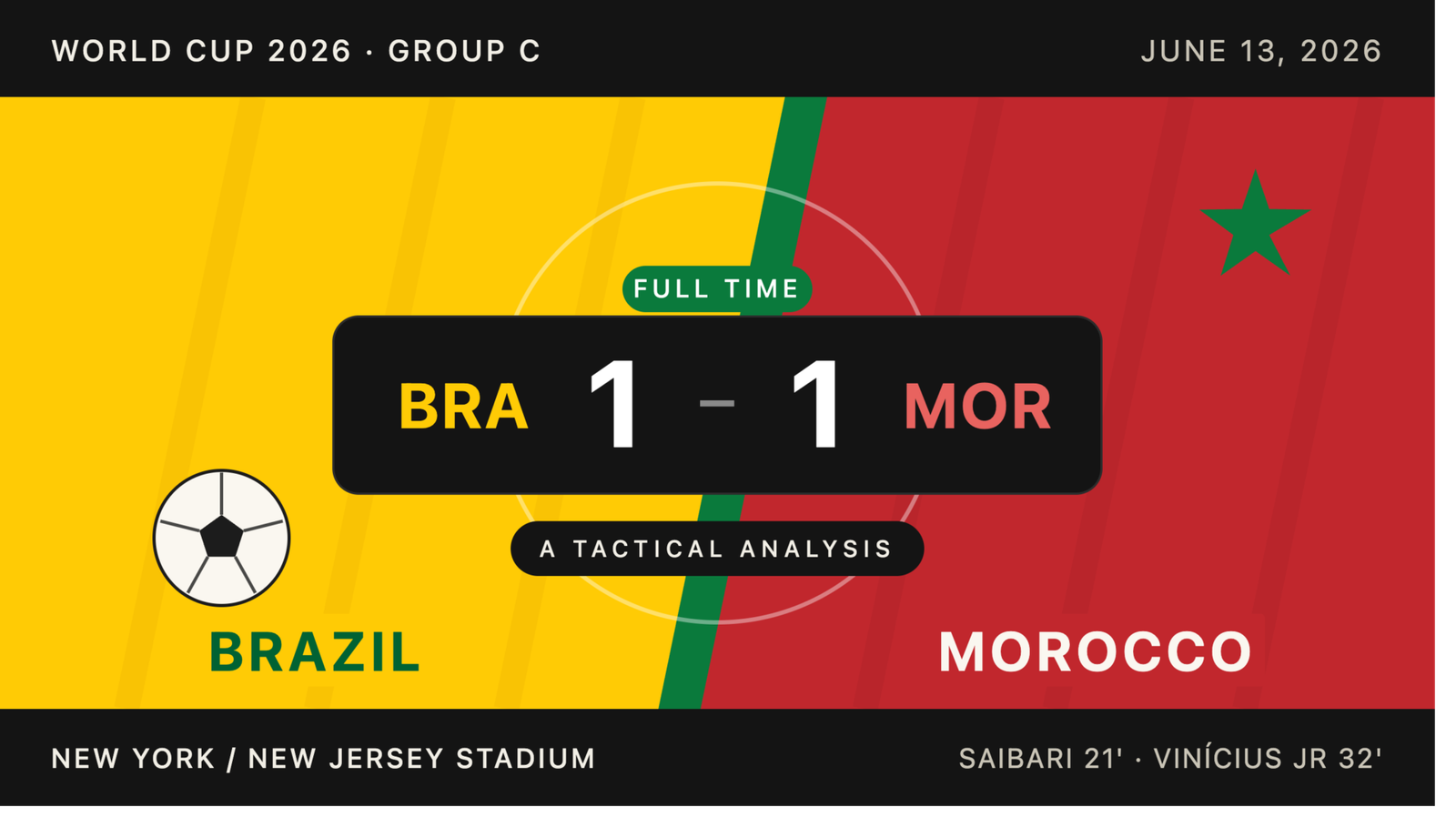
Group C — New York/New Jersey Stadium (MetLife), East Rutherford, NJ — June 13, 2026
Carlo Ancelotti’s first match in charge of Brazil at a World Cup finals ended in a 1-1 draw, and on the balance of play Morocco will feel they let two points slip away. Ismael Saibari and Vinícius Júnior traded first-half goals, and it took a late save from Alisson to ensure the spoils were shared after a cautious, low-tempo second half. The Atlas Lions were the better side for long stretches; only Brazilian individual quality and goalkeeping rescued a point.
Here is how the match broke down tactically.
1. Morocco’s blistering start and the high press
Mohamed Ouahbi’s side — newly built under the coach who replaced Walid Regragui — showed none of the deference you might expect against the five-time champions. They pressed high from the first whistle and controlled the ball, looking to provoke errors in Brazil’s build-up rather than sit deep and absorb.
The numbers tell the story of the opening exchanges: Morocco led the shot count 5-1 inside the first ten minutes, even if none of those early efforts seriously tested Alisson. Achraf Hakimi was the engine of this pressure, repeatedly driving out of midfield into space and getting shots away — one flashing wide around the 27th minute, another dragged over while off balance.
2. The opener: punishing the gap between the centre-backs
Morocco’s pressing was designed to win the ball high and attack in transition, and the goal came from exactly that template. Brahim Díaz threaded a through ball into Saibari, who found acres of space and lifted a composed chip over the onrushing Alisson.
The tactically significant detail is where the pass went: it sliced directly between centre-backs Marquinhos and Gabriel. That seam was not an accident — it is the space Ancelotti’s aggressive, front-loaded shape naturally concedes when Brazil commit numbers forward. Morocco identified it early and attacked it directly.
3. Why Brazil were exposed: the cost of the front-loaded shape
Ancelotti entered the tournament leaning hard into Brazil’s attacking wealth, reportedly naming nine forwards in his squad and setting up in a top-heavy formation built around Vinícius Júnior, Raphinha and company. That generates relentless threat going forward — but it thins the protection between and in front of the centre-backs.
With only a double pivot screening the defence, a single incisive pass can remove three or four players from the play at once. Díaz’s assist did precisely that. Morocco chose not to grind through Brazil’s midfield; they went straight at the structural weakness, and were rewarded.
4. The equaliser: brilliance over structure
Brazil’s leveller arrived eleven minutes later, and it owed far more to individual quality than to any tactical fix. A combination with Raphinha left Vinícius isolated on the left side of the box; he cut inside onto his right foot and curled a brilliant finish into the top corner, with the assist generally credited to Bruno Guimarães.
It was a reminder that even when out-structured, Brazil carry match-winners who can manufacture a goal from half a chance. But it did not alter the first-half dynamic — Morocco remained the better side, pressing high and dominating possession right up to the break.
5. Ancelotti’s halftime reset
The most revealing tactical decision came at the interval. Ancelotti withdrew Casemiro and Roger Ibañez — both already booked — for Fabinho and Danilo. The substitutions served a double purpose: they removed the risk of a second yellow in two key areas, and they shifted Brazil toward control.
Swapping a cautioned Casemiro for Fabinho let Brazil hold the ball more securely in midfield, while Danilo added a steadier defensive presence. In effect, Ancelotti traded first-half aggression for command of the game, accepting a draw-shaped contest rather than continuing to gamble against Morocco’s counter.
6. A cautious second half — and Morocco’s lingering threat
The trade-off was a flatter half with fewer clear chances. Both teams lowered the tempo: Morocco kept possession, Brazil stayed poised to counter, and the game grew more imprecise without producing many openings.
Morocco never abandoned the transition that won them the opener. Saibari latched onto a chipped pass inside the box around the 71st minute but could not beat Alisson, and an 84th-minute Issa Diop backpass nearly handed Brazil a winner before Bounou raced off his line to clear. Heat was a genuine factor throughout, prompting a first-half hydration break — a variable worth tracking across this tournament’s warm-weather kickoffs.
7. The save that rescued the point
In the end it was the goalkeeper, not the system, that earned Brazil their point. Deep into stoppage time, Neil El Aynaoui unleashed a powerful effort that Alisson turned away superbly, reacting just as sharply to deny the follow-up. It was that intervention, as much as Vinícius’s strike, that spared Ancelotti a losing start.
Verdict
Tactically, this was a strong night for Morocco’s plan and a warning for Brazil. Ouahbi’s high press and direct attacking of the channels between the centre-backs produced the better and more numerous chances; only Vinícius’s individual class and Alisson’s goalkeeping salvaged the draw. Ancelotti’s halftime adjustment showed pragmatism, but his front-loaded structure was repeatedly exposed in transition — something opponents will have noted.
With this fixture widely seen as a decider for top spot in Group C, both sides now sit level on a single point. Morocco leave with their reputation as Africa’s standard-bearers reinforced; Brazil leave knowing there is real work to do before the knockout rounds.
Match Facts
| Competition | FIFA World Cup 2026 — Group C |
| Result | Brazil 1-1 Morocco |
| Venue | New York/New Jersey Stadium (MetLife), East Rutherford |
| Date | June 13, 2026 |
| Scorers | Saibari 21′ (assist: Brahim Díaz) — Morocco; Vinícius Júnior 32′ (assist: Bruno Guimarães) — Brazil |
| Key moment | Alisson’s late double save denies El Aynaoui |
| Managers | Carlo Ancelotti (Brazil) · Mohamed Ouahbi (Morocco) |
About the Author