Prime Minister reviews expansion of EU partnership and support for government reforms.
 Yemen Herald News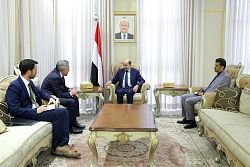
The humanitarian situation has reached alarming levels, with over 18 million individuals in need of assistance and more than 4.5 million people displaced due to the ongoing violence. Regular outbreaks of diseases such as cholera and measles are further compounding the crisis, creating a dire need for international aid and support for emergency healthcare services. Efforts to restore stability and governance in Yemen remain complicated by the political fragmentation of the country and the diverse interests of local actors as well as foreign stakeholders.
Amid this turmoil, political and economic reform has become a priority for the Yemeni government. Newly established governance structures, such as the Presidential Leadership Council, are focused on consolidating power and promoting national unity while addressing the myriad challenges that the war has exacerbated. The international community, aware of the precarious situation in Yemen, is keenly interested in the potential for stability and reform, which would not only alleviate humanitarian suffering but also contain larger regional threats.
In a recent meeting, Yemen’s Prime Minister and Minister of Foreign Affairs, Dr. Shaya Zindani, engaged with Ambassador Gabriel Munuera Viñals, who leads the European Union Mission to Yemen. This discussion centered on enhancing collaboration between Yemen and the European Union (EU), particularly regarding development financing and support for governmental reform initiatives aimed at improving state institutions and public services. The strategic partnership with the EU is underlined by the need to implement comprehensive reforms to bolster economic stability and institutional development.
Both leaders assessed the current political and security landscape, touching upon the implications of Houthi militia activities that jeopardize maritime safety in the Red Sea and the Bab al-Mandab Strait. The threat to maritime security from these factions has drawn international concern, as these waters are critical to global trade and energy transport. The ongoing efforts to bring peace to Yemen were also discussed, highlighting the need for a concerted response from the international community.
Zindani noted the Yemeni government’s ongoing commitment to addressing significant challenges in public services, especially within the electricity sector. Collaboration with Saudi Arabia, particularly through recent provisions of fuel derivatives that facilitate electricity generation, was also recognized. Furthermore, the Prime Minister conveyed aspirations for deeper cooperation with the EU, especially in expanding investment and development assistance aimed at uplifting the Yemeni economy and reinforcing governmental capabilities.
Key stakeholders in Yemen’s ongoing crisis include the Yemeni government, the Houthi movement, various local militias, and the regional powers involved in the conflict. The internationally recognized government, operating out of Aden, seeks to establish governance and state security, often with the backing of a coalition led by Saudi Arabia and augmented by logistical support from the United States and other allies. However, this government faces significant challenges due to the fractious political landscape and limited control over large territories.
The Houthi movement, which has entrenched itself in northern Yemen, continues to pose a formidable challenge to both the Yemeni government and Saudi-led coalition forces. The group’s military capabilities, bolstered by Iranian support, have enabled them to not only sustain their hold but also pose threats to regional maritime security. Their actions are under scrutiny, given their potential to exacerbate international tensions in a region already fraught with conflict.
International actors, including the European Union, play a critical role as mediators and supporters of peace efforts. Their involvement focuses on humanitarian aid and development programs, aimed at stabilizing Yemen through dialogue and support for reformist agendas. The EU’s commitment to Yemen’s development has become particularly vital in providing the infrastructure and programs necessary for rebuilding the war-torn nation.
Additionally, other regional actors, including the United Arab Emirates, have a significant influence on the dynamics in southern Yemen, which further complicates the quest for unity within the country. As these various stakeholders pursue their interests, the road to peace remains obstructed by competing agendas and the intricate web of alliances and hostilities in the region.
The conflict in Yemen has far-reaching implications not only for the nation itself but also for the broader region. The Bab al-Mandab Strait, an essential shipping route, is a pivotal area where geopolitical interests converge. Control over this strait has significant ramifications for international trade and energy transit between Europe, Asia, and the Americas. Disruption in this critical waterway due to Houthi interventions poses a risk to global shipping operations, prompting concerns from maritime nations relying on this route for secure passage.
Moreover, the war in Yemen has compounded existing tensions between regional powers, particularly Saudi Arabia and Iran. The conflict is often viewed through the lens of the Iranian-Saudi rivalry, with Iran backing the Houthis as part of its strategic ambitions in the region. This sectarian dimension has further polarized local factions, exacerbating divisions and hindering reconciliation efforts. As a result, stability in Yemen is of paramount importance not only for the Yemeni people but also for regional security dynamics.
The humanitarian crisis in Yemen has also resulted in significant international attention and action, particularly from neighboring countries that are grappling with the spillover effects of instability. Refugee movements and cross-border humanitarian needs have heightened the urgency for concerted regional measures to address the plight of those affected by the conflict. Increased cooperation among Gulf states can play a critical role in ensuring effective aid delivery and fostering peace initiatives.
Additionally, the ongoing conflict has broader implications for counter-terrorism efforts in the region, with various extremist factions exploiting the chaos in Yemen for their gain. Global security considerations are becoming increasingly intertwined with the need to stabilize Yemen, as various entities continue to navigate the evolving landscape of threats emanating from the conflict.
The recent discussions between Dr. Zindani and Ambassador Viñals underscore a critical juncture for Yemen’s future. The strategic partnership with the EU may provide an essential lifeline for the Yemeni government, facilitating reforms needed to address both immediate humanitarian needs and long-term institutional weaknesses. As the international community recognizes the significance of collaboration in rebuilding Yemen, the potential for enhanced cooperation reflects a pivotal moment for both the EU and Yemen in their quest for stability and development.
Continued support for institutional reforms and basic service improvements, particularly in the energy sector, is paramount as Yemen grapples with service delivery challenges. The government’s ability to translate international support into effective governance will depend heavily on its commitment to reform and the establishment of robust systems that enhance its capacity to meet public needs. However, the entrenched interests of local militias and segments of the population that remain loyal to the Houthis may pose obstacles to this process.
The international spotlight on maritime security in the Red Sea and around the Bab al-Mandab Strait further signals the broader significance of resolving conflicts within Yemen. As threats from Houthi militia activity escalate, ensuring a stable and peaceful environment in Yemen not only serves local interests but is also critical for international stakeholders concerned with maritime safety and security.
A savvy diplomatic approach that seeks to engage with a range of stakeholders—including local actors, regional powers, and international partners—will be essential for the effectiveness of any peace initiative. However, achieving consensus among competing interests could prove challenging and will require compromise and sustained dialogue.
Looking ahead, the trajectory of Yemen’s political landscape will depend significantly on both domestic governance efforts and international diplomatic strategies. The Yemeni government’s commitment to reform, alongside international support, may provide pathways to rebuilding the country and stabilizing its institutions. Enhanced collaboration with the EU and investors in the coming period will be crucial for implementing development programs that can gradually restore essential services and economic viability.
To address immediate humanitarian needs, continued advocacy for international aid will remain important, especially as millions face acute food insecurity and health emergencies. The effectiveness of such assistance will hinge on the Yemeni government’s capacity to facilitate aid access while maintaining security against hostile entities. A continued focus on humanitarian access as part of broader political negotiations could pave the way for more sustainable recovery efforts.
While the Houthi movement remains a significant obstacle to peace, their role in any future negotiations cannot be overlooked. Considering their interests and grievances could open avenues for dialogue, facilitating a more inclusive approach to peace that addresses the root causes of the conflict.
Ultimately, the success of Yemen’s journey toward stability will require ongoing commitment from all parties involved and a concerted effort to mitigate the complex realities of the conflict. It will necessitate a unified approach that transcends local divides and recognizes the interconnectedness of Yemen’s future with regional security and international interests.
About the Author