Arab-German Business Conference highlights Yemen’s economic recovery prospects.
 Yemen Herald News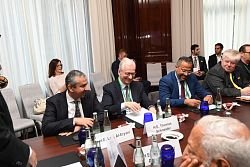
Yemen’s participation in the recent Arab-German Business Conference, held in Berlin, was marked by discussions focused on economic recovery and sustainable development initiatives. The Yemeni delegation, headed by Ambassador Louay Al-Eryani, aimed to deliver a message of optimism regarding the nation’s economic prospects. During the panel discussion titled “The Road to Economic Recovery and Sustainable Development in Yemen,” Ambassador Al-Eryani underscored several encouraging economic indicators that paint a more favorable picture of Yemen’s current state.
One of the key highlights included renewed cooperation with the International Monetary Fund, which could potentially facilitate economic stability and international financial support. Furthermore, the World Bank’s announcement of $250 million in new projects is seen as a critical investment that could bolster infrastructure and services in war-torn areas, helping to alleviate some of the burdens faced by the Yemeni population. Additionally, there have been notable improvements in the exchange rate of the Yemeni rial, a factor that can enhance purchasing power and stabilize local markets.
The Yemeni government is also taking steps to improve financial management systems with the aim of enhancing public services, which is vital for addressing the widespread issues related to salary payments for public sector workers. These initiatives are part of broader efforts designed to restore confidence in the economy and set a foundation for a sustainable recovery effort.
Participation in the Arab-German Business Conference highlighted the involvement of multiple key stakeholders, each playing a pivotal role in Yemen’s recovery journey. At the forefront was the Yemeni government, represented by Ambassador Louay Al-Eryani, who asserted the nation’s commitment to pursuing economic recovery through international partnerships. His leadership in discussions provided a platform for showcasing Yemen’s potential to engage with foreign investments and support.
The conference also welcomed the German Ambassador to Yemen, Thomas Schneider, who contributed insights from his visit to the country. His acknowledgment of Yemen’s large population as a promising market signifies the potential benefits of international trade and investment in a recovering economy. Such engagement underlines the importance of diplomatic relationships in facilitating economic revival and securing much-needed resources and expertise from abroad.
Moreover, the attendance of German business representatives indicates a growing interest in Yemen’s economic landscape. Their participation reflects an acknowledgment of the untapped opportunities within the country, particularly in sectors such as agriculture and energy, where both nations could significantly benefit from collaborative efforts. This multifaceted engagement paves the way for future partnerships that can enhance Yemen’s economic recovery and foster sustainable development.
The discussions at the Arab-German Business Conference take place within a broader regional context that influences Yemen’s recovery prospects. Neighboring countries in the Arabian Peninsula are also closely monitoring developments in Yemen due to the potential implications for regional stability. As Yemen continues on its path to recovery, successful economic revitalization could bring about positive changes not only within the country but also throughout the region.
The recent emphasis on strengthening economic ties and international partnerships aligns with the interests of other Gulf Cooperation Council (GCC) nations. Countries that have been involved in peace negotiations or have vested interests in Yemen may find renewed hope in a stable and economically viable Yemen. For instance, growing agricultural and energy sectors could serve as platforms for collaboration, bolstering food security and energy supply across the region.
However, challenges remain, particularly given the ongoing tensions between various factions and external influences. Yemen’s geopolitical positioning and the interests of Iran and Saudi Arabia place additional pressure on its path toward recovery. The dynamic nature of these relationships means that gains in economic recovery must be carefully managed to avoid escalating conflicts that could derail progress.
The recent Arab-German Business Conference serves as a testament to Yemen’s commitment to rebuilding its economy amid persistent challenges. The positive economic indicators highlighted by Ambassador Al-Eryani suggest a potential turning point for the nation, provided that these gains can be sustained. However, the reality on the ground remains complex, and the long road to recovery will require not only financial investment but also a stable political environment.
The challenges posed by ongoing conflict and humanitarian crises must be addressed in parallel with economic initiatives. The country’s ability to strengthen financial management systems and improve public services is contingent upon a unified governance structure that can effectively implement these policies. Without addressing the underlying issues of governance and security, economic gains may not translate into lasting improvements for the Yemeni population.
Furthermore, the participation of international stakeholders is crucial for facilitating a robust recovery. The engagement of German businesses and diplomats signifies a growing interest in Yemen’s potential, yet this interest must translate into meaningful investments and partnerships. Structural reforms and a clear vision for sustainable development must be prioritized to attract investors and promote long-term stability.
Looking ahead, Yemen’s economic recovery efforts will depend on several critical factors. The continued cooperation with international institutions like the International Monetary Fund will be pivotal in providing the necessary financial resources and technical assistance to support the country’s rebuilding efforts. Establishing a solid framework for financial management will also be crucial for maintaining transparency and accountability in the distribution of funds.
As diplomatic relations strengthen and opportunities for investment arise, Yemen must take proactive steps to create an environment conducive to business. Encouraging foreign investment, particularly in sectors such as agriculture and energy, could stimulate job creation and enhance overall economic activity. The government needs to streamline regulatory processes to facilitate easier entry for foreign businesses while ensuring that local industries also benefit from these developments.
Lastly, addressing the ongoing humanitarian crisis remains a pressing concern that cannot be overlooked. As Yemen moves forward with its economic recovery plans, it must simultaneously prioritize the needs of its population. Strategies that integrate economic, humanitarian, and political efforts will be essential for achieving sustainable development and long-term peace in Yemen. How effectively the government can navigate these intertwined challenges will ultimately determine the success of its recovery journey in the years to come.
About the Author