Yemen and Egypt Pledge Closer Banking Ties as Central Bank Governors Meet in Cairo
 Yemen Herald News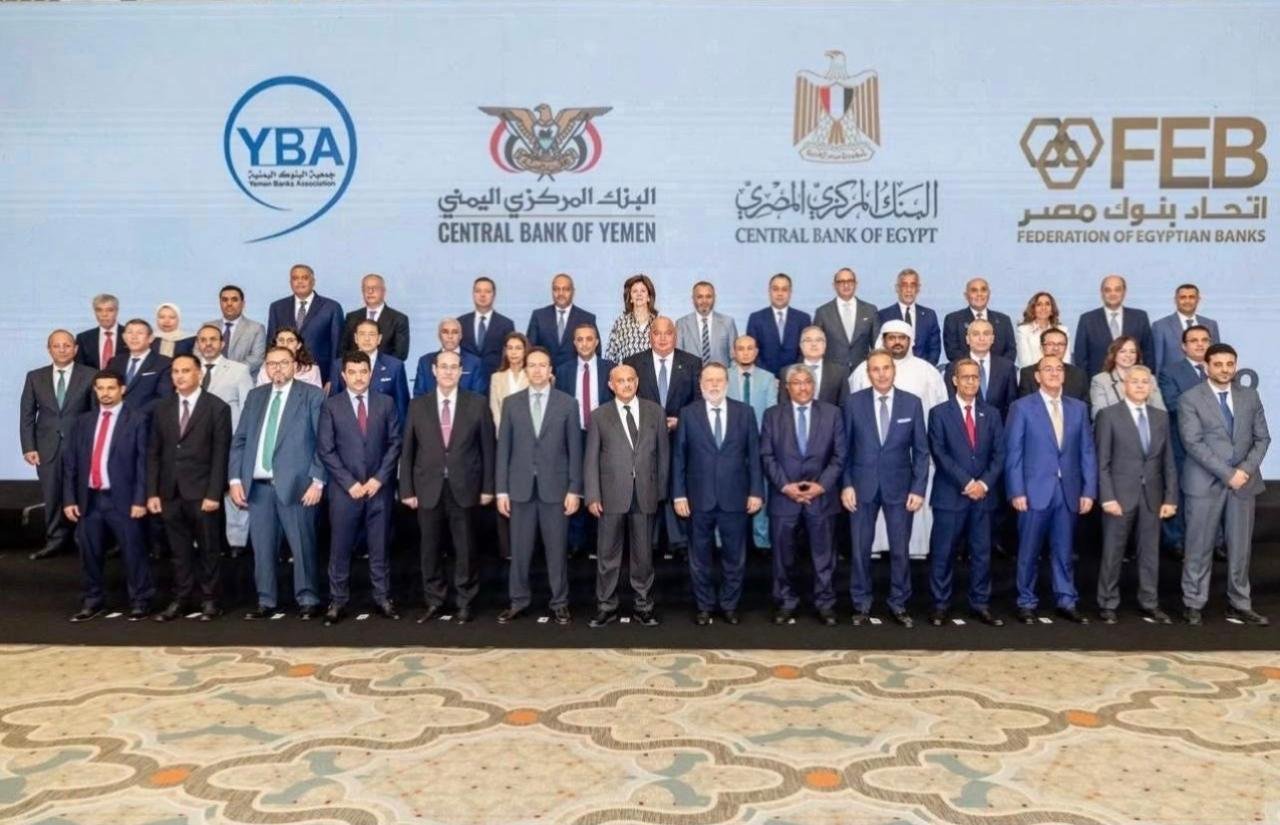
In a development that points to warming financial relations between Yemen and Egypt, the Governor of the Central Bank of Yemen, Ahmed Ghaleb, has predicted that the coming period will bring a marked increase in trade and investment activity between the two countries, driven in large part by rapid advances in banking technology. He made the remarks at the opening of a Yemeni-Egyptian banking cooperation forum in Cairo that gathered senior figures from both nations’ financial sectors, including representatives of the Yemeni Banks Association and the Federation of Egyptian Banks.
Ghaleb, who has led Yemen’s central bank from its Aden headquarters since December 2021, told delegates that Yemeni investment has become increasingly visible in Egypt’s financial landscape and pointed to scope for a meaningful expansion in commercial exchange. He framed the cooperation as timely, noting that both economies are wrestling with serious financial pressures that call for coordinated responses, shared strategies and a collective search for resilience rather than isolated national fixes.
The forum, according to the governor, was intended as a venue for practical discussion aimed at strengthening institutional ties and pooling expertise. Ghaleb expressed optimism that the gathering would open doors to closer collaboration, provide support for the large Yemeni community living in Egypt, and help Yemen’s banks take fuller advantage of technological progress in the sector. He has used recent public appearances to stress the need to rebuild confidence in the country’s battered financial system and to deepen arrangements with regional and international institutions.
Speaking at the same event, the Governor of the Central Bank of Egypt, Hassan Abdalla, welcomed the prospect of deeper partnerships between banks in the two countries. He stressed the importance of strengthening financial governance and prioritising digital transformation and cybersecurity, which he described as essential to maintaining stability in an increasingly interconnected global system. Abdalla, a veteran banker who has served as Egypt’s acting central bank governor since 2022, has overseen a demanding period of currency and monetary-policy adjustment in his own country.
Abdalla also offered to extend training programmes designed specifically for Yemeni banking professionals, with the aim of building their skills through shared knowledge and direct exchange. That pledge builds on existing engagement between the two institutions. Earlier in the year, the Central Bank of Egypt hosted a delegation from the Central Bank of Yemen in Cairo to share Egypt’s experience in payment systems and digital financial services, part of a wider effort to help qualify and train Yemeni cadres and to lift the technical capacity of Yemen’s banking sector.
The wider backdrop helps explain why such cooperation matters. Yemen’s banking system has been strained by years of conflict, a sharply depreciating currency and an institutional split that has left rival monetary authorities operating in Aden and Sana’a. The division has complicated everything from currency management to correspondent banking relationships, leaving many Yemeni institutions cut off from the global financial system. Against that difficult landscape, closer ties with a large and established financial sector such as Egypt’s offer Yemen both technical know-how and a measure of stability it has struggled to generate on its own. Yemen’s monetary authorities have repeatedly reaffirmed their commitment to reforms intended to protect the economy and preserve financial stability, including steps to tighten oversight of the money-exchange sector and to bring local banking practice closer to international standards.
Geography adds another layer of importance. Both countries sit close to the strategic shipping lanes of the Red Sea and the Bab al-Mandab Strait, a corridor that has seen heightened tension and disruption to commercial traffic in recent years. Stable financial channels between Cairo and Aden could help cushion some of the economic fallout from that instability, while reinforcing the broader diplomatic relationship between Yemen’s internationally recognised government and one of the region’s most influential states.
Abdalla’s standing lends additional weight to the Egyptian commitments. During 2025, he was named “Governor of the Year” by the Union of Arab Banks, a recognition of his role in steering Egypt through a turbulent economic stretch. His endorsement of joint training and knowledge-sharing signals that Cairo views the relationship with Yemen as more than a symbolic gesture and that it is prepared to commit institutional resources to it.
For the participants, the discussions appeared to confirm a shared view that financial cooperation is not only an economic necessity but also a tool for building stronger diplomatic relations. A more coordinated banking framework, several speakers suggested, could become a foundation for collaboration in other sectors, gradually broadening a partnership that currently centres on banking and payments. The emphasis on exchanging best practices in areas such as risk management and regulatory compliance reflected a common determination to guard against financial malpractice and to protect both economies.
Looking ahead, stakeholders remained cautiously optimistic about the prospects for expanded trade and investment. The initiatives outlined in Cairo represent a constructive step, but officials acknowledged that sustained follow-through will be needed to turn forum declarations into concrete results. The coming months are likely to test how far the two central banks can translate their stated ambitions into working arrangements, as Yemen and Egypt continue to navigate their respective economic challenges in a volatile regional environment.
About the Author