Yemen’s Defense Minister Pledges to Modernise Military Logistics in Marib
 Yemen Herald News
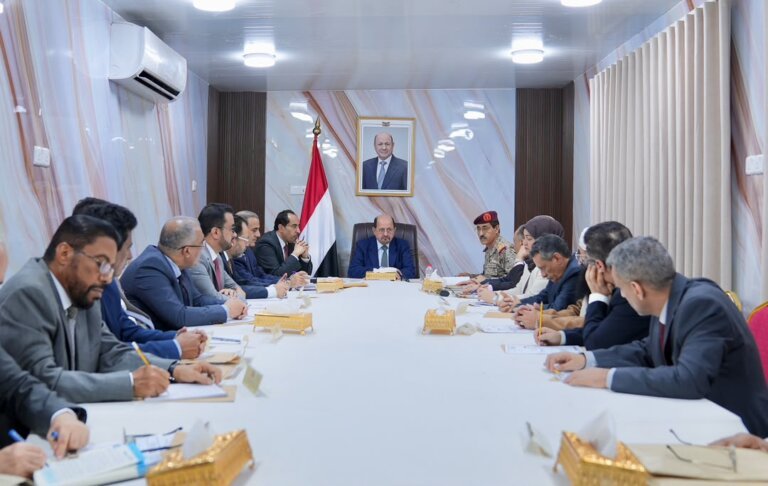
Yemen’s Defense Minister, Lieutenant General Taher al-Aqili, has reaffirmed his ministry’s commitment to building a more capable and modern military logistics system, using a meeting in Marib province to press the case that effective supply and support operations are central to the readiness of the country’s armed forces. The gathering, held on Monday with the leadership of the Logistics Support Authority, brought together the minister’s assistants and senior military commanders to review the authority’s performance and assess progress on its logistics plans and programmes.
During the session, al-Aqili commended the authority’s leadership and its affiliated departments for their efforts to strengthen the logistical capabilities of the armed forces. He stressed the importance of continuously modernising the authority’s operational methods to keep pace with current requirements, framing that modernisation as essential to the Ministry of Defense’s broader vision of a more efficient logistics network. The minister reaffirmed that the ministry would provide the authority with the resources and assistance it needs, arguing that reinforcing its capabilities would improve institutional performance, raise operational efficiency and bolster the combat readiness of Yemeni forces.
The meeting reflects the priorities of a defence establishment that has been undergoing change at its highest levels. Al-Aqili was sworn in as Minister of Defense of Yemen’s internationally recognised government in February 2026, taking on one of the most demanding portfolios in a state still shaped by years of war. His focus on logistics is notable because supply chains, maintenance, transport and the management of materiel are often less visible than front-line operations, yet they frequently determine whether an army can sustain itself over time. By placing the Logistics Support Authority at the centre of his agenda, the minister is signalling that institutional capacity, rather than battlefield rhetoric, will be a measure of the ministry’s progress.
Marib’s role as the venue is significant in its own right. The province has become a principal stronghold for the internationally recognised government and a hub for its military and political activity, hosting senior officials, training programmes and command meetings. Holding the logistics review there underscores the city’s position as a centre of gravity for government forces and as a place where decisions about the future shape of the armed forces are increasingly made.
The wider context is a conflict that has ground on since 2015, when fighting escalated between the internationally recognised government, backed by a Saudi-led coalition, and the Houthi movement, which controls the capital, Sanaa, and much of the north. The war has settled into a grinding stalemate punctuated by periods of relative calm and renewed tension, and it has placed enormous strain on the country’s institutions, infrastructure and economy. In that environment, the ability to equip, move and sustain forces efficiently carries weight not only on the battlefield but also in any future negotiations, where a well-organised military can strengthen a party’s hand.
The humanitarian backdrop to these military deliberations is severe. The United Nations estimated that around 19.5 million people in Yemen needed humanitarian assistance in 2025, while roughly 4.8 million remained displaced by the protracted crisis. Years of conflict have battered basic services, weakened the health system and left large parts of the population dependent on aid, with the country having endured major disease outbreaks, including cholera, linked to the collapse of sanitation and water infrastructure. Although a defence ministry meeting on logistics is far removed from the daily struggles of displaced families, the two are connected: stability and security are preconditions for the kind of recovery that could ease the suffering, and disorder in military institutions can deepen the very instability that fuels the crisis.
Yemen’s geography adds another layer of importance to questions of military organisation. The country sits beside the Bab al-Mandab Strait, one of the world’s most strategically sensitive maritime chokepoints, through which a large share of global shipping passes. That location has long drawn the attention of regional and international powers and has made the security situation in Yemen a matter of concern well beyond its borders. The Houthi movement’s capabilities and its external backing have featured prominently in regional security debates, lending added significance to efforts by the recognised government to professionalise and sustain its forces.
For the armed forces themselves, the practical value of a stronger logistics authority lies in reliability. Troops who can count on timely resupply, functioning equipment and coordinated support are better placed to hold positions, respond to threats and maintain morale. Investment in these systems also lays groundwork that could prove useful in any eventual transition, whether toward a negotiated settlement or a period of reconstruction, since the same capacity that supports military operations can help organise relief and rebuilding once conditions allow.
Whether the minister’s commitments translate into measurable improvements will depend on sustained funding, competent management and a degree of stability that has often proved elusive. For now, the Marib meeting offers a statement of intent from a relatively new defence chief determined to make institutional reform a hallmark of his tenure. The coming months will show whether the Logistics Support Authority can deliver the gains in efficiency and readiness that al-Aqili has set out, and whether that progress can contribute, even modestly, to a more stable footing for a country still searching for a durable peace.
About the Author