
Yemen’s Presidential Leadership Council Pushes Reform and Security at Riyadh Meeting
 Yemen Herald News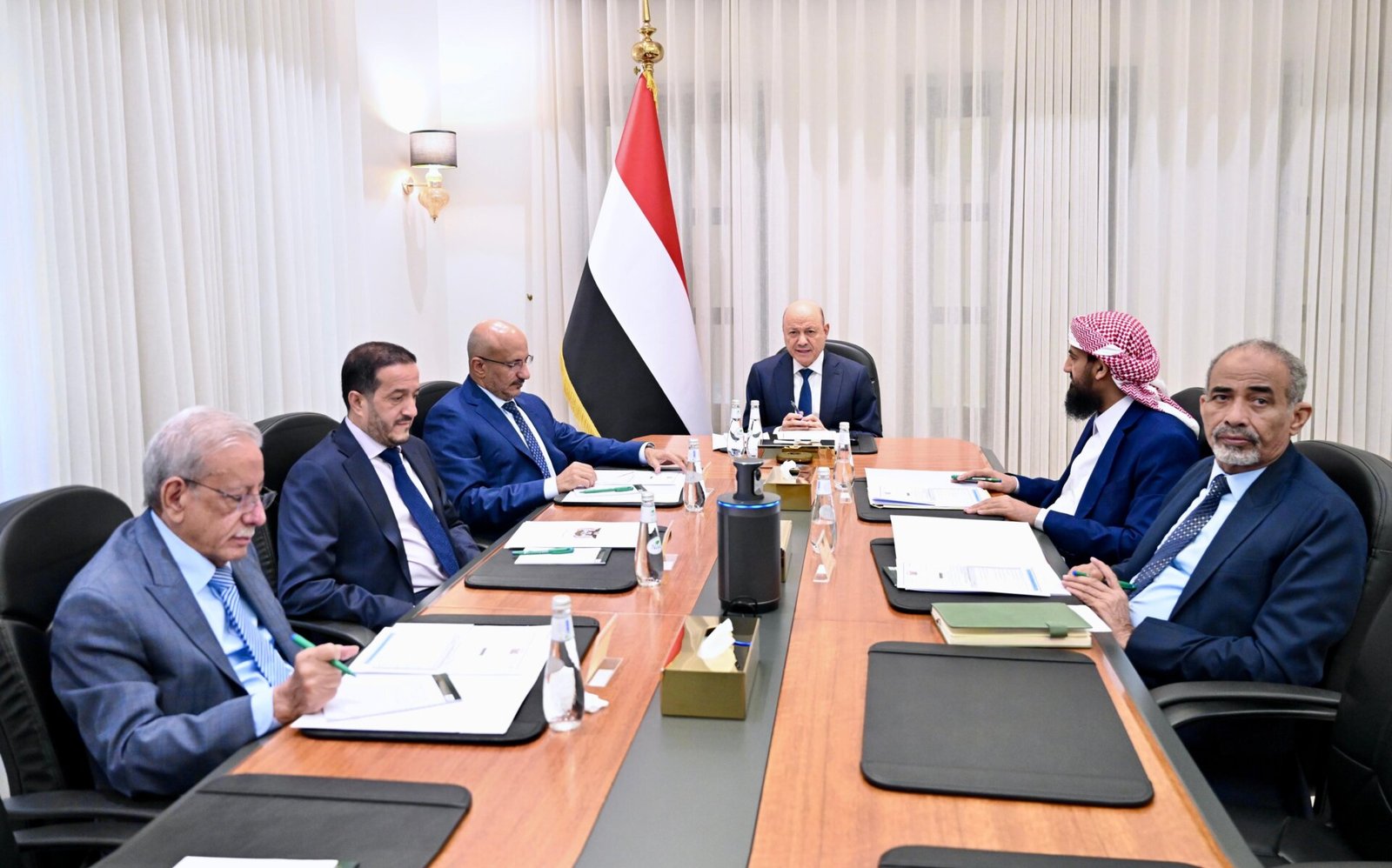
Yemen’s Presidential Leadership Council held a meeting on Monday under the chairmanship of Dr Rashad al-Alimi, gathering its members to review a wide range of economic, security and administrative matters at a moment when the internationally recognised government is seeking to demonstrate momentum on reform. The session was attended in person by council members Tariq Saleh, Abdulrahman al-Mahrami, Othman Mujalli and Mahmoud al-Subaihi, while Sultan al-Arada, Dr Abdullah al-Alimi and Salem al-Khanbashi took part via video link, underscoring the dispersed nature of a leadership body whose work spans several locations.
Much of the discussion centred on the progress of economic, financial and administrative reforms intended to support recovery, improve the delivery of public services and reinforce stability in Aden and other areas under government control. The council examined economic performance indicators alongside updates on the government’s programme and the state budget, weighing measures to strengthen essential services while confronting the obstacles that continue to hamper their provision. The emphasis throughout was on translating plans into tangible improvements that ordinary Yemenis can feel in their daily lives.
On security, the council reviewed conditions in regions freed from Houthi control and considered approaches to the challenges that persist there. Members praised the work of military and security forces, particularly their investigations into recent assassinations, and reaffirmed a commitment to combating terrorism and holding those responsible to account. Internal security has become a pressing concern in the temporary capital and surrounding areas, where periodic violence has tested the government’s ability to assert authority and protect civilians and officials alike.
The leadership pointed to recent institutional steps as evidence of progress, citing the establishment of a supreme committee for tenders and auctions and the creation of a body dedicated to the care of those wounded in the war. Such measures were presented as part of a broader drive toward more transparent and accountable governance. The council urged the government to build on these foundations and to accelerate the implementation of approved plans, identifying the fight against smuggling, the sound management of local revenues and greater efficiency in public spending as immediate priorities.
Those directives reflect a recognition that credibility at home and abroad depends on visible results. Strengthening state institutions, the council suggested, is essential not only for effective administration but also for rebuilding public trust and reassuring international donors whose support remains vital. With the government’s finances under severe strain after years of conflict, the careful handling of revenue and expenditure has taken on heightened importance, as has the need to curb the illicit trade that deprives the state of resources.
The meeting also offered an occasion to acknowledge external support, with the council expressing gratitude for Saudi Arabia’s continued assistance. Particular mention was made of the extension of the Masam mine-clearance project, a Saudi-funded initiative that has removed more than half a million landmines and explosive remnants of war across Yemen and that has recently entered a further year of operations. The council also commended the Saudi Development and Reconstruction Programme for Yemen for delivering projects in sectors such as electricity and infrastructure across a number of governorates, work that directly affects living conditions in liberated areas.
Beyond domestic affairs, the council turned to wider political, security and regional developments and their bearing on Yemen’s situation. Members discussed the steps that may be required in the period ahead to navigate a complex environment, stressing the need to align national strategies with shifting regional dynamics. The Houthi movement’s capabilities and the external backing it receives featured in those deliberations, as the council weighed how regional tensions could shape the calculations of all parties to the conflict.
As part of its routine oversight, the council examined follow-up reports on earlier decisions and recommendations, assessing rates of implementation and identifying the obstacles that have slowed progress. Corrective measures were discussed with the aim of keeping the leadership’s strategic objectives on track, a process intended to impose discipline on a reform agenda that has often struggled to move from declaration to delivery. The attention to monitoring reflected an awareness that announcements alone do little to change conditions on the ground.
The backdrop to these deliberations remains a grinding conflict that has continued since 2015 and a humanitarian emergency of vast scale. United Nations estimates put the number of Yemenis in need of assistance at around 19.5 million in 2025, with roughly 4.8 million people displaced by the war. Basic services have been battered, the economy has contracted sharply and the country has endured major disease outbreaks, including cholera, linked to the collapse of water and sanitation systems. Against that reality, the council’s reform efforts carry consequences that extend well beyond the realm of policy.
The success of these initiatives will depend heavily on cooperation with regional partners, with Saudi Arabia continuing to play a central role in both humanitarian relief and reconstruction. The response of the wider international community, in funding and in diplomacy, is likely to shape the trajectory of any recovery. For the Presidential Leadership Council, the challenge is to convert its stated priorities into governance that meets the needs of a population worn down by war, and to lay the groundwork for a more stable future even as the conflict and its regional complexities remain unresolved.
About the Author




