Project Masam Clears 2,164 Explosives in Yemen in Final Week of June 2026
 Yemen Herald News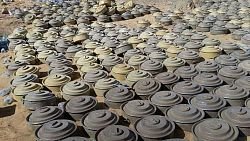
Yemen’s long war has left behind a hidden hazard that continues to kill and maim long after the fighting in any given area subsides: landmines and other explosive remnants of conflict scattered across farmland, roads, villages and water sources. The Saudi-funded Project Masam, operated under the King Salman Humanitarian Aid and Relief Centre, has made the removal of those devices its central mission, and its latest figures underline both the scale of the contamination and the steady progress of clearance teams working across the country’s liberated areas.
According to the project’s operational reporting, demining teams cleared 6,786 landmines and explosive remnants of war throughout June 2026. The bulk of that work came earlier in the month, with 4,622 items removed during the first three reporting weeks. The final week of June accounted for the remaining 2,164 devices, a tally made up of 81 anti-tank mines, six anti-personnel mines, 2,072 items of unexploded ordnance and five improvised explosive devices. That breakdown is typical of what Masam teams encounter, as the overwhelming majority of recovered items are unexploded ordnance left over from active combat rather than mines deliberately laid, though both pose lethal risks to anyone who stumbles upon them.
The cumulative numbers are striking. Since operations began in July 2018, Project Masam has located and cleared 571,125 landmines and explosive threats across Yemen, based on figures covering activities up to 26 June 2026. That total comprises roughly 7,515 anti-personnel mines, 151,892 anti-tank mines, 403,170 items of unexploded ordnance and 8,548 improvised explosive devices. The figures reflect nearly a decade of sustained effort and the sheer density of contamination in areas that have seen front lines shift repeatedly since the conflict escalated in 2015.
Yemeni and Saudi authorities have consistently attributed much of the mine-laying to Houthi forces, who are widely accused of planting devices in agricultural land, residential areas and along routes used by civilians. Whatever their origin, the consequences fall heaviest on ordinary people. Children, farmers, herders and returning displaced families are among the most frequent victims, and incidents continue to occur. In late June, a landmine blast in the village of Al-Ribi, in Al-Dhale governorate, killed five children and injured nine others, a tragedy that drew condemnation from Yemen’s National Mine Action Committee and served as a grim reminder of why the clearance work matters.
The danger posed by these devices extends well beyond the immediate toll of death and injury. Contaminated land cannot be safely farmed, grazed or built upon, which deepens food insecurity and obstructs the return of displaced families to their homes. Mines along roads disrupt the movement of people and the delivery of humanitarian aid, complicating an already overstretched relief operation. In a country where the United Nations estimated that around 19.5 million people needed humanitarian assistance in 2025 and roughly 4.8 million remained displaced, the presence of explosives is not a peripheral problem but a direct obstacle to recovery and stability. Compounding the difficulty, Yemen’s 2025 humanitarian response plan was only about a quarter funded, forcing aid agencies to scale back services even as needs continued to grow, which makes every hectare of land returned to safe use all the more consequential.
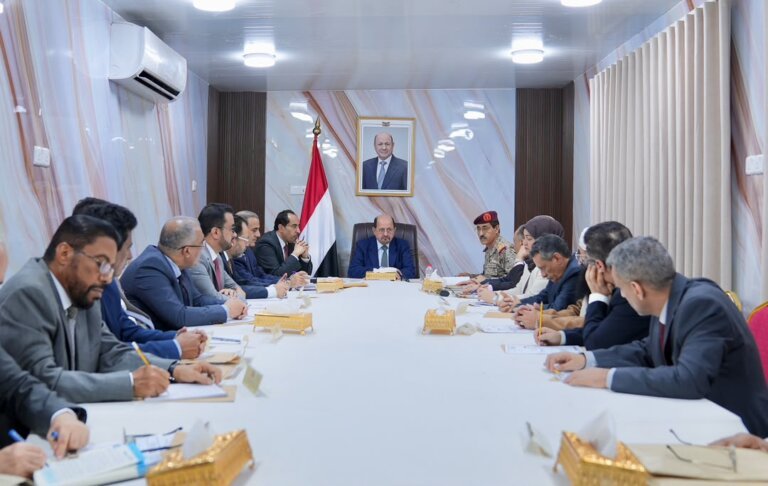
Project Masam has expanded its capacity to meet that challenge. Its managing director, Ousama Algosaibi, has described the growth of the operation to dozens of demining teams as Yemen’s mine crisis persists, and the project recently marked the start of a ninth consecutive year of operations. That milestone was acknowledged by senior Yemeni figures, including Presidential Leadership Council chairman Dr Rashad Al-Alimi, who welcomed the renewal of the project as a long-term investment in the lives and future of the Yemeni people, and the country’s information minister, who visited the project’s headquarters in Marib to congratulate the teams.
The work itself is painstaking and dangerous. Teams composed of Saudi professionals, international specialists and trained Yemeni deminers survey suspected areas, identify devices and either neutralise them on site or remove them for controlled destruction. Each item recovered represents a potential casualty avoided, but the pace of clearance must contend with the continued laying of new devices in some areas and with the difficulty of reaching contested or remote terrain. Officials involved in the effort have repeatedly stressed that sustained funding and international support are essential if the operation is to keep pace with the threat.
For the communities living alongside this danger, the value of mine clearance is immediate and tangible. Land returned to safe use allows farmers to plant again, families to rebuild and children to walk to school without fear. Demining is therefore not only a technical undertaking but a foundation for broader humanitarian recovery, enabling aid to flow and reconstruction to begin in areas that have been paralysed by fear. As the conflict’s wider political resolution remains uncertain, the steady reduction of explosive hazards offers one of the few measurable forms of progress on the ground.
The figures released for June 2026 capture a single month in a much longer campaign, but they illustrate the rhythm of an operation that has become a fixture of Yemen’s humanitarian landscape. With more than half a million devices already cleared and thousands more being removed each month, Project Masam’s task is far from complete, yet each week’s tally marks another increment of land made safer for the people who must live on it.
About the Author