Yemen’s Shura Council Backs National Unity and Political Leadership at Cairo Meeting
 Yemen Herald News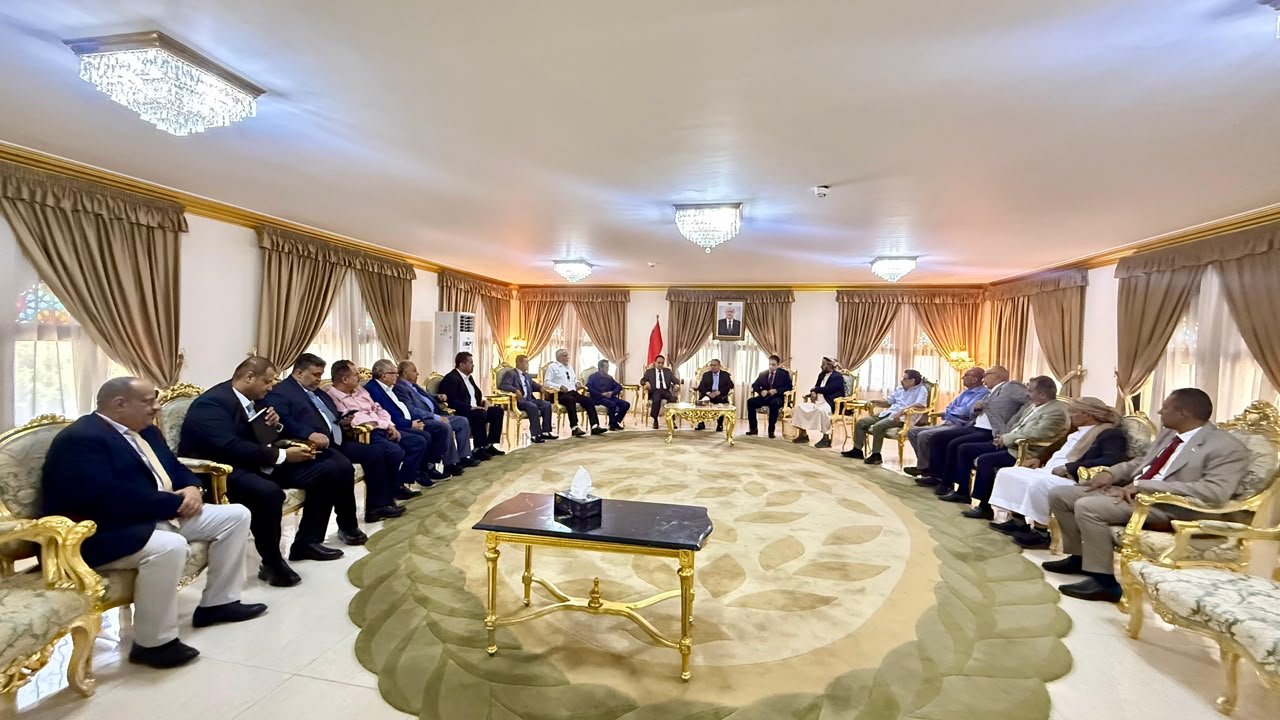
The presidency of Yemen’s Shura Council convened on Monday in Cairo under the chairmanship of Dr Ahmed Obaid bin Daghr, holding a session devoted to the political, economic and security challenges confronting the country amid a volatile national and regional landscape. The meeting offered the council’s leadership an opportunity to assess the state of the conflict and to reaffirm its support for the institutions of the internationally recognised government as Yemen navigates a prolonged and damaging war. The gathering came as bin Daghr, a former Yemeni prime minister who has chaired the Shura Council since 2021, was in the Egyptian capital, where Arab parliamentary leaders have convened for regional talks, a setting that lent his remarks an audience beyond Yemen’s borders.
At the heart of the discussion was the theme of national unity. Bin Daghr stressed that the gravity of the current moment demands cooperation among all parties and a willingness to rally behind the political leadership in order to confront the economic and security difficulties weighing on the nation. Strengthening the capacity of state institutions, he argued, is essential both to stabilise the country and to meet the aspirations of ordinary Yemenis for security, services and a measure of normal life after years of upheaval.
The chairman affirmed what he described as the Shura Council’s unwavering commitment to its constitutional responsibilities, including defending state institutions and backing efforts to restore governance, improve security and advance the search for peace. That framing reflects the council’s role within the broader architecture of Yemen’s recognised government, in which it functions as a consultative body alongside the executive and the House of Representatives, lending political weight to the campaign to reassert legitimate authority.
Bin Daghr situated the council’s stance within the wider effort led by the Presidential Leadership Council under Dr Rashad Mohammed al-Alimi, which has consistently presented itself as favouring a peaceful resolution to the conflict. He contended, however, that the Houthi movement’s continued intransigence and its rejection of regional and international peace initiatives demonstrated an unwillingness to ease the suffering of Yemenis, an obstinacy that he said continued to block progress toward a negotiated settlement.
Against that backdrop, the chairman appealed to the international community to shoulder its responsibility by intensifying pressure on the Houthis. He called for their genuine engagement in a credible peace process grounded in the agreed terms of reference that have long underpinned diplomatic efforts, with the aim of ending what the government describes as a coup and restoring the functioning of state institutions disrupted by years of fighting. The plea echoed a recurring demand from Yemen’s recognised leadership for firmer external backing.
The council’s presidency also commended the government’s recent efforts to manage the difficulties of the current phase and to preserve the unity and integrity of state institutions. It welcomed initiatives aimed at economic and administrative reform, presenting them as steps toward improving living conditions and easing the humanitarian pressures that have spread across the country. Such reforms have become a central plank of the government’s agenda as it seeks to demonstrate competence and rebuild trust at home and with international partners.
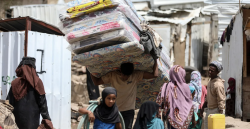
Despite the obstacles, the council urged that reform efforts continue and that essential public services be strengthened for a population enduring severe hardship. The scale of need remains immense: United Nations estimates put the number of Yemenis requiring humanitarian assistance at around 19.5 million in 2025, with roughly 4.8 million people displaced by the conflict. Years of war have battered the economy and basic services, leaving large numbers of families dependent on aid and acutely vulnerable to any disruption in its delivery.
Security and stability in areas freed from Houthi control featured prominently in the deliberations. The council’s presidency stressed that durable peace in those regions depends on bolstering the capacity of the armed forces and security services, and on supporting them in carrying out their national duties. Those duties, it noted, include combating terrorism, enforcing the law and holding to account those who violate it, priorities that have taken on added urgency amid episodes of instability in the temporary capital and elsewhere.
The geopolitical environment surrounding Yemen adds further complexity to the picture. The country sits at the intersection of significant regional tensions, and the influence of Iran, exercised in part through its support for the Houthis, complicates the search for peace and forces local and international actors alike to weigh their positions carefully. Yemen’s location beside the Bab al-Mandab Strait, one of the world’s most strategically sensitive maritime passages, lends its stability an importance that extends well beyond its borders. Yemeni officials have repeatedly warned that threats to shipping in this corridor, including attacks linked to the Houthis, carry consequences for global trade and reinforce the case for international attention to the country’s plight.
As the situation continues to evolve, the outlook remains uncertain, underscoring the need for concrete steps toward resolving the conflict. The Shura Council’s emphasis on dialogue and collective effort reflects a recognition that Yemen’s future depends not only on the political will of its own leaders but also on sustained engagement from the international community. Whether that combination can be mustered in the period ahead will shape the prospects for the peace, stability and development that Yemenis have long been denied.
About the Author