Yemen’s Planning Minister Courts Qatar, Kuwait and g7+ for Recovery Support in Hamburg
 Yemen Herald News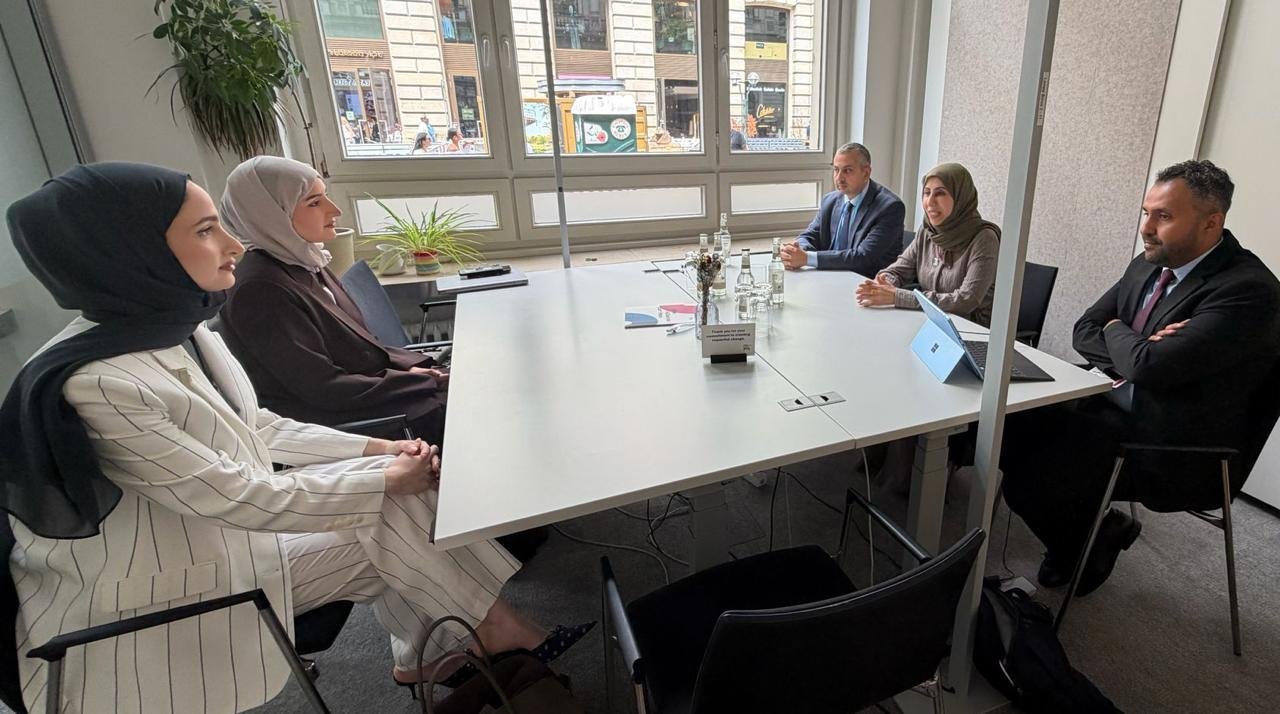
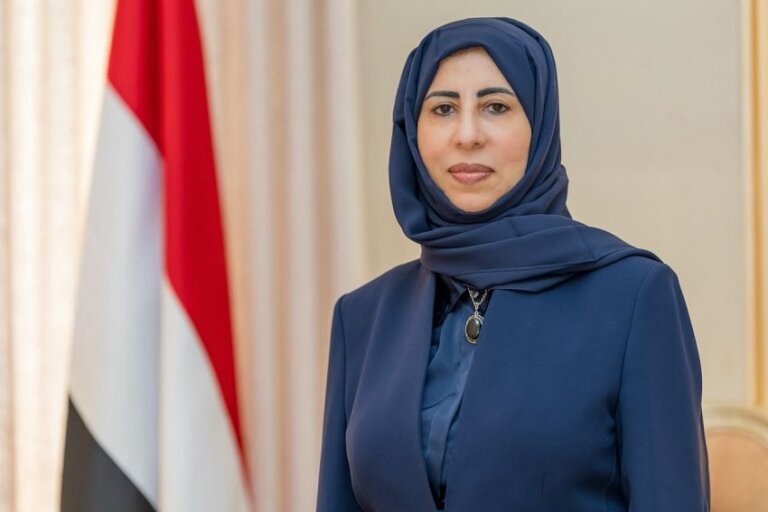
Yemen’s Minister of Planning and International Cooperation, Dr Afrah Abdulaziz al-Zouba, used the sidelines of the Hamburg Sustainability Conference 2026 to press international partners for stronger backing for her country’s battered economy and public services. Across a series of meetings on the margins of the German-hosted gathering, she sought to convert broad expressions of goodwill into concrete development projects for a nation still struggling to recover from more than a decade of war, positioning Yemen as a partner ready to move from emergency relief toward long-term planning.
One of the central discussions brought al-Zouba together with Haya al-Thani, Deputy Director-General of Planning at the Qatar Development Fund. The two sides reviewed the Yemeni government’s priorities across the health, education, energy and water sectors, areas in which the collapse of infrastructure and public financing has left millions without reliable services. Both signalled an intention to shape a joint plan of action capable of evolving from dialogue into practical, fundable initiatives rather than remaining a set of unmet aspirations.
The meeting, attended by Yemen’s Ambassador to Germany, Louay al-Eryani, was framed around the country’s wider drive for economic reform and greater private-sector engagement. For a government whose revenues have been hollowed out by conflict, partnerships with established donors such as the Qatar Development Fund offer a route to financing reconstruction while attempting to restore a measure of institutional stability at home. Officials cast the talks as part of a broader effort to rebuild confidence among external backers.
Al-Zouba also held talks with the Secretary-General of the g7+, the intergovernmental group of fragile and conflict-affected states of which Yemen is a member. Their conversation centred on strengthening cooperation and coordination among fragile nations and on carrying shared concerns to influential forums such as the United Nations Security Council and the G20. Yemen was presented as a case study of the compounded challenges these states face, and of the need for sustained international attention rather than episodic engagement.
On the same margins she met the Director-General of the Kuwait Fund for Arab Economic Development, Waleed al-Bahar, and Germany’s Minister of State at the Federal Ministry for Economic Cooperation and Development, Niels Annen, to discuss expanding development cooperation with Yemen. The spread of meetings reflected a deliberate strategy of courting several donors at once, seeking to align their support behind a single set of national priorities rather than a patchwork of unconnected pledges that would be harder to coordinate and sustain.
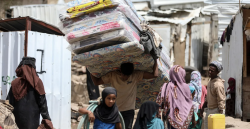
The appeals come against the backdrop of one of the world’s gravest humanitarian emergencies. The United Nations estimates that more than 22 million people in Yemen will require humanitarian assistance and protection in 2026, including roughly 5.2 million who have been displaced from their homes. Around 18.3 million people are acutely food insecure, and recurrent disease outbreaks, economic decay and damaged infrastructure continue to erode the resilience of communities already pushed to the very edge of survival.
Al-Zouba urged the international community to help fragile states withstand these shocks, noting that many of the pressures bearing down on Yemen originate beyond its borders and require cooperative solutions. Reduced access to clean water, climate stress and deepening food insecurity, she warned, are compounding hardship in a country where basic services have been stretched to breaking point, and where declining international funding threatens to unravel gains that have been painstakingly achieved.
Yemen’s geography adds a further layer of complexity to its recovery. The country sits astride the Bab al-Mandab Strait and the southern Red Sea, one of the world’s most important shipping corridors, and its instability has repeatedly drawn in regional and international actors. That strategic weight has at times attracted attention and resources, but it has also entangled Yemen in wider rivalries that complicate the more mundane work of reconstruction, service delivery and governance reform.
The Hamburg conference itself, a joint initiative involving the German development ministry, the United Nations Development Programme and the city of Hamburg, was organised around themes of resilient economies, sustainable energy and international cooperation. For a delegation from one of the world’s poorest and most fragile states, the forum offered rare access to a concentration of donors, development banks and multilateral officials in a single setting, and a platform to make Yemen’s case to decision-makers who rarely gather together.
Beyond Hamburg, Yemeni officials have engaged the World Bank on a new country partnership framework aligned with a national development plan described as the first comprehensive strategy of its kind in years, while the minister has held separate discussions with United Nations agencies on strengthening humanitarian coordination and the transition toward sustainable development. Taken together, these efforts reflect an attempt to knit scattered donor relationships into a more coherent strategy built around agreed national priorities.
The task facing al-Zouba’s ministry remains formidable. Years of fighting have fractured Yemen’s institutions, weakened the currency and left public salaries irregular across large parts of the country, deterring the private investment that reconstruction ultimately depends on. Turning conference commitments into disbursed funding and completed projects has often proved slow, and officials are acutely aware that donor fatigue and competing global crises can quickly divert money elsewhere. Even so, the engagements in Hamburg mark a modest step toward longer-term development planning, and cooperation with partners such as the Qatar Development Fund could, if realised, give citizens tangible reasons for hope.
About the Author