Yemen’s Agriculture Minister Calls Governance Essential to Smart Farming at FAO Global Conference
 Yemen Herald News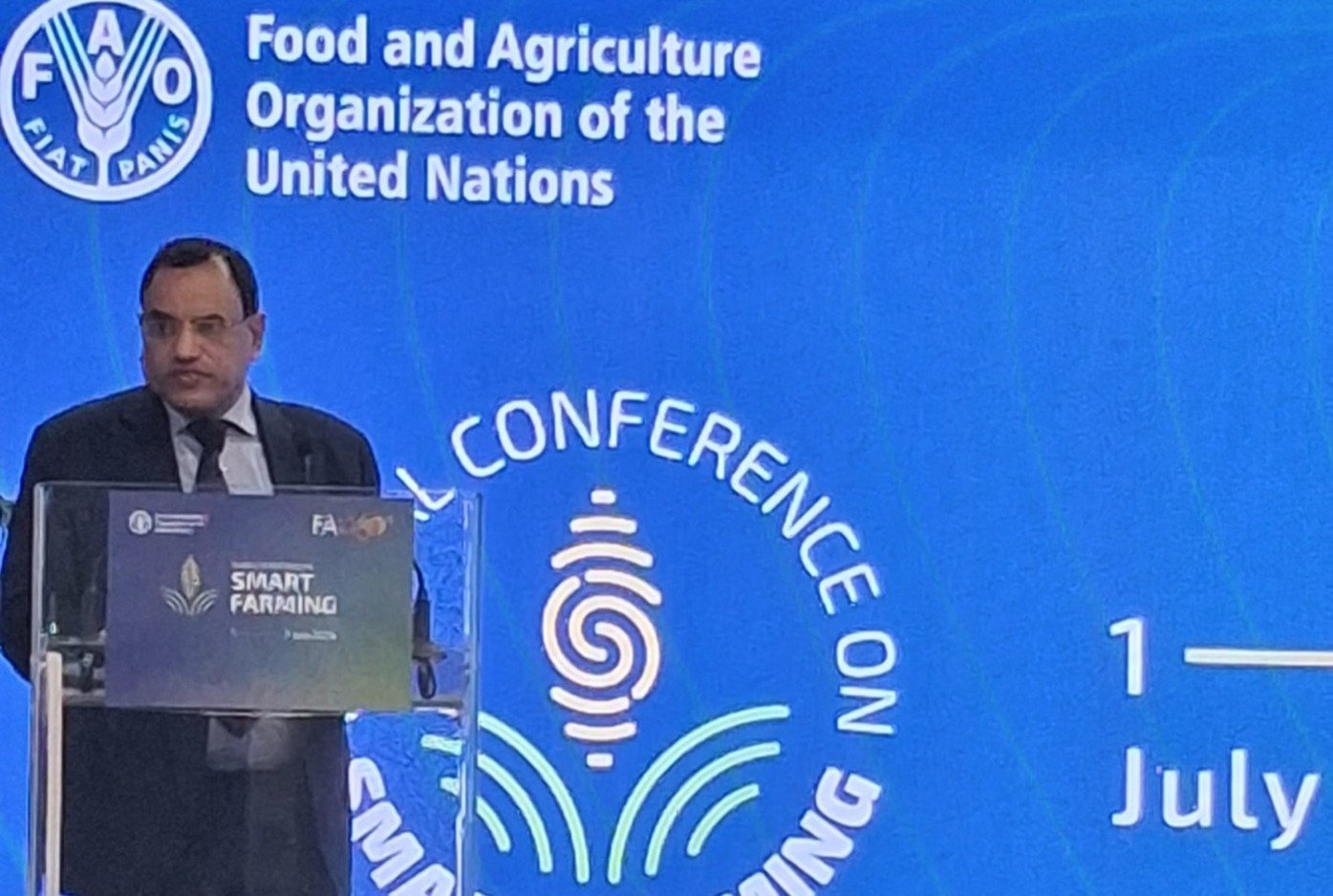
The Food and Agriculture Organization of the United Nations opened its first-ever Global Conference on Smart Farming in Rome this week, and Yemen used the platform to press a pointed argument: technology alone will not transform agriculture unless strong governance stands behind it. Salem Al-Soqtari, Yemen’s Minister of Agriculture, Irrigation and Fisheries, led his country’s delegation to the three-day gathering at FAO headquarters, telling a high-level roundtable that effective governance is essential to advancing food security and achieving sustainable agricultural development.
Speaking during the session titled “Governance for Inclusive and Sustainable Smart Agriculture,” Al-Soqtari said the benefits of digital innovation and emerging technologies will reach farmers, and especially small-scale producers, only if governments build the institutional foundations to support them. He framed governance not as a bureaucratic afterthought but as the mechanism that decides whether new tools are adopted widely and fairly or remain confined to a well-resourced few.
Building an enabling environment for smart agriculture, the minister argued, requires coordinated action on several fronts at once. He called for modernizing institutional frameworks, adopting policies that actively support digital transformation in farming, and investing in the digital infrastructure and agricultural information systems that make data-driven decisions possible. Strengthening farmers’ technical skills matters just as much, he added, pointing to partnerships with international organizations, the private sector, and research institutions as the route to closing capability gaps in the field.
The conference, the first of its kind convened by FAO, brought together policymakers, development partners, private-sector representatives, civil society organizations, researchers, and agricultural specialists from around the world. Over three days, delegates examined how to expand climate-smart agricultural systems and accelerate the adoption of innovative farming practices, with governance, financing, and inclusion recurring as central themes across the sessions.
On the sidelines of the conference, Al-Soqtari also held a bilateral meeting with FAO Director-General Qu Dongyu, part of a series of exchanges between Yemeni officials and an organization that has become one of the country’s most important partners on food security. FAO has maintained a substantial presence in Yemen throughout the war, supporting farmers, herders, and fishing communities whose livelihoods have been disrupted by the conflict and by repeated economic shocks.
For Yemen, the stakes attached to those discussions are unusually high. The country remains mired in one of the world’s most severe humanitarian crises, with more than 18 million people dependent on humanitarian assistance after years of conflict that escalated sharply in 2015. Agriculture, once a mainstay of rural livelihoods, has been battered by fighting, displacement, a collapsing currency, and worsening water scarcity, leaving millions of people food insecure. Even before the war, Yemen relied on imports for the large majority of its staple food, and that dependence has left it acutely exposed to price spikes and supply disruptions in global markets.
Against that backdrop, Al-Soqtari pointed to a series of initiatives intended to lift productivity while conserving scarce resources. They include expanding greenhouse cultivation, introducing hydroponic growing techniques, and promoting modern irrigation methods such as drip and center-pivot systems. Each is designed to raise yields while optimizing water use, a critical concern in a country where erratic rainfall and depleted aquifers make every liter count.
Smart farming, the concept at the heart of the Rome gathering, refers to the use of digital tools, data, and connected technologies to make agriculture more precise and efficient. The methods range from sensors and satellite mapping to mobile advisory services and automated irrigation, all aimed at helping producers use land, water, and inputs more effectively while cutting waste and lowering the environmental cost of food production.
By folding climate-smart practices into these programs, officials hope to build resilience against the environmental pressures increasingly weighing on crop production. Rising temperatures, unpredictable rainfall, and prolonged dry spells have all made traditional farming less reliable, and the ministry has presented smart agriculture as a way to adapt rather than simply endure the changing conditions.
Delivering on that vision, the minister acknowledged, will depend on sustained cooperation among many actors, including government bodies, private enterprises, and academic institutions. The multi-stakeholder approach is meant to ensure that technological gains do not occur in isolation but feed into broader agricultural development that reaches ordinary producers rather than a narrow elite.
Yemen’s geography lends its agricultural ambitions a wider significance as well. The country sits alongside the strategic Red Sea and the Bab al-Mandab Strait, one of the world’s busiest shipping corridors, and officials have long argued that a more stable rural economy could help ease some of the pressures that have made the wider region a flashpoint in recent years.
The outlook Al-Soqtari sketched was cautiously optimistic. If Yemen can implement its smart-agriculture plans and engage effectively with international partners, he suggested, it could begin to rebuild a sector capable of feeding its own population. Continued external support and investment, he added, would be crucial to turning pilot projects into lasting change on the ground.
Ultimately, he said, realizing the full promise of smart agriculture will hinge on the strength of governance frameworks and the willingness of diverse stakeholders to work together. With that combination in place, Yemen could move beyond meeting immediate food needs toward building a more durable agricultural foundation for the years ahead.
About the Author