
Yemen’s Agriculture Minister Joins FAO Global Conference on Smart Farming in Rome
 Yemen Herald News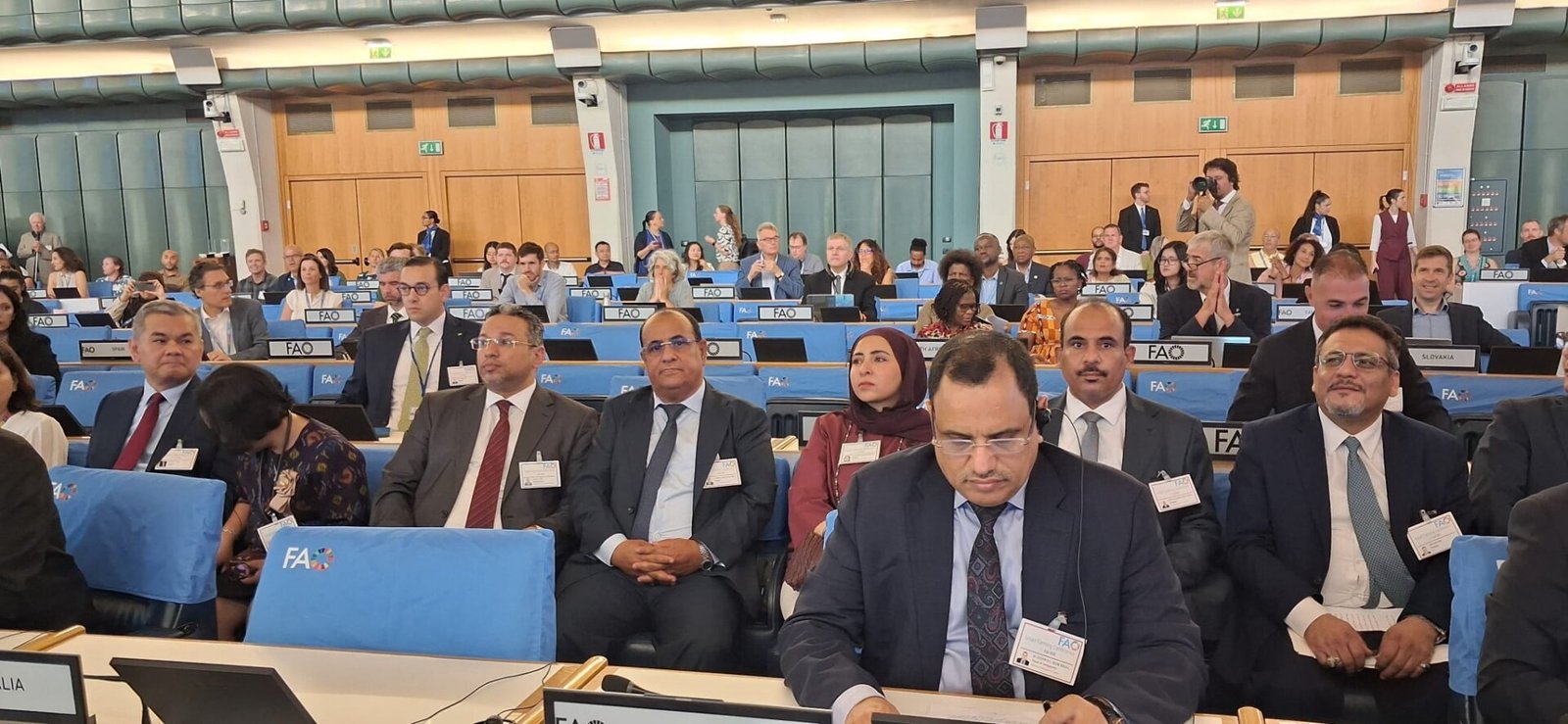
Yemen’s Minister of Agriculture, Irrigation and Fisheries, Salem al-Soqtari, is representing his country at the Food and Agriculture Organization’s Global Conference on Smart Agriculture, which has opened in Rome. The three-day gathering has drawn policymakers, private-sector representatives, civil society organisations, researchers and agricultural experts from around the world, united by a common concern: how to sustain and improve food production in the face of a changing climate.
The conference is centred on climate-smart agriculture, an approach that seeks to raise productivity, build resilience to climate shocks and reduce the environmental footprint of farming at the same time. By bringing together a broad range of participants, organisers hope to encourage a wide-ranging dialogue on policy frameworks, investment strategies and international partnerships capable of turning these principles into practical solutions adapted to local conditions.
For Yemen, the themes under discussion are far from abstract. The country is among the most water-scarce in the world, and its farmers face a combination of erratic rainfall, prolonged drought and the steady depletion of groundwater. Layered on top of these environmental pressures is a civil war that has disrupted production, damaged infrastructure and severed the trade routes on which agricultural communities rely, leaving the sector deeply strained.
Al-Soqtari’s participation gives Yemen a voice in shaping the conference’s conclusions and an opportunity to press its case for support. Officials from the ministry have consistently argued that rebuilding agriculture is essential both to feeding the population and to reviving a rural economy that once employed a large share of the workforce. The exchange of ideas in Rome, they hope, will yield strategies that can be tailored to Yemen’s particular circumstances.
Smallholder farmers are a central focus of the event, and they are also at the heart of Yemen’s agricultural challenge. These farmers, who make up the backbone of rural food production, typically have limited access to credit, modern inputs and reliable markets, and the war has compounded each of these difficulties. Techniques that boost yields while requiring fewer resources could be especially valuable in such a setting.
The emphasis on locally adapted solutions resonates with the ministry’s own priorities. Generalised strategies, officials note, often fall short when applied to the diverse and war-affected landscapes of Yemen, where conditions vary sharply between the highlands, coastal plains and arid interior. Approaches that reflect the realities faced by individual communities are more likely, they argue, to take root and deliver lasting benefits.
Yemen also brings a distinctive agricultural heritage to such conversations. Its ancient terraced farming systems, carved into mountainsides over centuries, and its renowned coffee, long prized in international markets, illustrate a tradition of adapting cultivation to a demanding environment. Preserving and modernising this heritage, officials argue, is part of the wider task of rebuilding an agricultural sector that can support both livelihoods and national identity.
Food security remains one of the gravest aspects of Yemen’s humanitarian crisis. The United Nations estimates that around 18 million people require assistance, and years of conflict have pushed many families into hunger. Because the country imports a large proportion of its food, disruptions to global markets or shipping can quickly translate into higher prices and greater hardship, underscoring the value of strengthening domestic production wherever possible.
Climate-smart practices discussed at gatherings such as this one range from drought-resistant seed varieties and efficient irrigation to soil conservation, improved water harvesting and the use of data to guide planting decisions. For a country as water-stressed as Yemen, methods that make the most of scarce resources hold particular promise, though implementing them at scale requires investment, training and functioning institutions.
International development partners were present in force at the conference, reflecting a collaborative effort to tackle shared challenges. Governments, agencies and organisations use such forums to exchange successful strategies and identify investment opportunities, and for a country like Yemen, engagement with this network can open doors to funding and expertise that would otherwise be difficult to secure amid the constraints of conflict.
The FAO has long been an active partner in Yemen, supporting emergency agricultural programmes, livestock health campaigns and initiatives to protect rural livelihoods. Its convening of a conference dedicated to smart farming reflects a wider trend in which agricultural development and climate adaptation are increasingly treated as central to humanitarian and economic recovery rather than as secondary concerns.
Beyond its immediate agricultural implications, the discussion carries a regional dimension. The Red Sea region is a strategically important and contested space, and stability there is bound up with the economic wellbeing of the countries that border it. Yemeni officials have suggested that strengthening the country’s agriculture, with international backing, could contribute not only to food security but to the broader resilience of a fragile region.
Realising the ambitions voiced at such conferences, however, depends on more than good intentions. In Yemen’s case, insecurity, limited funding and the difficulty of operating across a divided country all stand in the way of large-scale change. Officials acknowledge that turning conference commitments into results on the ground will require sustained follow-through and a degree of political stability that remains elusive.
Even so, Yemen’s presence in Rome carries symbolic and practical weight. It signals that, despite the war, the government is seeking to engage with global efforts to modernise agriculture and confront climate change, and it keeps the country’s needs visible to potential partners. For al-Soqtari’s ministry, the conference represents a chance to align Yemen’s long-term agricultural planning with international thinking on sustainable and resilient farming.
About the Author




