
Yemen’s Planning Minister Meets Aid Groups in Hamburg to Improve Development Coordination
 Yemen Herald News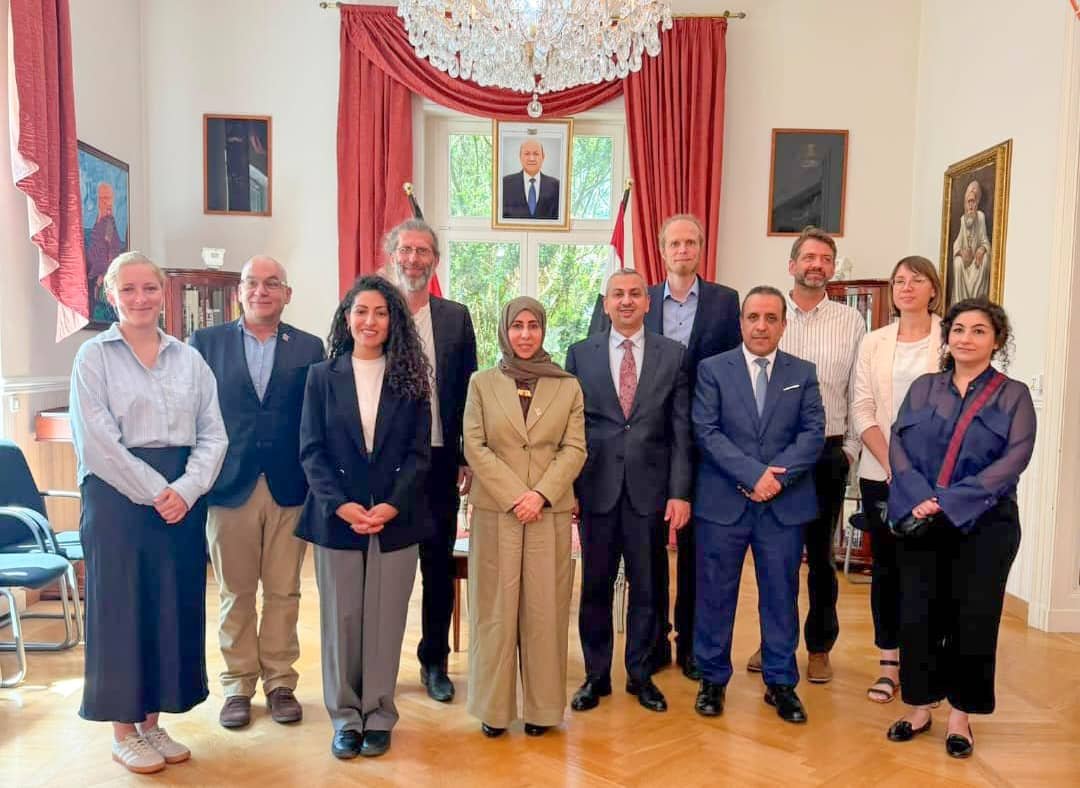
Yemen’s Minister of Planning and International Cooperation, Dr. Afrah Al-Zouba, has used the sidelines of the Hamburg Sustainability Conference 2026 to press international aid organisations for closer coordination in support of the country’s recovery. In a series of meetings, the minister sought to strengthen collaboration and smooth the delivery of humanitarian and development projects at a time when Yemen’s needs remain vast, and its resources stretched thin.
Among those she met were representatives of Vision Hope, CARE, Save the Children and Oxfam, alongside Yemen’s ambassador to Germany, Louay Al-Iryani. The talks focused on identifying the practical obstacles that hold up development work across different sectors and on finding ways to improve the way projects are implemented so that they reach the communities they are meant to help.
A recurring theme was the need for a genuine exchange of knowledge and proven practice. Participants agreed that the Yemeni government and its international partners achieve far more when they work in step, sharing lessons from past programmes to sharpen future interventions and to align their goals more closely with both the immediate and the long-term needs of the population.
Dr. Al-Zouba stressed the strategic value of these partnerships, describing them as essential to Yemen’s recovery and development. She acknowledged the substantial role that humanitarian and developmental organisations play in delivering programmes to communities living through the crisis, and the aid groups, for their part, reaffirmed their commitment to continuing that support and welcomed the ministry’s push to tighten dialogue and coordination.
The discussions also weighed innovative methods of project delivery designed to bypass the administrative and logistical bottlenecks that so often slow work on the ground. Representatives recognised that tackling these operational problems is fundamental to increasing the impact of their efforts, with an emphasis on durable solutions that build resilience rather than simply meeting the emergency of the moment.
Beyond the meetings with non-governmental organisations, the minister held talks with the World Food Programme’s acting executive director, Carl Skau. Their conversation centred on improving food access for the most vulnerable groups — particularly children and mothers — while reducing costs through mechanisms that draw on local markets and support Yemen’s own producers, farmers and fishermen. Linking relief to local economic activity has become a central plank of the government’s argument that aid should strengthen, not sideline, domestic livelihoods.
That approach reflects a broader shift in how Yemen and its partners talk about assistance. After years in which the priority was simply keeping people alive, officials increasingly frame the goal as connecting emergency relief to sustainable development, so that families can gradually rebuild their own means of support rather than remaining indefinitely dependent on outside help.
The context for all of this remains daunting. Yemen continues to endure one of the world’s gravest humanitarian emergencies, with more than half the population needing assistance and millions facing food insecurity and displacement after a decade of war. Funding shortfalls have forced aid agencies to cut back services, making the efficiency and coordination the minister championed in Hamburg all the more important.
The conflict’s geopolitics add further complexity. States in the Saudi-led coalition, notably Saudi Arabia and the United Arab Emirates, have maintained an active role in Yemen through both military and humanitarian support, while Iran’s backing of the Houthi movement pulls in the opposite direction. That rivalry complicates any attempt to build a coherent, nationwide approach to recovery and stabilisation, and shapes the environment in which aid organisations must operate.
For international partners, engagement of the kind seen in Hamburg offers a way to align their programmes with government priorities while navigating those political sensitivities. Coordinating through the planning ministry allows organisations to reduce duplication, share risk and target their resources more effectively — an increasingly urgent consideration as budgets tighten and donor attention is pulled toward competing crises elsewhere.
The minister framed continuous dialogue and joint planning as more pressing than ever, arguing that Yemen’s fragile political landscape and the lingering consequences of conflict demand sustained cooperation rather than one-off gestures. By fostering an environment of mutual support, she suggested, the government and its partners can work more effectively toward restoring a measure of stability and opportunity for ordinary Yemenis.
The Hamburg Sustainability Conference has grown into a significant forum for governments, multilateral bodies and civil society to discuss financing and partnerships for sustainable development, with particular attention to the challenges facing countries in the Global South. Yemen’s presence at such a gathering allows its officials to make the case directly to donors and implementing agencies that its recovery is both urgent and achievable, and to position long-term development, rather than open-ended relief, as the framework for future engagement.
Meetings on the margins of an international conference will not, on their own, resolve Yemen’s crisis. But the Hamburg talks illustrate the diplomatic groundwork the government is trying to lay: securing renewed commitments from major aid organisations, testing new ideas for delivering help more efficiently, and insisting that recovery must be built with Yemenis rather than delivered to them. Whether those intentions translate into measurable improvement will depend on funding, security and the difficult politics of a country still searching for a durable path out of war.
About the Author




