Southern Yemen Protests Swell in Solidarity with Hadramout as the STC Denounces Crackdown
 Yemen Herald News
Public demonstrations have spread across southern Yemen in a wave of solidarity with the people of Hadramout, whom the Southern Transitional Council says have faced violence and repression at the hands of security forces. A spokesman for the council described the protests as a unified expression of southern identity, arguing that any aggression against Hadramout is felt as an assault on the south as a whole and reflects what he called a shared destiny binding the region’s provinces together.
The unrest was triggered by the killing and wounding of civilians during a rally in Hadramout held in support of the STC. Reports of casualties spread quickly through the south, igniting anger in neighboring provinces and prompting residents to take to the streets. Demonstrators accused the authorities of using excessive force against peaceful protesters, and the council’s spokesman predicted that the coming days would bring further mobilization as grievances hardened into sustained popular pressure on those in power.
The confrontation follows months of escalating tension over control of Hadramout, a vast and resource-rich province on Yemen’s eastern seaboard. In late December 2025, Yemen’s Presidential Leadership Council declared a ninety-day nationwide state of emergency after the STC moved to seize control of the province. About a week later, forces aligned with the internationally recognized government and the Saudi-led coalition pushed the council out of the territory it had taken, setting the stage for the standoff that has since fueled the protests.
Throughout early 2026, crowds gathered repeatedly across southern Yemen to voice support for the STC, which had itself announced its dissolution amid the crisis, a move that only deepened uncertainty about the region’s political future. Rights groups and local sources reported that government forces killed at least six people and injured dozens during clashes with demonstrators in Aden and Shabwa, and that dozens more were detained in Hadramout, accusations that sharpened the sense of grievance driving the wider movement.
By April 2026, the solidarity campaign had reached provinces well beyond Hadramout. In Al-Mahra governorate, the Al-Masila district witnessed a large rally and march organized in response to the council’s call, with participants denouncing the repression faced by demonstrators across the south and demanding accountability. Speakers reaffirmed that the restoration of an independent southern state remained, in their view, a strategic goal reflecting the will of the population, and they called for an international investigation into the alleged violations.
Human rights organizations lent weight to those complaints. Independent monitors reported apparent excessive force against protesters in southern Yemen, describing the use of live fire and mass detentions in response to largely peaceful gatherings. Such findings amplified the STC’s narrative and drew international attention to a crackdown that had unfolded largely in the shadow of the country’s broader war, reinforcing calls for restraint and for an impartial inquiry into the deaths and injuries reported in Hadramout and elsewhere.
The Southern Transitional Council has long pursued self-rule for southern Yemen, drawing on a distinct regional identity rooted in the era before the country’s 1990 unification. Although the council has fought alongside the anti-Houthi coalition, its ambitions have repeatedly put it at odds with the internationally recognized government based in Aden, producing a fraught relationship of alliance and rivalry. The Hadramout crisis has exposed those fault lines anew, testing the fragile arrangements that have kept the southern factions and the government uneasily aligned.
Analysts say the protests carry significant political weight. A visible show of popular support strengthens the STC’s claim to speak for the south and pressures rival authorities, while the mobilization risks further fragmenting an already splintered political landscape. Control of Hadramout, with its oil resources and long coastline, is a prize that multiple actors covet, and the province’s fate is likely to shape the balance of power among the coalition, the recognized government and the southern movement for years to come.
The government and coalition, for their part, have framed their intervention in Hadramout as a matter of restoring state authority and preventing a unilateral seizure of a strategically vital province. Officials aligned with the Presidential Leadership Council have cast the emergency measures as necessary to preserve national cohesion, rejecting the argument that force was used indiscriminately against civilians. The competing narratives, each amplified by supporters on the ground and online, have made an independent accounting of events all the more important and all the harder to achieve.
Regional powers loom large over the contest. Saudi Arabia has deepened its footprint in Hadramout and the wider south, and reports have described it consolidating influence over the region’s security and administration. That involvement adds another layer to a struggle already crowded with competing interests, and it complicates the STC’s push for autonomy, since the council’s fortunes depend in part on the calculations of the external patrons who help underwrite Yemen’s rival camps and their armed forces.
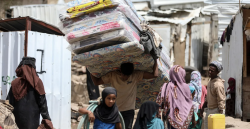
All of this unfolds against the backdrop of a humanitarian emergency of staggering scale. United Nations agencies estimated that around 19.5 million Yemenis needed assistance in 2025, with roughly 4.8 million displaced and some 18 million facing acute hunger, while recurring outbreaks of cholera and measles strained a collapsing health system. For many southerners, those deprivations are inseparable from their political demands, lending the protests an urgency that blends calls for accountability with a desperate plea for relief and better governance.
About the Author