Yemen’s Agriculture Minister and FAO Discuss Stronger Cooperation on Plant Protection
 Yemen Herald News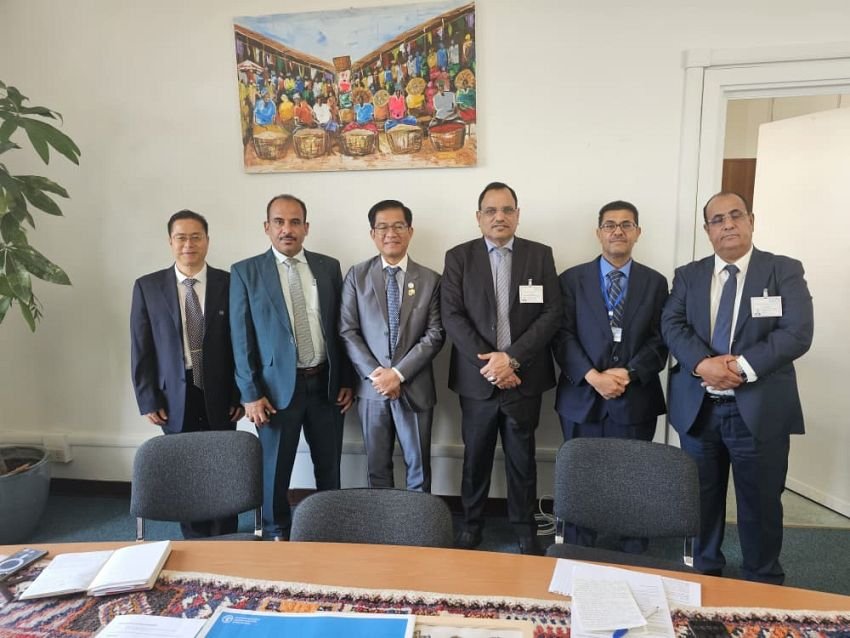
Yemen’s Minister of Agriculture, Irrigation and Fisheries, Salem al-Soqtari, has met a technical team from the Food and Agriculture Organization of the United Nations (FAO) to discuss strengthening cooperation on plant protection and agricultural development. The talks came as the country contends with the compounding pressures of war, economic collapse and environmental stress, all of which have weakened a farming sector that millions of Yemenis depend on for food and livelihoods.
The discussions focused on enhancing technical cooperation in plant protection, the management of transboundary pests and the regulation of agricultural inputs such as pesticides, fertilisers and seeds. Officials examined how to improve Yemen’s plant quarantine system, digitise border inspection procedures and establish central laboratories capable of identifying pests and testing for pesticide residues, measures intended to protect crops and consumers alike.
Al-Soqtari emphasised the urgency of building a robust partnership with the FAO, pointing in particular to the smuggling of illegal pesticides and fertilisers and to weak border controls. These problems, he said, have heightened the risk of pest invasions and further undermined agricultural output, making outside technical support and expertise all the more important for a ministry whose resources have been stretched thin by years of conflict.
Among the specific threats discussed were the desert locust and the red palm weevil, pests capable of devastating crops and palm groves if left unchecked. The two sides considered support for programmes to combat these threats, with particular attention to Hadramout and the Socotra Archipelago, regions whose agriculture and unique environments are especially vulnerable. Socotra, a UNESCO World Heritage site, is home to plant species found nowhere else on earth.
The FAO representatives expressed their readiness to provide technical assistance and proposed forming a joint working group, to be coordinated with the organisation’s office in Yemen and its relevant departments. The group would aim to develop a comprehensive national plant protection strategy tailored to Yemen’s circumstances, strengthening the institutional, legislative and regulatory framework needed to manage pests and safeguard the food supply.
Food security has become one of the most acute dimensions of Yemen’s humanitarian emergency. The United Nations estimates that around 18 million people need assistance, and more than four million have been displaced, while the war has disrupted farming, damaged infrastructure and severed supply chains. In a country that relies heavily on imported food, protecting domestic production is widely seen as vital to reducing dependence and cushioning the population against price shocks.
Agriculture has historically been a mainstay of the Yemeni economy, employing a large share of the workforce, particularly in rural areas. Crops such as grains, fruits, vegetables and coffee, along with fisheries along the country’s long coastline, provide both sustenance and income. The degradation of this sector during the conflict has therefore carried consequences that extend well beyond the farms themselves, affecting employment, nutrition and rural stability.
Fisheries, in particular, represent an underused source of potential growth. Yemen’s coastline along the Red Sea, the Gulf of Aden and the Arabian Sea gives it access to rich fishing grounds, and the sector has long provided food and export earnings for coastal communities. Rehabilitating fisheries infrastructure and management, officials say, could complement crop production in strengthening the country’s overall food security.
Climate pressures have added to the strain. Yemen is among the most water-scarce countries in the world, and shifting rainfall patterns, droughts and the depletion of groundwater have made farming increasingly precarious. Officials and international agencies have stressed the importance of sustainable water management and climate-resilient agriculture, framing environmental adaptation as inseparable from the goal of long-term food security.
Transboundary pests pose a particular challenge because they do not respect borders, and outbreaks in one country can quickly spread to its neighbours. The desert locust, in particular, has periodically threatened swathes of the Horn of Africa and the Arabian Peninsula, and effective control requires coordinated monitoring and rapid response across the region. Yemen’s location makes it an important link in that wider surveillance effort.
The proposed strengthening of plant quarantine and border inspection reflects a recognition that prevention is often more effective than cure. By intercepting contaminated shipments and unregulated inputs before they enter the country, authorities hope to reduce the introduction of new pests and the misuse of chemicals that can harm both crops and the environment. Digitising these processes is intended to make them faster and more transparent.
The FAO has been a longstanding partner in Yemen, supporting emergency agricultural interventions, livestock health campaigns and efforts to sustain rural livelihoods throughout the war. Its continued engagement on plant protection builds on that record and reflects a broader shift in humanitarian thinking toward measures that bolster resilience and self-sufficiency, rather than relying solely on the delivery of emergency relief.
For al-Soqtari’s ministry, the meeting offered both practical prospects and a degree of institutional reinforcement. Developing a national plant protection strategy with international backing could help restore some of the regulatory capacity eroded by conflict, while signalling to donors and partners that the government is prioritising food security. Officials indicated that follow-up work would proceed through the joint working group envisaged in the talks.
Whether these plans translate into durable improvements will depend on funding, security and the ability of state institutions to operate across a fragmented country. Nonetheless, the discussions underscored a shared understanding that protecting Yemen’s crops and farmland is essential not only to feeding its people today but to laying the groundwork for the agricultural recovery the country will need whenever a lasting peace is achieved.
About the Author