Yemen Pushes to Advance Qana Port in Shabwa to Revive Its Maritime Economy
 Yemen Herald News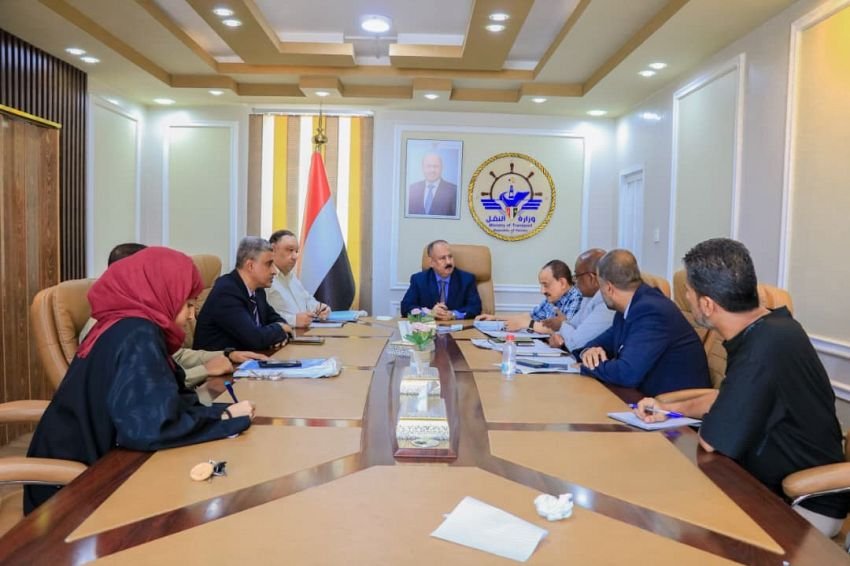
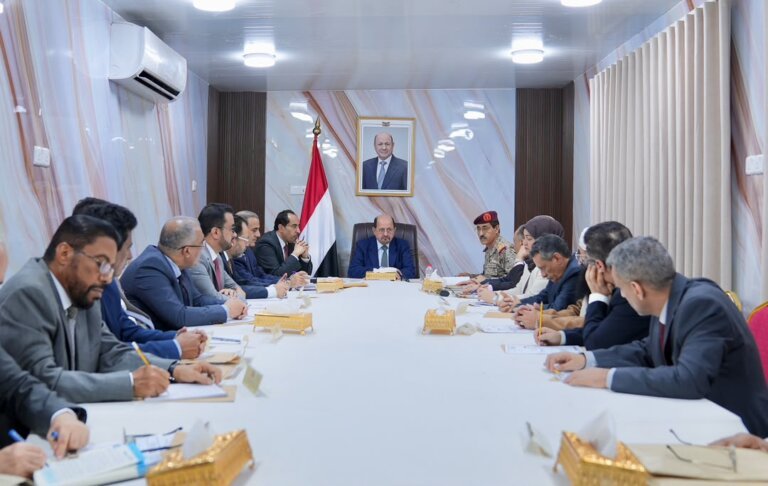
Yemen’s Minister of Transport, Mohsen al-Amri, chaired a meeting in Aden on Sunday to advance approval of the proposed Qana Port in Shabwa Governorate, a project the internationally recognised government hopes will strengthen the country’s maritime economy after more than a decade of war. Officials framed the port as a way to lift public revenues, widen legitimate trade and improve living conditions along Yemen’s southern coast, where the conflict that escalated in 2015 has left the economy severely weakened and the currency battered.
The meeting gathered members of a technical committee formed under Ministerial Decision No. 28 of 2026 to examine the legal and regulatory groundwork required before construction can begin. The committee reviewed how the Qana project fits within Yemen’s broader National Ports Strategy, a framework that separates the roles of commercial and specialised ports and sets out how each should be operated and developed. Participants also weighed the earlier phases of the project, including the technical studies and engineering designs already completed, and the steps still needed to bring the plan to formal approval.
Qana’s appeal rests largely on geography. The site sits on the Arabian Sea with natural depth, a substantial hinterland and room for berths and storage yards, qualities that supporters believe could turn it into a genuine commercial gateway rather than a minor regional harbour. Al-Amri has repeatedly described the Arabian Sea coastline of Hadramout, Shabwa and the Socotra archipelago as an underused asset, arguing that these outlets could be developed into international logistics hubs capable of restoring some of Yemen’s standing on global trade routes. Planning documents have earmarked a large tract of land for the future port and its supporting facilities, an indication of the scale of the ambition attached to the site.
The committee also set out the project’s core objectives: raising state revenue, improving the efficiency of Yemen’s existing ports and tightening oversight of maritime traffic to reduce smuggling. Illicit shipping has drained customs income and undermined legitimate importers throughout the war, so officials view stronger port governance as both an economic and a security priority. Bringing more cargo through regulated facilities, they argue, would help rebuild the customs base that the state depends on, and measures such as a single-window clearance system could make Yemeni ports faster and more attractive to shippers.
Alongside Qana, the meeting addressed the planned expansion of Mukalla Port, long regarded as a central pillar of Yemen’s maritime activity. Officials said enlarging Mukalla would help the country handle expected growth in trade and offer better services to shipping lines and importers. Improved capacity there, combined with a functioning port at Qana, could give the government two complementary outlets on the Arabian Sea and reduce the strain on any single facility.
Al-Amri pressed the committee to complete every procedural, legal and technical requirement tied to the Qana approval, and stressed that the work must serve national priorities and support economic growth across Yemen’s governorates rather than the interests of any one region. He linked the port programme to a wider push to convert long-standing feasibility studies into projects that can actually be financed and built, whether through the state’s own resources, existing agreements or support from donors.
The economic stakes are considerable. The United Nations estimates that more than 22 million Yemenis will need humanitarian assistance in 2026, with roughly 18 million people classed as acutely food insecure and millions more displaced from their homes. Functioning ports matter directly to those figures, because most of Yemen’s food, fuel and medicine arrives by sea; faster and more reliable handling at Qana and Mukalla could ease the flow of both commercial goods and humanitarian aid to a population that has endured years of shortages.
To keep the process moving, al-Amri called for a follow-up meeting bringing together the local authority in Shabwa, the Yemeni Arabian Sea Ports Corporation and the ministry’s tender committee. That session is intended to review progress, resolve outstanding technical and administrative questions and finalise the documentation needed to push the Qana project toward approval. The minister’s emphasis on coordination reflected an awareness that overlapping jurisdictions and incomplete paperwork have often stalled reconstruction efforts in Yemen.
The initiative also carries a regional dimension. The waters off southern Yemen sit close to the Red Sea and the Bab al-Mandab Strait, one of the world’s busiest and most contested shipping corridors. Competition for influence over these routes has intensified in recent years, and officials believe investment in Yemeni port infrastructure could help the country reclaim a share of the maritime traffic that passes its coast while attracting both domestic and foreign investors.
For a government still contending with conflict, projects such as Qana and Mukalla are as much about signalling as about steel and concrete. They offer a visible sign that reconstruction can move forward even amid instability. Whether the plans translate into working ports will depend on financing, security and sustained political will, but the ministry’s latest steps suggest an effort to turn ambition into a concrete programme. Officials say the coming weeks will be decisive in determining how quickly the Qana project can clear its remaining hurdles and move from paper to the water’s edge.
About the Author