Houthis Announce Israeli Spy Arrests as Abduction Wave Grips Sana’a
 Yemen Herald News
The Houthi movement has announced the detention of several people it accuses of spying for Israel, presenting the operation as a major achievement for its security services. The declaration has landed at the same time as reports from residents of Sana’a describing a fresh wave of abductions, with numerous individuals said to have been seized by Houthi forces from their homes and workplaces, prompting alarm among rights groups about a widening crackdown.
In their public statements, Houthi authorities framed the arrests as the unraveling of a foreign intelligence plot, linking the alleged network to Israeli, American, and Saudi services. Officials claimed the cell was directed from a joint operations room based outside Yemen and equipped with sophisticated espionage tools, and they suggested that some operatives had used the cover of humanitarian and aid organizations to conceal their activities.
Local sources, however, painted a different and more troubling picture of who was actually being taken. According to residents and activists, the sweep has fallen heavily on journalists, civil society figures, and professionals, many of whom have no plausible connection to espionage. That mismatch has fueled suspicion that the spy-network narrative is being used to justify a broader campaign against perceived dissent.
The parallel timing is central to the concern. As the Houthis trumpeted their counter-espionage success, dozens of people were reportedly disappearing into detention, often without formal charges or acknowledgment of their whereabouts. For families left searching for missing relatives, the official emphasis on foreign plots offered little clarity and heightened fears about the fate of those detained.
Rights advocates warn that the accusations may serve as a pretext for arbitrary arrests. The Houthis have provided some material they say implicates the alleged spies, but independent observers note that such claims cannot be verified, that details remain scarce, and that any confessions obtained in custody may have been coerced. The lack of transparency makes it difficult to separate genuine security concerns from political repression.
International bodies have taken notice. United Nations agencies and non-governmental organizations have expressed concern over staff members detained in connection with the alleged network, given the Houthis’ assertion that aid operations were exploited as cover. The targeting of humanitarian workers carries particular risk in a country where millions depend on relief, since it can disrupt the delivery of assistance and deter organizations from operating.
The episode fits a documented pattern of Houthi behavior in the territory they control. Over the course of the war, the group has periodically announced the discovery of spy rings and has detained aid workers, activists, and critics, often framing crackdowns as defensive measures against external enemies. Analysts say such campaigns serve both to project strength and to tighten control over a population living under strict authority.
For residents of Sana’a, the immediate effect is a deepening climate of fear. The prospect of being seized from home or work for questioning authority, or simply for one’s profession, discourages open expression and shrinks the already narrow space for independent journalism and civic activity. That chilling effect ripples through social and professional networks well beyond those directly detained.
The crackdown also intersects with the wider regional confrontation that has drawn Israel, the United States, and Iran-aligned forces into open conflict. By casting detainees as agents of Israel and its partners, the Houthis align their internal security actions with the broader narrative of resistance they have cultivated, using the language of foreign threat to legitimize domestic enforcement.
Detentions of aid personnel have proven especially consequential in the past, prompting agencies to scale back or suspend operations in areas under Houthi authority. Because so much of Yemen’s population relies on external assistance to meet basic needs, any interruption can have life-and-death implications, and humanitarian officials have repeatedly urged that the neutrality and safety of relief workers be respected regardless of the political disputes swirling around them.
Observers also note that waves of arrests have sometimes coincided with internal pressures or moments of external tension, serving to consolidate control and deter potential challengers. Whether the latest campaign reflects a genuine security threat, an assertion of dominance, or some combination of the two, its most visible outcome has been to intensify the atmosphere of surveillance and intimidation that many Sana’a residents say now shapes their daily lives.
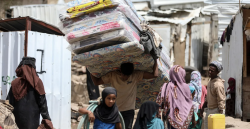
All of this unfolds against the backdrop of one of the world’s gravest humanitarian emergencies. Yemen has been mired in war since 2015, leaving an estimated 18 million people in need of assistance and more than four and a half million displaced. Recurrent outbreaks of disease, chronic food insecurity, and a collapsed economy have compounded the suffering of a population with little protection from the powerful forces that govern their lives.
Human rights organizations have called for the immediate disclosure of detainees’ names and locations, access to legal representation, and independent scrutiny of the espionage claims. Without such safeguards, they argue, the line between counter-intelligence and the silencing of critics becomes impossible to police, and the risk of wrongful detention grows with every new wave of arrests.
For now, the true scope of both the alleged spy network and the abduction campaign remains obscured by the Houthis’ tight control over information. What is clear is that fear has spread through Sana’a, that aid operations face renewed uncertainty, and that the intertwining of security claims with the suppression of dissent has once again placed Yemen’s civilians at the mercy of a conflict that shows little sign of easing.
About the Author