Yemen’s Ambassador Raises Iranian Interference in Talks With Pakistani Official
 Yemen Herald News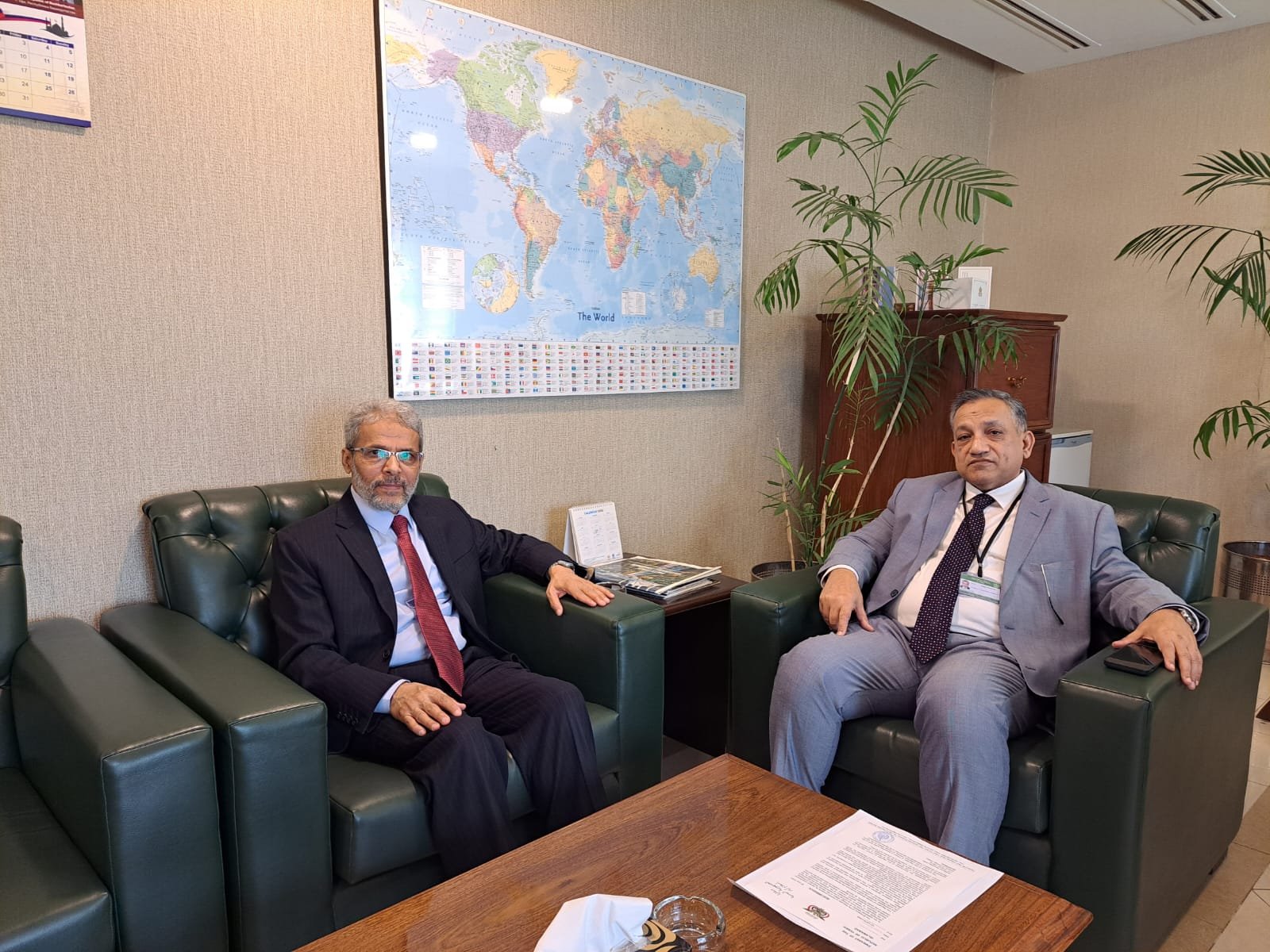
Yemen’s ambassador to Pakistan, Mohammed al-Ashbi, held talks in Islamabad with Zahid Hussain, the Additional Foreign Secretary responsible for the Middle East at Pakistan’s Foreign Ministry, using the meeting to press concerns about what the Yemeni government describes as repeated Iranian violations of its sovereignty. The envoy framed the encounter as part of a broader diplomatic push to secure international accountability for actions he said threaten both Yemen’s security and the stability of the wider region.
During the discussion, al-Ashbi reiterated the recognized government’s firm denunciation of what it regards as foreign interference in Yemeni affairs. He argued that such conduct breaches international law and contravenes the principles of the United Nations Charter, and he maintained that these violations endanger not only Yemen but peace and security on a far larger scale. His remarks reflected a growing frustration within the Yemeni leadership over what it sees as insufficient international pushback against Tehran’s role in the conflict.
The ambassador’s complaints echoed a recent controversy over Iran’s reach into Houthi-controlled territory, including a direct flight from Tehran that landed at Sana’a airport and drew condemnation from Yemen’s Presidential Leadership Council. Yemeni officials have accused Iran of moving personnel, expertise, and equipment to its Houthi allies, and al-Ashbi presented these alleged transfers as evidence that Yemen’s airspace and institutions are being exploited by an outside power.
Al-Ashbi stressed that the government retains the full right to defend its territory and sovereignty. He warned that continued interference would endanger Yemen and threaten peace and security internationally, and he signaled that Yemen’s leaders intend to raise these concerns more assertively across diplomatic forums rather than allowing them to go unaddressed. The meeting in Islamabad was cast as one element of that intensifying campaign.
The backdrop to the talks is Yemen’s long and unresolved war, which pits the Iran-aligned Houthi movement against the internationally recognized government based in Aden and its regional backers. Despite years of military operations by a Saudi-led coalition aimed at curbing Houthi advances, the conflict has proven stubbornly intractable, and Yemeni officials contend that Iranian support for the Houthis has repeatedly frustrated efforts to reach a settlement.
Yemen’s decision to press its case in Islamabad reflects Pakistan’s rising diplomatic profile in Middle Eastern affairs. In 2026, Pakistan emerged as a central mediator in the confrontation between Iran and its adversaries, helping to broker a ceasefire and hosting rounds of negotiation known as the Islamabad Talks in April. For Sana’a’s recognized government, a country with such channels to Tehran and to Western capitals is a potentially valuable interlocutor.
That wider conflict, which erupted at the end of February 2026, drew in much of the region and placed Gulf states under direct threat, with several absorbing missile and drone attacks. Pakistan’s role in de-escalating the fighting elevated its standing as a broker capable of talking to multiple sides, and Yemen appears keen to tap that influence as it seeks protection against what it describes as persistent violations of its sovereignty.
Pakistan’s mediation was widely credited with helping to stabilize the ceasefire that eventually paused the conflict, and the Islamabad Talks brought representatives together in April to shore up that fragile truce and explore a longer-term resolution. Islamabad has long balanced close ties to Gulf states with a working relationship with neighboring Iran, a position that lent it credibility as a go-between when few other capitals could speak to all parties at once.
For Yemen, aligning its diplomacy with a mediator of that stature offers a chance to be heard beyond the immediate circle of Gulf backers on which it has traditionally relied. Yemeni officials have increasingly sought to widen their diplomatic base, courting partners in South Asia and beyond in the hope of building broader support for their sovereignty claims and for eventual peace efforts, and the Islamabad meeting fits squarely within that strategy.
The dialogue also fits a broader effort by both governments to strengthen bilateral ties. Yemen hopes that closer diplomatic and security cooperation with Pakistan could yield support against foreign incursions and lend it additional leverage as it pursues a resolution to its conflict. For Islamabad, deeper engagement with Yemen complements its ambitions to be seen as a constructive force in regional security rather than a peripheral player.
Al-Ashbi’s meeting comes amid heightened tensions across the Middle East, where observers warn that continued escalation could spill into a broader confrontation. By articulating its grievances through diplomacy, the Yemeni government seeks to internationalize its case, arguing that the same principles of sovereignty and non-interference invoked elsewhere in the region should apply equally to Yemen.
Underlying all of this is a humanitarian emergency of staggering proportions. An estimated 18 million Yemenis require assistance, and years of fighting have displaced millions and battered the country’s infrastructure and economy. Yemeni diplomats routinely link the political and security dimensions of the crisis to this human toll, arguing that external interference prolongs the suffering by obstructing a path to peace.
Whether the Islamabad meeting yields tangible results will depend on how far Pakistan and other regional actors are willing to engage with Yemen’s concerns. For now, the encounter underscores a recognizable pattern in Yemeni diplomacy: an effort to convert bilateral relationships into a coalition of support, and to keep international attention fixed on a conflict that its government insists cannot be resolved without confronting the role of outside powers.
About the Author