Three Sisters Drown in Water Tank in Yemen’s Hajjah Province
 Yemen Herald News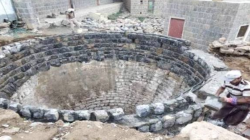
Three young sisters drowned on Friday evening after falling into a water tank in a rural village in Yemen’s northwestern province of Hajjah, in an accident that has left their family and community grieving. The tragedy took place in Bayt al-Qahmi village, in the Jabal Nimer area of the Bani al-Awam district, one of many remote communities where households depend on stored water for daily life.
According to accounts from the village, the youngest of the sisters slipped into the tank while the children were playing nearby. When one of her older siblings jumped in to try to pull her out, she too was dragged under, and the eldest sister then entered the water in a desperate attempt to save them both. All three drowned in a matter of moments, a rapid and unstoppable sequence that villagers later described as a painful calamity for the area.
The loss has cast a pall over the small rural community, where residents spoke of deep shock and sorrow. Neighbors and relatives gathered in mourning, and many struggled to comprehend how an ordinary afternoon near the family home could end in such devastation. In tight-knit villages like Bayt al-Qahmi, the death of three children from a single family is felt across the entire community.
The accident also draws attention to a hazard that is widespread across rural Yemen. Years of conflict have damaged public water networks and left many communities without reliable piped supply, forcing families to rely on open tanks, cisterns, and harvested rainwater stored in uncovered reservoirs. These containers, often unfenced and easily accessible, can become deadly traps for young children who play nearby without close supervision.
Tragedies of this kind are far from isolated. Drownings of children in open tanks, wells, and dams are reported with grim regularity in different parts of the country, from Taiz and Ibb to Marib, frequently following the same heartbreaking pattern in which one child falls in and siblings or relatives drown trying to help. Each incident underscores how the scarcity of safe, managed water sources translates into everyday danger for the youngest and most vulnerable.
Yemen’s broader humanitarian emergency compounds the risk. The war that has ravaged the country since 2015 has driven widespread poverty and hollowed out basic services in many regions, including Hajjah, which has been among the areas hardest hit by displacement and deprivation. With an estimated 18 million people in need of humanitarian assistance and millions forced from their homes, the resources available for child safety and community protection are stretched perilously thin.
Aid organizations have repeatedly warned that the collapse of infrastructure has knock-on effects that reach far beyond hunger and disease. When families cannot access clean, reliably delivered water, they improvise with whatever storage they can build or afford, and safety features such as secure lids, fencing, or barriers are often the first things sacrificed to cost and necessity. The result is a landscape dotted with hazards that would be unthinkable in better-resourced settings.
Yemen ranks among the most water-scarce countries in the world, a problem that predates the war but has been sharply worsened by it. Damaged pumping stations, fuel shortages, and mass displacement have pushed many households to depend on whatever water they can collect, whether from tankers, wells, or rooftop catchment. In that context, an uncovered tank is less a lapse of judgment than a byproduct of scarcity, which is why the resulting dangers are so hard to eliminate.
Child protection specialists note that children make up a large share of Yemen’s population and often shoulder daily chores, including fetching and carrying water, that bring them into contact with these hazards from an early age. Combined with limited access to schooling and safe play spaces, that exposure heightens the risk of accidents, and addressing it means treating water safety as part of the wider humanitarian response.
In the aftermath of the drownings, residents of Bayt al-Qahmi have spoken of a shared determination to prevent similar losses. Community members and local leaders have discussed practical steps, from covering and securing water tanks to raising awareness among parents about the dangers such containers pose. Advocates argue that even modest interventions, delivered through trusted local figures, could change behavior and save lives.
Local health workers and community organizers could play a central role in that effort. Simple awareness sessions about the risks of open water storage, combined with basic physical safeguards, might help households make their surroundings safer for children. Empowering communities with knowledge and low-cost solutions, advocates say, is often more sustainable than one-off interventions, particularly in areas where outside assistance is intermittent.
Yet lasting change is difficult amid ongoing instability. The presence of armed groups and the strain of a prolonged conflict complicate efforts to rebuild the social and physical frameworks that protect families. Alongside immediate humanitarian aid, long-term safety depends on political solutions that restore basic services and engage local communities in reconstruction, weaving modern safety standards together with the realities of rural life.
For now, the deaths of the three sisters stand as a stark reminder of the quiet, everyday tragedies that unfold in the shadow of Yemen’s larger catastrophe. Beyond the headlines of war and diplomacy, families continue to face preventable dangers rooted in poverty and neglected infrastructure. Both local authorities and international partners, advocates say, have a role to play in ensuring that children are not lost to hazards that could be addressed with modest investment and sustained attention.
About the Author