Al-Alimi Presses for National Unity in Talks With Consultation and Reconciliation Authority
 Yemen Herald News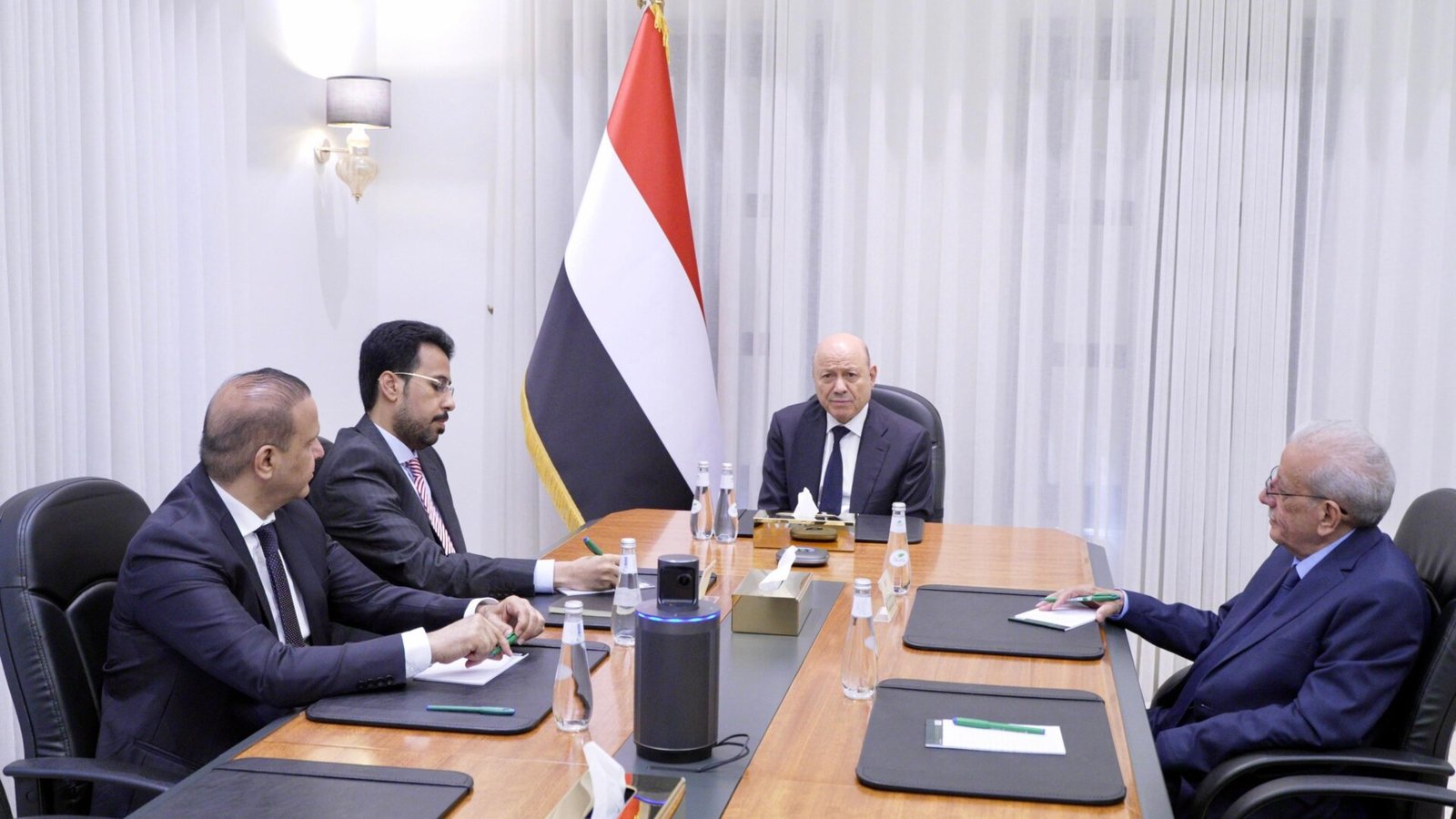
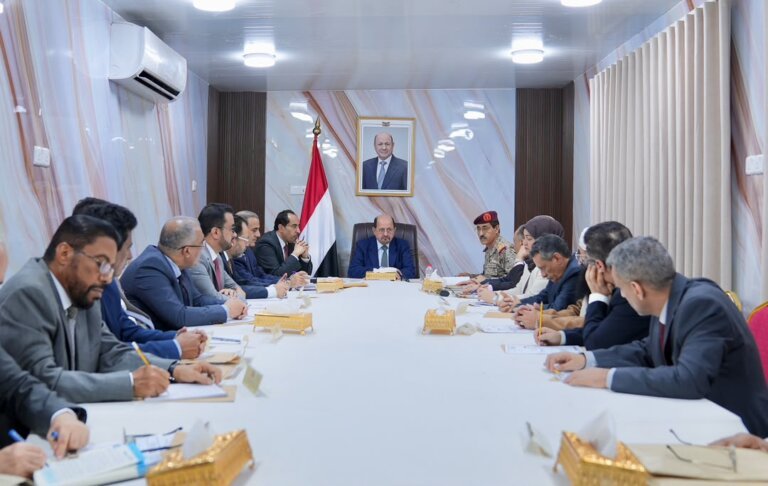
President Dr. Rashad al-Alimi, chairman of Yemen’s Presidential Leadership Council, held talks in Riyadh with Mohammed al-Ghaithi, head of the Consultation and Reconciliation Authority, and a number of the body’s deputy members. The meeting brought the leadership face to face with the authority’s senior figures at a moment of mounting pressure on the internationally recognised government, and it centred on the latest political and security developments alongside a detailed review of the authority’s forthcoming plans and programmes. Those initiatives are designed to reinforce the work of the Presidential Leadership Council and to nurture the national unity that Yemen’s institutions will need if they are to withstand the challenges facing the country.
During the discussions, al-Alimi stressed that the authority must carry out the responsibilities assigned to it under the Declaration of the Transfer of Power and its own internal regulations. He framed the body as a vehicle for consensus rather than division, and he pressed its leaders to help draw the country’s competing political factions and national forces closer together. That cohesion, he argued, is essential to strengthening state institutions and to steering Yemen through the transitional phase on which any lasting recovery depends.
The president used the meeting to brief the authority’s leadership on recent shifts in the political, security and military landscape. He pointed to what he described as intensifying hostilities from the Iran-aligned Houthi movement, and he voiced concern over what he characterised as repeated Iranian breaches of international resolutions concerning Yemen. Among the incidents he cited was a reported flight said to have carried military personnel and equipment into areas under Houthi control, an episode he presented as emblematic of the external interference complicating the conflict.
Al-Alimi described such activity as an affront to Yemeni sovereignty and a direct challenge to international efforts aimed at de-escalating the war and calming tensions across the wider region. His remarks reflected a broader frustration within the recognised government at the pace of outside intervention, and they underlined what he sees as a pressing need for sustained international attention to Yemen if the fragile diplomatic track is to be preserved. The comments also served as a reminder that the country’s internal politics remain closely entangled with regional rivalries.
Turning to governance, the president set out the steps his administration has taken to improve the performance of the institutions charged with maintaining security, stability and public order. He linked those efforts to the wider goal of economic recovery, arguing that functioning state bodies are a precondition for restoring services, protecting livelihoods and rebuilding public confidence. He said the current circumstances demand closer cooperation and integration among state institutions and the entities that support them.
Al-Alimi called for a unified approach to national decision-making and for what he termed a full mobilisation of resources to restore the effectiveness of state institutions and safeguard the gains achieved in stabilising the economy. The appeal spoke to a recurring theme in his public messaging, namely that Yemen’s recovery will hinge less on any single military or political manoeuvre than on the ability of the country’s leadership to act in concert and to present a coherent front to both domestic constituencies and international partners.
The meeting unfolded against the backdrop of a conflict that has ground on since 2015 and produced one of the world’s gravest humanitarian emergencies. Aid agencies estimate that more than 18 million people inside Yemen require some form of assistance, while over 4.5 million have been displaced by the fighting. The war’s human toll has been compounded by economic collapse, a fractured currency and the disruption of basic services, leaving large swathes of the population dependent on external relief.
Yemen’s strategic geography adds another layer of complexity. The country sits alongside the Red Sea and the Bab al-Mandab strait, one of the world’s busiest maritime corridors, where disruptions carry consequences well beyond Yemen’s borders. That position has drawn in regional and global powers, and it helps explain why a durable settlement has proved so hard to disentangle from broader contests over influence in the region.
The Consultation and Reconciliation Authority was conceived as a consultative body meant to broaden participation in Yemen’s political process and give a wider range of national voices a stake in the country’s future. Its leaders were encouraged to press ahead with plans aimed at fostering unity, though al-Alimi acknowledged that their success will depend on balancing rival factions while limiting outside interference.
Serious obstacles remain in the way of that ambition. The Houthi movement’s continued military activity, coupled with the support it draws from Iran, threatens both the peace process and the delicate work of national reconciliation. Officials in the recognised government have repeatedly warned that progress on the battlefield or at the negotiating table can be undone quickly if external actors continue to arm and embolden the movement, and al-Alimi’s remarks suggested little expectation of an early easing of those pressures.
Looking ahead, the road to recovery and peace in Yemen remains steep. The focus, as the president framed it, must extend beyond military resilience to encompass durable economic reform and humanitarian relief that places the welfare of ordinary Yemenis at its centre. As the Presidential Leadership Council and the Consultation and Reconciliation Authority press on with their respective mandates, the coming months are likely to prove decisive in shaping whether Yemen’s institutions can consolidate their footing or remain vulnerable to renewed fragmentation.
About the Author