
Yemen’s Water Minister and French NGO ACTED Discuss Cooperation on Water and Climate
 Yemen Herald News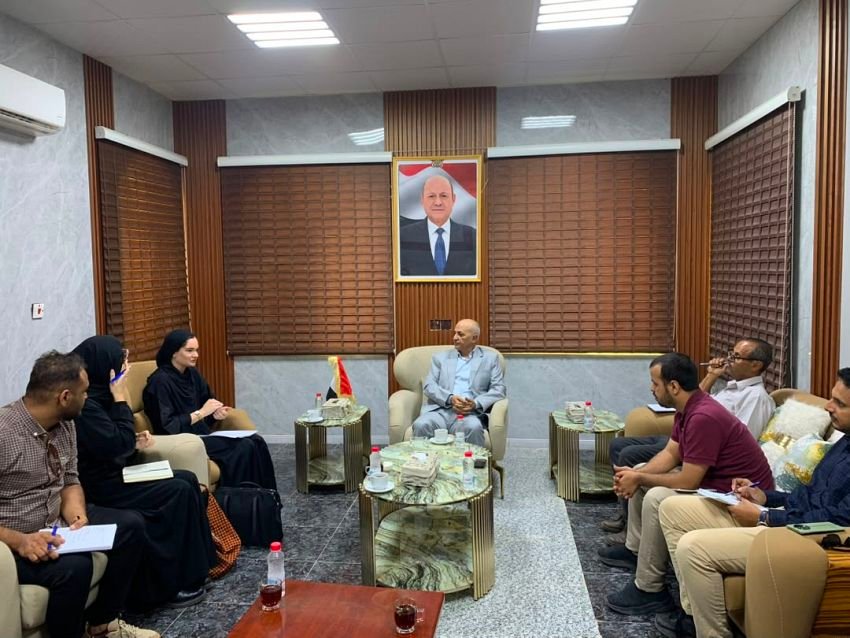
Yemen’s Minister of Water and Environment, Eng. Tawfiq al-Sharjabi, held talks in the temporary capital Aden with Rafaella Colletti, director of the local office of the French organisation ACTED, to explore closer cooperation on managing water resources and protecting the environment. The discussion reflected a shared sense of urgency about the pressures bearing down on Yemen’s water and environmental systems, from the effects of a prolonged war to the mounting impact of climate change, and both sides pointed to the need for practical strategies capable of addressing these overlapping challenges.
More than a decade of conflict has placed severe strain on Yemen’s water and environmental infrastructure, deepening vulnerabilities that predated the fighting. With more than 22 million people, about half the population, expected to need humanitarian assistance in 2026 and millions still displaced from their homes, the ministry’s efforts to repair water systems and respond to environmental threats have taken on added weight. Recurrent cholera outbreaks and the risk of other communicable diseases have underlined how closely safe water and public health are bound together in the country’s emergency.
During the meeting, al-Sharjabi set out the ministry’s main priorities, which include adapting to climate change, managing disaster risk and rebuilding infrastructure. These concerns are especially pressing in a country where shifting weather patterns and chronic scarcity have made water one of the most contested resources. The minister framed cooperation with ACTED as a way of strengthening the ministry’s capacity to tackle these interlocking problems, drawing on the organisation’s experience while tailoring solutions to Yemen’s particular conditions.
The two sides also discussed the need for a clear framework to guide future projects, one that would serve both the ministry and the communities it is meant to reach. By building a structured partnership, they hoped to develop practical measures that reflect proven international practice yet remain grounded in local realities. Techniques for water conservation and environmental protection, they suggested, could play a significant part in safeguarding scarce resources as climate pressures intensify across much of the country.
ACTED’s involvement carries particular significance in this context. One of France’s largest humanitarian and development organisations, the agency works in crisis-affected settings around the world, combining emergency relief with longer-term development programmes. Colletti’s participation in the talks signalled a readiness to reinforce cooperation not only on water supply but across the broader environmental agenda, an area that has often been overshadowed by the more immediate demands of the humanitarian response yet is central to Yemen’s long-term recovery.
Climate change adaptation has become an unavoidable part of development planning in conflict-affected states such as Yemen. Rising temperatures and increasingly erratic rainfall threaten to place even greater strain on already limited water supplies, with consequences for agriculture, health and livelihoods. Yemen already ranks among the most water-scarce countries in the world, its per-capita availability far below regional and global averages, and years of over-extraction have steadily drawn down the aquifers on which many towns, villages and farms have long depended for survival. Both al-Sharjabi and Colletti acknowledged the importance of disaster risk management, recognising that anticipating and preparing for climate-related shocks can help blunt their impact in the years ahead rather than leaving communities to absorb the damage after the fact.
The talks further considered mechanisms for funding and allocating resources in ways that would strengthen the ministry’s operational capacity. Involving local communities in these efforts, the two sides noted, is key to ensuring that programmes are sustainable and genuinely responsive to people’s needs. Grassroots participation not only improves the design and delivery of projects but also builds resilience among populations bearing the brunt of the humanitarian crisis, giving them a stake in the systems intended to serve them.
The scale of need helps explain the emphasis both sides placed on water and sanitation. The United Nations estimates that some 14.4 million people in Yemen will require water, sanitation and hygiene assistance in 2026, while around 5.2 million remain internally displaced, frequently living in conditions that lack reliable access to clean water. Damaged infrastructure and dwindling supplies raise the danger of disease, making cooperation of the kind discussed with ACTED a matter of immediate humanitarian importance as well as long-term development.
Yemen’s fractured political landscape adds a further layer of complexity. With the war drawing in the Houthi movement, the Saudi-led coalition and a range of international actors, strengthening water and environmental resilience could contribute, however modestly, to broader stability. As the country contends with the consequences of a grinding conflict, partnerships with organisations such as ACTED may offer avenues for both immediate relief and the gradual work of recovery, provided commitments are sustained over time.
Looking ahead, the effectiveness of the strategies discussed will depend on the commitment of all those involved, from international organisations and local authorities to community members themselves. The minister’s engagement with ACTED represents a step towards the kind of expanded international cooperation that could bring resources and expertise to bear on rebuilding Yemen’s vital infrastructure. If sustained, such initiatives may ease immediate humanitarian pressures while laying the groundwork for a more secure and sustainable future for a nation still struggling under the weight of war.
About the Author




