Yemen’s Prime Minister Meets Dutch Ambassador in Aden to Deepen Ties
 Yemen Herald News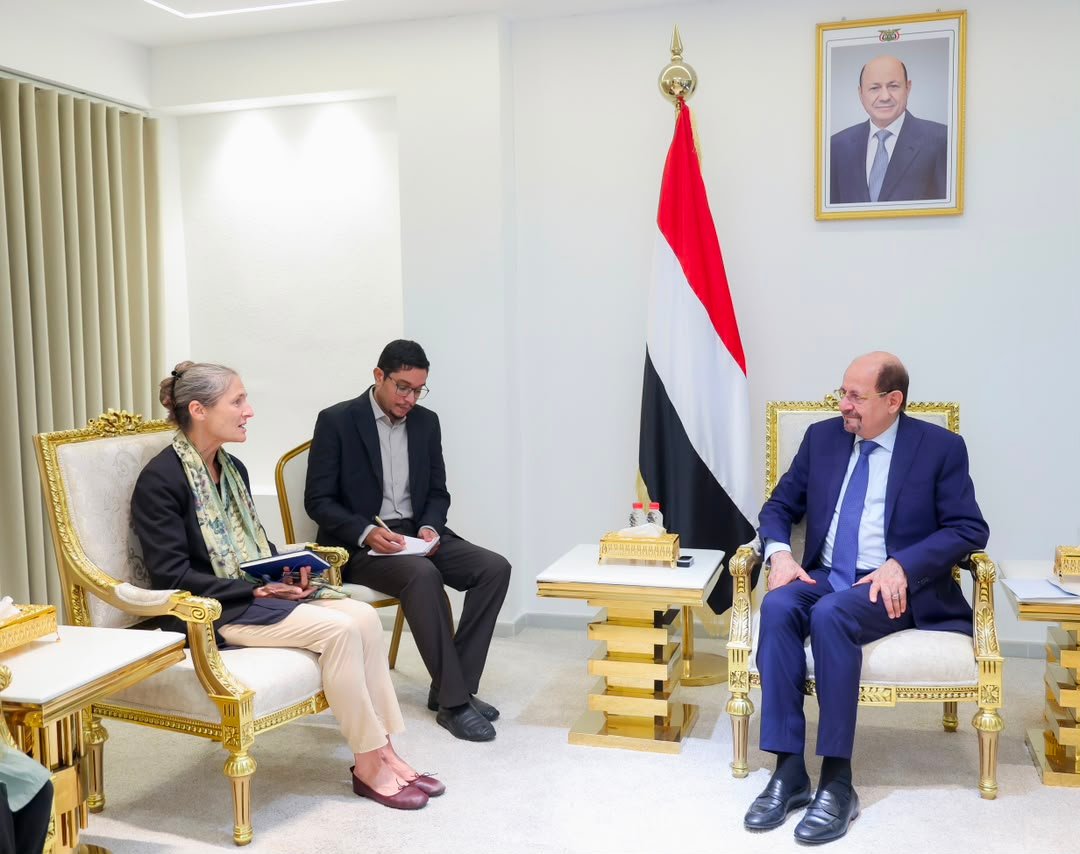
Yemen’s Prime Minister, Shaya al-Zindani, met the Ambassador of the Kingdom of the Netherlands to Yemen, Jeannette Seppen, in the interim capital, Aden, where the two sides discussed ways to deepen bilateral relations and widen Dutch support for a government trying to stabilise a country worn down by years of war. The talks drew together economic, humanitarian and developmental concerns at a moment when Yemen’s internationally recognised authorities are working to shift their conversation with donors away from emergency relief and toward longer-term recovery.
Al-Zindani, who has led the government since early 2026 while also holding the foreign affairs portfolio, used the meeting to underline the scale of the challenges his cabinet inherited. He was appointed prime minister by the Presidential Leadership Council in January 2026, following the resignation of Salem Saleh bin Braik, and formed a reshuffled cabinet shortly afterwards. His government has since sought to present itself as a more active partner for foreign donors rather than a passive recipient of aid, an approach it argues is better suited to Yemen’s needs after a decade of crisis.
Yemen’s conflict, which escalated into full-scale war in 2015, has produced one of the world’s gravest humanitarian emergencies. United Nations agencies estimate that well over 18 million people need some form of assistance, and millions more have been driven from their homes. Against that backdrop, the prime minister argued that sustained international engagement is essential if the government is to keep basic services running and rebuild institutions battered by years of fighting. He framed the request less as a plea for charity than as an appeal for reliable, structured cooperation that can outlast the emergency phase of the crisis.
According to the government’s account of the meeting, al-Zindani stressed the urgent need for continued outside support, noting that efforts to steady the economy and promote recovery are constrained by both financial pressures and wider regional tensions. He tied the discussion to a broader strategy of seeking diversified assistance that goes beyond humanitarian hand-outs and instead supports durable development. That emphasis reflects a recognition within the government that repeated short-term responses have not resolved the structural problems weighing on the country, from a depreciating currency to collapsing public services.
Ambassador Seppen, for her part, reaffirmed the Netherlands’ commitment to Yemen and its backing for the government’s reform agenda. She indicated that Dutch assistance is concentrated in areas the government also regards as priorities, including the health sector, water resource management and measures to encourage economic recovery. Those fields are closely tied to the daily struggles of ordinary Yemenis, where failing services, water scarcity and a weakening currency have compounded the effects of the conflict and pushed many households deeper into hardship.
Yemeni officials have separately indicated that cooperation with the Netherlands also extends to capacity-building programmes for state institutions and to efforts aimed at women’s empowerment, areas the government describes as central to a more inclusive recovery. The Netherlands has long emphasised integrated water management and the rule of law in its overseas work, themes that resonate with a Yemeni administration eager to strengthen governance and to rebuild the machinery of the state in areas under its control.
The meeting unfolded against the wider geopolitics of the region, where the Bab al-Mandab Strait remains a critical factor. The strait is a vital maritime corridor for global trade, and its stability matters not only to Yemen but to regional and international stakeholders who depend on the safe passage of shipping. Disruption in these waters has repeatedly drawn outside navies into the area and raised the stakes of Yemen’s internal conflict, tying the country’s fate to concerns far beyond its borders.
That internal conflict remains unresolved. The Houthi movement controls the capital, Sanaa, and much of the north, while the internationally recognised government operates from Aden. Gulf governments and their partners accuse the Houthis of acting with Iranian support, a charge Tehran rejects even as it acknowledges political ties to the movement. The competing narratives have made outside mediation difficult and left development efforts exposed to the risk of renewed fighting, a reality that shadows every attempt to plan for the longer term.
For the Yemeni government, encounters such as this one are part of an effort to engage the international community more proactively, moving from a reactive posture to one that actively courts development partnerships. The prime minister’s appeal reflected a belief that coordinated, sustained support is needed to address problems that piecemeal responses have failed to solve. Aligning foreign programmes with the government’s own priorities, officials on both sides argued, would help ensure that limited resources are directed where they can do the most good.
The Netherlands has been among the European countries most consistently involved in Yemen’s development and water sectors, and both delegations suggested the relationship could serve as a model for how Yemen engages other donors. Whether that vision translates into expanded programmes will depend on security conditions and on the government’s ability to demonstrate results. For now, the meeting reaffirmed a working partnership that both sides say they intend to build on as Yemen looks beyond survival toward recovery.
About the Author