Yemen’s Social Affairs Minister and UNHCR Discuss Support for Displaced Yemenis
 Yemen Herald News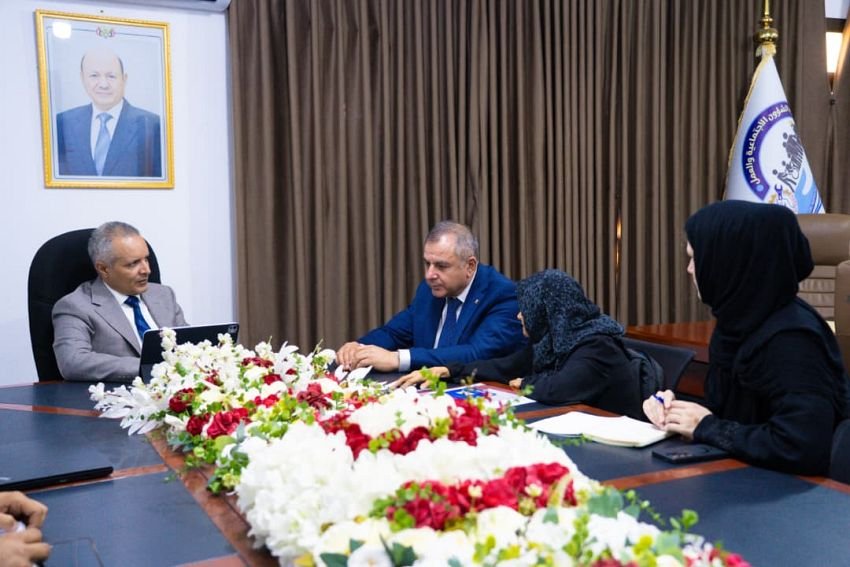
Yemen’s Minister of Social Affairs and Labour, Mukhtar al-Yafei, met the Acting Representative of the United Nations High Commissioner for Refugees (UNHCR) in Yemen, Armen Yedgarian, in the interim capital, Aden, to review ways of strengthening cooperation between the government and the UN refugee agency. According to the government’s account, the talks focused on projects that support internally displaced people, refugees and the host communities that shelter them, and on improving coordination so that assistance reaches families whose lives have been upended by years of conflict.
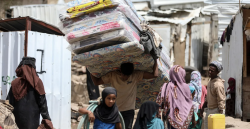
The meeting reflected a working relationship that has become central to Yemen’s humanitarian response. The war that escalated into a full-scale conflict in 2015 has produced one of the world’s most severe emergencies, and UN agencies estimate that in 2026 more than 22 million people across the country, over two-thirds of the population, now require some form of assistance. Millions have been forced from their homes, and the burden of sheltering them has fallen heavily on communities that were already struggling before the war.
Programs of the kind discussed typically combine emergency shelter, protection work and support for host communities that have absorbed large numbers of new arrivals with little of their own to spare. Officials described these interventions as essential not only for immediate survival but for helping people begin to rebuild after prolonged upheaval, and stressed that government institutions and international agencies must work in step if limited resources are to be used well and duplication avoided.
The humanitarian picture in Yemen has grown more complicated as the emergency has dragged on. Aid workers have warned of the recurrence of preventable diseases, including cholera and measles, which spread quickly in crowded displacement sites where clean water, sanitation and health care are in short supply. Displaced families, often living in makeshift conditions, are among the most exposed to these risks, and outbreaks can move rapidly through settlements where people live in close quarters with little protection.
Both the government and UN agencies have acknowledged that without sustained coordination the health situation could deteriorate further, adding to the strain on a system already stretched beyond its limits. Preventive measures such as vaccination campaigns, the provision of clean water and improved sanitation depend on reliable funding and secure access, neither of which can be taken for granted in a country still divided by conflict.
Funding has become a particular concern. Aid organizations warned during 2026 that budget shortfalls were forcing them to scale back services, cutting into programs that displaced families rely on for shelter, food and medical care. Officials at the meeting emphasized that closer coordination between the government and UNHCR could help stretch scarce resources, but they acknowledged that no amount of efficiency can fully compensate for a decline in the money available to fund the response.
Access remains a further obstacle. The division of the country between the internationally recognized government and the Houthi movement has complicated the delivery of aid, restricting access to some areas and forcing agencies to negotiate with competing authorities. Concerns about the safety of staff, secure access to those in need, and coordination among the many organizations working in Yemen continue to shape what is possible on the ground, and delays or restrictions can leave vulnerable families waiting for help that arrives late or not at all.
Yemen’s strategic geography adds another layer of complexity. The country sits alongside the Red Sea and the Bab al-Mandab Strait, one of the world’s most important shipping lanes, and the involvement of outside powers has at times blurred the line between humanitarian and political considerations. Gulf governments accuse the Houthis of acting with Iranian support, a charge Tehran denies even as it acknowledges political ties to the movement, and these competing claims are best understood as the positions of the parties rather than settled fact.
For ordinary Yemenis, the consequences of these wider rivalries are felt in the daily struggle to secure food, water and medical care. Political and military developments far from their control can determine whether aid reaches them, whether markets function and whether prices remain within reach. That reality lends particular weight to efforts, as the one discussed in Aden, to keep humanitarian cooperation functioning despite the surrounding turmoil.
The government said al-Yafei expressed optimism about the potential for closer coordination with UNHCR, pointing to the pressures facing displaced families and the need for a response that addresses both immediate survival and longer-term recovery. He framed the partnership as one that must adapt to the scale of the crisis, combining relief with efforts to help people regain a measure of stability rather than remaining indefinitely dependent on emergency aid.
Whether the discussions translate into expanded programs will depend on funding, access and the durability of cooperation between the government and its international partners. For now, the meeting signaled a shared intent to sustain a humanitarian effort that millions of Yemenis rely on, in a country where the needs remain vast, and the resources to meet them are shrinking. In such conditions, officials argue, coordination is not a luxury but a necessity if the response is to reach the families who need it most.
About the Author