
Yemen’s Planning Minister and Dutch Ambassador Discuss Water and Climate Cooperation
 Yemen Herald News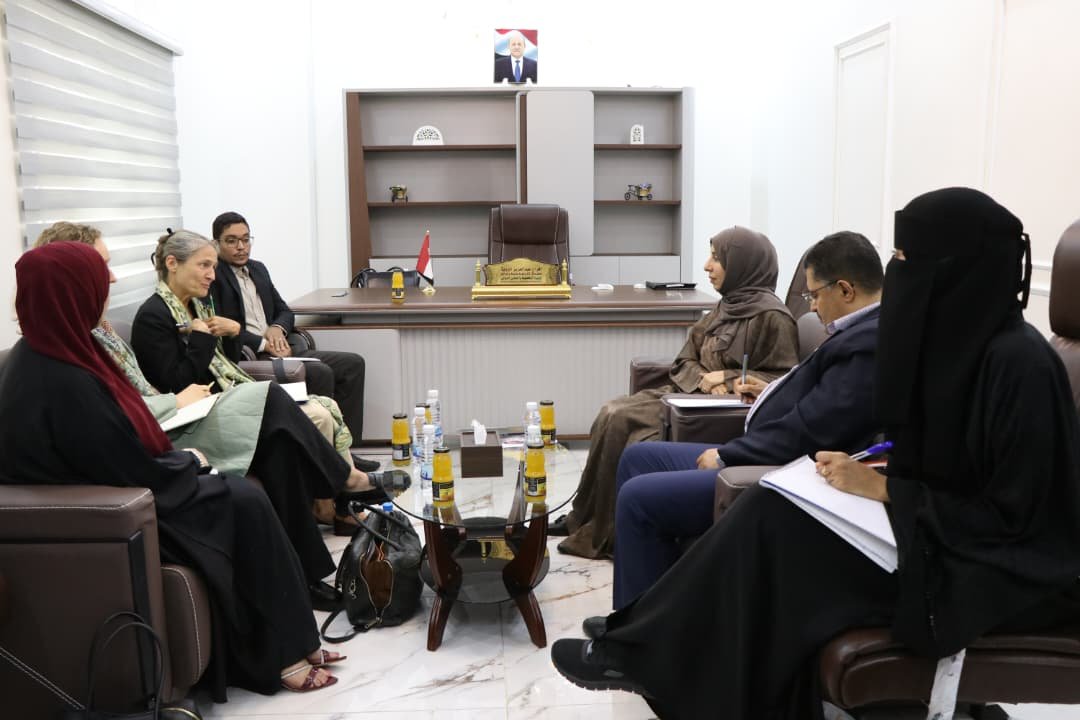
Yemen’s Minister of Planning and International Cooperation, Dr. Afrah al-Zouba, held talks with the Ambassador of the Kingdom of the Netherlands to Yemen, Jeannette Seppen, on strengthening bilateral ties and expanding Dutch support for the government’s development and reform agenda. The discussion, conducted remotely, focused on how the two sides can build on years of cooperation to help a country still contending with the consequences of a protracted war that has left millions dependent on outside assistance.
At the centre of the conversation were water resources and climate change, two areas where the Netherlands has been among Yemen’s most consistent partners. The officials reviewed the extensive support the Dutch have provided over the years, with the Netherlands leading bilateral cooperation on integrated water resource management and modern irrigation techniques. In a country where water scarcity is among the most pressing long-term threats to stability, both sides underlined the importance of helping Yemen secure access to climate financing.
According to the government’s account, the two discussed a Water and Climate Resilience programme designed to strengthen the resilience of water services against the effects of climate change. The initiative is envisaged in three phases and forms part of Yemen’s broader development priorities for 2026. Officials framed the effort as an attempt to link immediate needs with longer-term planning, ensuring that emergency responses and durable recovery strategies reinforce rather than undercut one another.
Yemen ranks among the most water-stressed nations in the world, and years of conflict have accelerated the depletion of groundwater, damaged infrastructure and weakened the institutions meant to manage scarce supplies. Aid specialists have repeatedly warned that competition over water can deepen local conflict, making investment in management and irrigation not only a development concern but also a question of stability. Tying water programmes to climate adaptation reflects a recognition that the pressures on Yemen are structural and likely to intensify. Access to international climate finance, which the officials singled out, is difficult for fragile states to obtain, and Yemeni planners have argued that dedicated support is needed to help the country meet the technical and administrative requirements that such funding usually demands.
Al-Zouba used the meeting to emphasise the strength of the ties between Yemen and the Netherlands, describing the Dutch as a development ally that combines deep experience with a strong tradition of the rule of law. She expressed the government’s determination to deepen the partnership, a priority she linked to the array of challenges the country faces. Yemen’s humanitarian crisis, which affects well over 18 million people, has underscored for officials the value of dependable international partnerships in supporting recovery.
The minister also set out the government’s national plan and its key near-term priorities. Central among them is institutional reform intended to improve the efficiency and effectiveness of the state, alongside an emphasis on public-private partnerships as a means of driving economic growth and improving the delivery of services across sectors. The approach reflects a wider ambition to move beyond crisis management toward rebuilding the machinery of government.
For her part, Ambassador Seppen affirmed that the Netherlands aligns its programmes with the priorities set by the Yemeni government and expressed readiness to explore avenues for enhancing support. The aim, she suggested, is an integrated approach that maximises developmental impact rather than a scattering of disconnected projects. That emphasis on coordination mirrors a broader push by donors and Yemeni officials alike to make limited resources go further. The planning ministry has in recent months held a series of meetings with international partners, including UN officials and development banks, as it works to shape a slate of projects for 2026, and the Dutch discussions form part of that wider effort to marshal external support behind a common set of priorities.
The meeting took place against the backdrop of the wider regional context that continues to shape Yemen’s prospects. The civil war, which escalated in 2015, has drawn in numerous external actors and complicated an already dire humanitarian situation. The Houthi movement controls the capital, Sanaa, and much of the north, while the internationally recognised government operates from the southern port city of Aden. The Saudi-led coalition’s earlier intervention and the involvement of other outside powers have added further layers to the conflict.
The strategic geography of the Red Sea and the Bab al-Mandab Strait complicates Yemen’s path to stability, serving as a chokepoint for international trade and a focus of security concerns. Gulf governments accuse Iran of backing the Houthis, a charge Tehran denies even as it acknowledges political ties to the movement. Such tensions heighten the urgency, in the government’s view, of steady international engagement to mitigate violence and support development that might otherwise be undone by renewed hostilities.
Looking ahead, officials presented the exchange with the Netherlands as a step toward rebuilding and reforming vital sectors. Enhancing bilateral cooperation and ensuring that development gains are sustainable, they argued, will be essential if Yemen is to translate isolated projects into lasting improvements. Whether the ambitious water and climate agenda can be delivered amid ongoing insecurity and tight donor budgets remains an open question, but both sides signalled a shared intent to keep the partnership moving forward.
About the Author




