Yemen’s Women’s Affairs Minister Leads Aden Meeting to Strengthen Protection of Women
 Yemen Herald News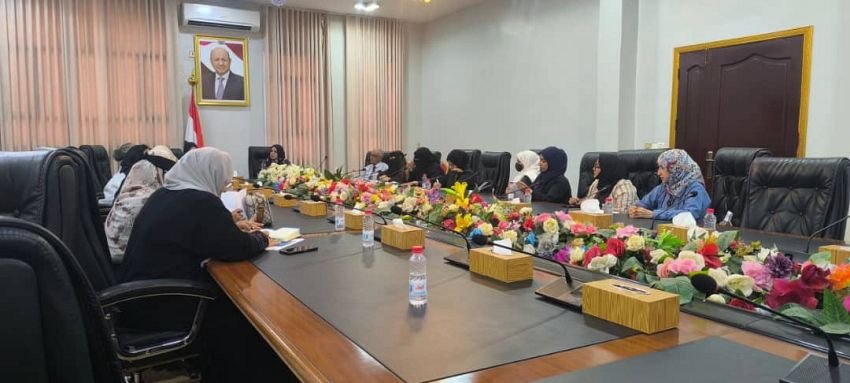
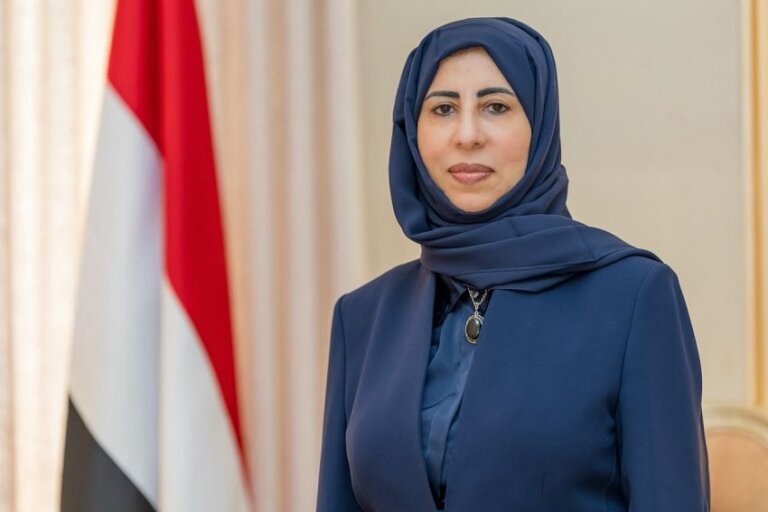
Aden has hosted a significant gathering aimed at strengthening the status and protection of women in Yemen, a country where years of conflict have left women especially exposed. Dr. Ahd Jaasous, the Minister of State for Women’s Affairs, led a meeting with representatives from government bodies and civil society to deepen cooperation on women’s rights, safety and gender equality. The session reflected a push to coordinate efforts across a fragmented system, and to give the question of women’s protection a more prominent place in Yemen’s political and humanitarian agenda.
Jaasous is among the small number of women named to ministerial posts when Yemen’s Presidential Leadership Council announced a new cabinet, sworn in earlier this year in the Saudi capital, Riyadh. The government, chaired by Prime Minister Shae’a al-Zandani and led politically by the council under Rashad al-Alimi, created her portfolio to give women’s affairs dedicated representation within the state. The Aden meeting was part of an effort to translate that mandate into concrete coordination on the ground.
Much of the discussion focused on ensuring that overlapping programs do not duplicate one another. A recurring theme was the need for a more cohesive approach, with participants arguing that scattered, uncoordinated initiatives have limited impact in a country where institutions are stretched thin and resources are scarce. In an environment of chronic shortages, they said, the efficient use of the little that is available matters as much as securing new funding.
A central outcome was a strong call for stronger measures to combat violence against women. Participants pressed for regular sessions of the Supreme Council for Women, a body envisaged to reinforce the legal and institutional frameworks that protect women’s rights. Advocates argue that consistent, high-level attention is essential if commitments are to be enforced rather than left on paper, and that a functioning council could give women’s protection the institutional weight it currently lacks amid competing wartime priorities.
Without a body that meets regularly and carries real authority, they warned, protective measures risk remaining aspirational. Jaasous stressed the importance of building sustainable partnerships between government and civil society, arguing that durable progress depends on cooperation rather than one-off projects. She framed the ministry’s role as convening and coordinating the many actors working on women’s issues, so that their efforts reinforce one another instead of competing for the same limited attention and money.
The stakes are heightened by the way the war has reshaped Yemeni society. The conflict has altered family structures and pushed many women into new roles as heads of households, sharpening both their vulnerabilities and their importance to any eventual recovery. Women who once relied on male relatives for income and protection have increasingly had to provide for their families alone, often without the legal standing or economic support to do so securely.
Aid workers have repeatedly warned that women and girls face heightened risks of early marriage, exploitation and untreated health problems as the crisis drags on, and that services designed to protect them are among the first to collapse when funding falls short. UN agencies reported during 2026 that budget cuts were forcing them to scale back programs, with women and girls frequently among the hardest hit, adding urgency to calls for stronger domestic institutions that do not depend entirely on external aid.
The humanitarian backdrop is severe. The United Nations estimates that in 2026 more than 22 million Yemenis, over two-thirds of the population, need some form of assistance, with women and girls making up a large share of those requiring protection and support. In such conditions, advocates argue, safeguarding women is not a peripheral concern but central to the survival and eventual rebuilding of communities across the country.
The political landscape complicates the enforcement of any protections. Yemen remains divided between the internationally recognized government and the Houthi movement, which controls large areas including the capital, Sana’a, while the government relies on backing from a Saudi-led coalition. That fragmentation makes it difficult to apply laws consistently across the country, and participants acknowledged that a stronger legal framework would mean little without the authority and reach to implement it.
The gap between policy and practice loomed over the discussions. Even where laws or commitments exist on paper, enforcing them across a territory split among rival authorities and armed groups is an immense challenge, and women in areas outside government control may see little benefit from decisions taken in Aden. Participants recognized that meaningful protection would require not only better laws but also the institutional capacity, funding and political will to carry them out.
For Jaasous and the advocates who joined her, the Aden meeting was less an endpoint than a marker of intent. By elevating women’s protection within the government’s agenda and pressing for functioning institutions like the Supreme Council for Women, they sought to lay groundwork that could outlast the immediate crisis. Whether those aspirations translate into tangible change will depend on resources, security and the durability of a government still contending with war, division and a humanitarian emergency of staggering scale.
The creation of a dedicated women’s affairs portfolio has itself been read as a signal of intent. Supporters see the appointment of women to senior government roles as recognition that women’s participation is a right rather than a symbolic gesture, and as a foundation on which stronger protections can be built. Skeptics caution that titles and ministries mean little without budgets and enforcement, but even they acknowledge that having a voice for women inside the cabinet is a necessary first step toward embedding their concerns in national decision-making.
About the Author