Yemen Vocational Training Minister and UNFPA Discuss Expanding Youth Skills Programs
 Yemen Herald News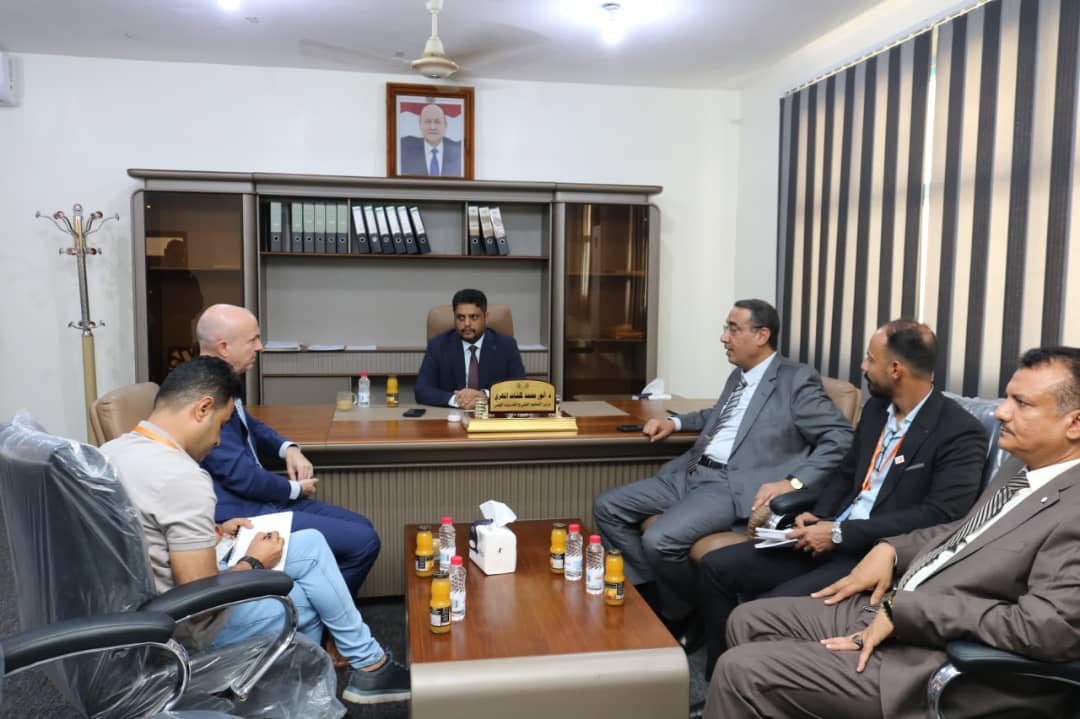
The Minister of Technical Education and Vocational Training, Dr. Anwar al-Mahri, met the United Nations Population Fund (UNFPA) Representative in Yemen, Francesco Galtieri, in Aden on Wednesday to discuss expanding vocational training and youth skills programs across the country. The talks centered on how the ministry and the UN agency can cooperate to widen access to practical, market-oriented training for young Yemeni men and women, whose employment prospects have been narrowed by more than a decade of conflict and economic decline.
According to the ministry, the discussion built on UNFPA’s existing youth-targeted programs, which aim to equip young people with skills suited to a fast-changing labor market. Both sides examined ways to align technical and vocational education more closely with the needs of employers at home and abroad, so that graduates leave training with qualifications that translate into paid work rather than certificates with little practical value. Al-Mahri stressed that partnerships with international organizations remain central to the government’s efforts to rebuild the sector.
That emphasis on outside cooperation is a recurring theme in the government’s dealings with international partners, reflecting both the scale of the need and the limits of what a cash-strapped administration can achieve alone. The ministry framed the meeting as part of a longer-term push to modernize a training system that has struggled to function through years of war, and to give it the capacity to serve a young population entering an economy with few formal jobs.
The backdrop to the talks is a humanitarian emergency that ranks among the world’s most severe. The war that escalated in 2015, when a Saudi-led coalition intervened against Houthi forces that had seized the capital Sanaa, has displaced millions and shattered the formal economy. The United Nations estimates that in 2026 some 22.3 million Yemenis, more than two-thirds of the population, require humanitarian assistance and protection, including around 5.2 million people who remain internally displaced from their homes.
The economic picture is equally stark. Public salaries have gone unpaid for long stretches in many areas, and a collapsing currency has pushed basic goods beyond the reach of ordinary families. The UN has described Yemen as among the most food-insecure countries in the world, with more than 18 million people acutely food insecure. In that environment, officials argue, vocational training is more than a route into a first job; it is a means of restoring a measure of stability to communities that have lost it.
The ministry describes skills development as a tool for stabilization, one that can give disadvantaged young people a stake in society, reduce the appeal of armed groups, and support the reintegration of those whose education was interrupted by the fighting. By channeling young people toward trades and services that the economy still needs, officials hope to offer an alternative to displacement, unemployment or recruitment into the conflict, and to build a workforce capable of contributing to eventual recovery.
Turning that vision into reality depends heavily on the state of Yemen’s schools and training centers, many of which have been damaged, repurposed or starved of resources. Restoring and modernizing that infrastructure is a prerequisite for the kind of expansion the ministry envisions, and officials have acknowledged that rebuilding the sector will take sustained investment over many years. Teacher shortages, outdated equipment and interrupted funding have all made it harder for existing institutions to keep pace with demand.
Aid operations in Yemen have also faced deep funding shortfalls, and UN agencies warned during 2026 that budget cuts were forcing them to scale back services, with women and girls often among the hardest hit. That context sharpens the case both sides made for programs that build self-reliance rather than long-term dependence on emergency relief, since durable skills can outlast the fluctuations of the annual aid appeal and continue to generate income even when external funding contracts.
The meeting fits within the priorities of the internationally recognized government, which is based in Aden and has sought to present itself as a partner capable of delivering services and attracting support. For UNFPA, whose mandate includes the wellbeing of young people and of women and girls, cooperation on skills training aligns with a broader effort to protect a generation whose prospects have been shaped by years of instability. Both the ministry and the agency framed the talks as a step toward practical collaboration rather than a formal agreement.
Whether the discussions lead to expanded programs will depend on funding, security and the ability of both partners to sustain their commitments amid competing demands. For now, the meeting signaled a shared intent to treat vocational training as a long-term investment in Yemen’s stability rather than a short-term relief measure. In a country where so much of the population depends on aid, officials argue, building the skills that allow young people to support themselves may prove one of the more durable contributions the international community can make.
Youth unemployment is one of the most pressing dimensions of Yemen’s crisis. A large share of the population is under 25, and the collapse of the formal economy has left many young people with few legitimate ways to earn a living, a gap that aid officials warn can feed instability and migration. Programs that pair training with the real demands of local employers, or with opportunities in neighboring labor markets, are seen as a way to convert that demographic pressure into an asset. For a country still years from any settled peace, equipping young Yemenis with marketable skills is a rare investment whose benefits do not hinge on the outcome of the war.
About the Author