A UNICEF official and the Water Minister held discussions on water and sanitation support.
 Yemen Herald News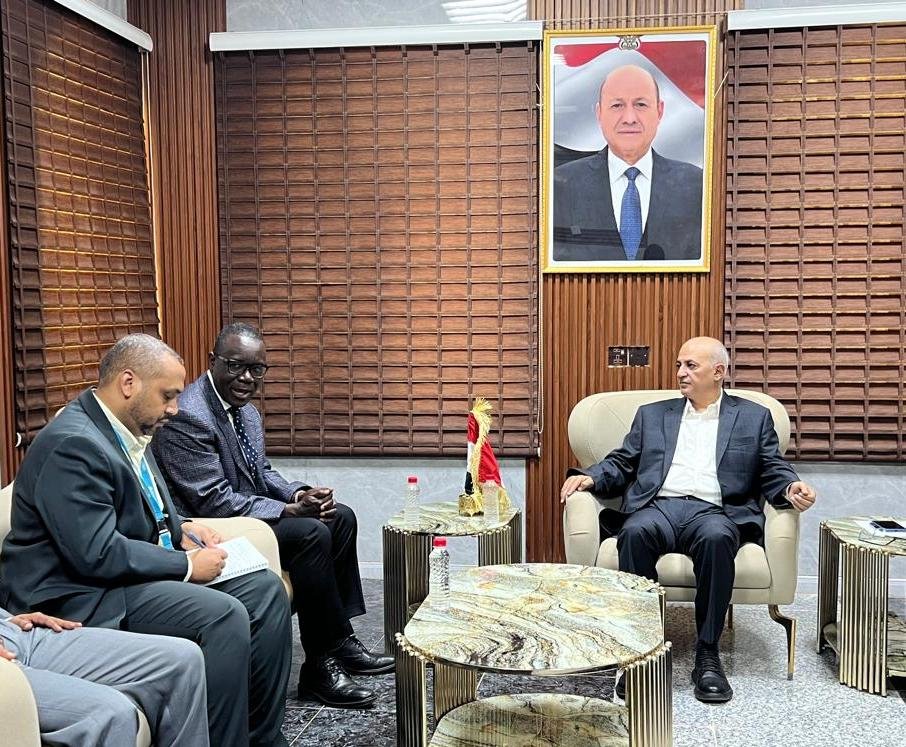
Since 2015, Yemen has been embroiled in a devastating civil war that has led to one of the world’s worst humanitarian crises. The conflict, which initially sparked between the Houthi movement and the country’s internationally recognized government, has drawn in regional powers and turned Yemen into a battleground for geopolitical interests. The Saudi-led coalition, along with the United Arab Emirates, has intervened against the Iran-backed Houthis, contributing to the ongoing instability and destruction of infrastructure throughout the country. As a result, essential services, particularly in areas such as water supply and sanitation, have been severely compromised, leaving millions of people in dire circumstances.
In the heart of this tumult lies the city of Aden, where the Presidential Leadership Council operates as the recognized government authority. Despite the challenges of war and a fragmented governance system, local and international organizations are striving to deliver humanitarian assistance. The United Nations and its associated agencies, including UNICEF, play a crucial role in coordinating efforts to address the urgent needs of the civilian population. The scale of the crisis is staggering, with over 18 million people requiring assistance and more than 4.5 million displaced from their homes due to ongoing conflict and violence.
The discourse around humanitarian aid in Yemen frequently emphasizes the interconnectedness of health, nutrition, sanitation, and water availability. These sectors are critical to maintaining public health, as problems such as cholera and measles outbreaks have periodically surged due to broken infrastructure and insufficient healthcare access. As the conflict persists, international partnerships are increasingly becoming essential in ensuring that vulnerable communities can regain some semblance of stability and support.
A recent meeting between the Yemeni Minister of Water and Environment, Eng. Tawfiq Al-Sharjabi, and Obia Achieng, the Deputy Representative for Programs at UNICEF in Yemen, highlighted the urgent cooperation between governmental and international organizations in addressing pressing humanitarian needs. The discussions focused on enhancing efforts in water, sanitation, and nutritional services, aiming to generate key initiatives that would mitigate the hardships faced by vulnerable communities across Yemen.
During their meeting, both parties reviewed the progress of projects currently being implemented under their collaborative framework. Priority areas were identified, particularly the need to ensure water and public health security, addressing these challenges in underserved regions where the need is most acute. The ministry highlighted continued initiatives alongside UNICEF that strive not only to alleviate immediate issues but also create sustainable solutions over the long term.
Minister Al-Sharjabi underscored the importance of securing reliable energy sources for water facilities, while also improving food and sanitation services. He spoke to the critical necessity of further collaboration between the Ministry and UNICEF as well as other international agencies, to effectively meet the growing demand for services in a country crippled by war and economic decline. Al-Sharjabi’s focus on long-term solutions is indicative of a strategic shift in managing Yemen’s water and sanitation sector.
The primary stakeholders in these discussions are the Yemeni government, specifically the Ministry of Water and Environment, and UNICEF as a prominent international organization focused on children’s welfare. The Yemeni government is striving to regain functionality amidst the chaos of war, with the Ministry of Water and Environment taking on pivotal responsibilities in stemming the tide of humanitarian crises related to water, nutrition, and sanitation. The commitment to joint initiatives marks a step towards stabilizing and improving the lives of citizens affected by the ongoing conflict.
UNICEF plays a multifaceted role as an international partner representing global concerns for vulnerable populations, particularly children. UNICEF’s alignment with the Yemeni Ministry of Water and Environment allows for the integration of international best practices into local contexts, creating a tailored approach to Yemen’s unique challenges. As a result, joint programs focus not only on immediate relief but also on creating a sustainable infrastructure that supports long-term health and well-being.
Other essential partners include local NGOs and community-based organizations that amplify the reach of water and sanitation programs in remote and underserved areas. The collaborative efforts among these stakeholders are vital for resource mobilization and advocacy, which underpin the success of humanitarian initiatives. By fostering partnerships between governmental and non-governmental entities, Yemen aims to enhance delivery mechanisms for emergency assistance and sustainable development.
The ongoing humanitarian situation in Yemen has implications that extend beyond its borders, impacting regional stability and security. The civil war has exacerbated existing tensions between Iran and Saudi Arabia, with Yemen often viewed as a proxy battleground for their rivalry. The struggle for dominance in the Red Sea region, particularly around the strategic Bab al-Mandab Strait, highlights the geopolitical dimensions of the crisis, as this maritime route is crucial for international trade and energy supplies.
Fluctuations in humanitarian conditions can influence migration patterns as people flee conflict zones in search of safer environments. Neighboring countries, particularly those in the Gulf Cooperation Council, are affected by increasing numbers of refugees seeking asylum, adding strain to their own resources. Furthermore, the potential for instability to spill over into these nations creates an incentive for regional stakeholders to seek a peaceful resolution to the Yemen conflict.
International aid, including that provided by UNICEF and other organizations, has a significant role in regional diplomacy and humanitarian politics. The commitment to cooperative programs focusing on water, sanitation, and nutrition is not merely an act of charity but also a strategic maneuver to stabilize Yemen. When basic needs are met, it reduces the likelihood of further conflict and fosters a sense of normalcy, which is beneficial for overall regional peace.
Yemen’s humanitarian crisis is characterized by an intricate interplay of conflict-induced challenges and the urgent need for infrastructural development. The partnership between the Yemeni government and UNICEF, focused on water and sanitation, emphasizes a commitment to addressing fundamental problems at their roots. By prioritizing initiatives that enhance public health and provide reliable water sources, these stakeholders not only work toward immediate relief but also lay the groundwork for resilience and recovery.
The long-term goals outlined by Minister Al-Sharjabi suggest a comprehensive approach that integrates energy solutions with water and sanitation services. This strategic perspective could cultivate sustainable development pathways that are vital for a country where traditional systems have been upended. Attention to energy supply for water facilities, for instance, is critical, as it directly affects the functionality of these essential services.
However, the effectiveness of these initiatives hinges on consistent collaboration and resource availability. Each project must address Yemen’s unique socio-political context, particularly the impact of ongoing violence and economic decline. Given that humanitarian aid is often contingent upon political will and stability, further complications might arise as the international community navigates its support amidst the intricate dynamics of Yemen’s conflict.
Looking ahead, the focus will need to remain firmly on the sustainability of water and sanitation services amidst the ongoing war. Continued dialogues like the one between Al-Sharjabi and Achieng will be essential to adapting UNICEF’s approaches to emerging challenges on the ground while ensuring that support aligns with the evolving needs of Yemen’s population. There is a pressing need for more localized solutions that address immediate humanitarian crises while simultaneously promoting long-term development goals.
The ability of Yemen to secure reliable partnerships and mobilize resources will play an indispensable part in its recovery from this humanitarian disaster. Enhanced coordination between the government, UNICEF, local NGOs, and community actors will be vital in steering initiatives towards meaningful change. The continued involvement of international stakeholders will be crucial as the country navigates the complex landscape of humanitarian aid and governance, which is intricately linked to achieving peace.
As the conflict drags on, the global community will continue to monitor the situation closely, as emerging developments could alter the scope of humanitarian intervention. Sustained commitment to supporting Yemen in rebuilding its water and sanitation infrastructure, alongside other critical sectors, will remain imperative for improving conditions for millions of Yemenis suffering amid this ongoing crisis. The future of Yemen rests on its ability to overcome its current turmoil and build a framework for cooperation that prioritizes stability, resilience, and the welfare of its citizens.
About the Author