Activities of Kamaran Company in Jordan Reviewed by Prime Minister and Foreign Minister
 Yemen Herald News
Yemen, a country situated at the southern tip of the Arabian Peninsula, has been entrenched in a devastating civil conflict since 2015. This protracted war has left the nation in a state of turmoil, leading to one of the worst humanitarian crises in modern history. The conflict primarily pits the internationally recognized government, backed by a Saudi-led coalition, against the Houthi movement, an Iran-aligned group that controls significant portions of northern Yemen, including the capital, Sana’a. This ongoing discord has resulted in more than 18 million people needing humanitarian aid and created over 4.5 million internally displaced persons (IDPs).
In this context, the economic landscape has been severely impacted, with many sectors struggling to survive amid the hostility and instability. National companies face numerous challenges, including disruptions in operations, currency instability, and a lack of critical infrastructure. Despite these difficulties, there exist pockets of optimism, particularly among enterprises striving to maintain their operations and contribute to Yemen’s economy. Central to this discussion is the Kamaran Industry and Investment Company, which has endeavored to sustain its functions and sustain the livelihoods of those dependent on it.
The Kamaran Company operates within the Jordanian free zones, which can offer a strategic advantage for Yemeni enterprises to engage with international markets without the immediate challenges posed by the ongoing civil unrest in Yemen. The facility’s operations are vital, not just for economic reasons, but also due to their potential in generating employment opportunities and enhancing local investment climates. This scenario offers a unique perspective on Yemen’s efforts to rebuild and sustain its economy in the face of external challenges.
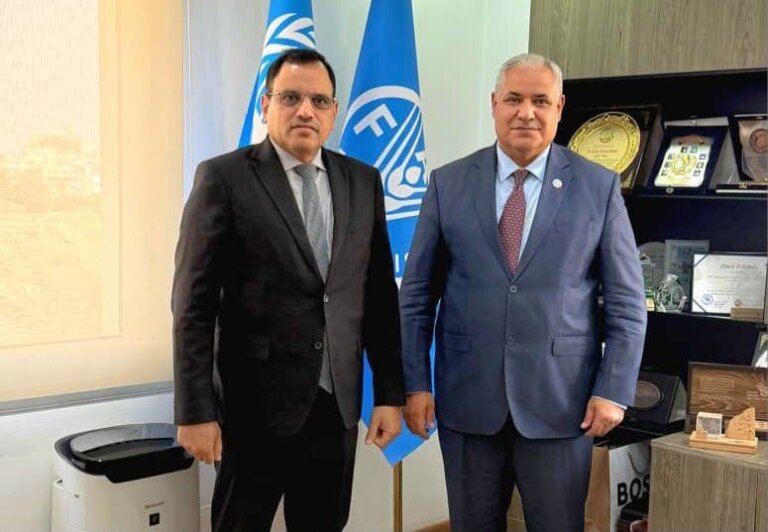
Recently, Prime Minister Dr. Shaya Mohsin Al-Zindani met with Mr. Abdulhafidh Al-Sammah, the Chairman of Kamaran Company, to discuss the current status of the company, its operations in Jordan, and plans for future investment. The briefing highlighted the company’s performance and the various struggles it faces in maintaining and expanding its activities in the region. During this meeting, the Prime Minister underscored the government’s commitment to monitoring the performance of national firms and providing needed support to assist them in reaching their investment goals.
Dr. Al-Zindani emphasized the importance of effective coordination among government entities, particularly urging the Central Bank of Yemen and Yemen’s Embassy in Jordan to ensure ongoing support for Kamaran’s operations. This includes facilitating an environment conducive to uninterrupted business activities, which is crucial for the stability of not just the company but the broader economic landscape affected by the ongoing civil strife.
The Prime Minister’s words reflect a wider government strategy focused on economic stabilization and resilience amidst adversity. He noted the vital role that Kamaran Company plays in Yemen’s economy and expressed the need to continue supporting local businesses. The sentiment shared by Dr. Al-Zindani resonates throughout various discussions at the governmental level, where prioritizing national investments is seen as a fundamental aspect of Yemen’s economic policy.
The stakeholders involved in the Kamaran Company initiative include government officials, business leaders, and international financial institutions, all of whom play critical roles in fostering a viable business environment. The primary actor in this scenario is Prime Minister Dr. Shaya Mohsin Al-Zindani, who also serves as the Minister of Foreign Affairs. His dual role allows him to bridge the gap between domestic policies and international collaboration, positioning Yemen for potential opportunities despite the severe ramifications of the ongoing conflict.
Meanwhile, Mr. Abdulhafidh Al-Sammah, as the Chairman of the Board of Directors, acts as a key figure in navigating the company’s operational strategy. His leadership is pivotal in aligning the company’s objectives with government initiatives while maintaining transparency regarding challenges and necessary changes in business operations. Mr. Al-Sammah’s engagement with top government officials suggests a strategic partnership aimed at fostering resilience in Yemen’s economy through effective private-public collaboration.
Moreover, the Central Bank of Yemen plays a fundamental role in providing the necessary financial infrastructure needed to support companies like Kamaran. With the challenges posed by rampant inflation and currency devaluation, the bank’s policies and decisions directly impact the stability and sustainability of businesses operating under these precarious economic conditions. The Embassy of Yemen in Jordan is also a significant stakeholder as it aids in facilitating trade and investment exchanges, thereby amplifying the economic engagement between Yemen and Jordan.
This network of stakeholders working in concert outlines a path forward, yet it requires ongoing commitment from all parties to ensure that the solutions proposed can lead to tangible outcomes.
The implications of Kamaran Company’s activities extend beyond its direct operations. As one of Yemen’s notable national investments, the company plays a role in shaping the overall economic relationship between Yemen and Jordan, as well as the broader regional economic landscape. Given the growing recognition of the importance of private sector participation in developmental efforts, the commitment of the Yemen government to supporting businesses like Kamaran could foster stronger economic ties within the region.
Jordan, which hosts a considerable number of Yemeni nationals, including professionals with expertise in various sectors, stands to benefit from increased economic collaboration. Enhanced economic ties could lead not only to greater investment opportunities but also to potential avenues for skill transfer and development, helping alleviate some of the human resource challenges faced by Yemen. As the stability of Kamaran Company improves, the positive ripple effects could contribute to a more vibrant regional economy.
Furthermore, nurturing positive business relationships amid the ongoing civil conflict can also signal to international investors that Yemen is taking steps toward recovery and resilience. By showcasing successful models such as Kamaran, the country could attract foreign direct investment that has been largely absent due to security concerns. This would be crucial for rebuilding essential infrastructures and services that have deteriorated during years of war, ultimately leading to improved conditions for citizens.
As Kamaran Company solidifies its presence in Jordan, it will undoubtedly impact broader regional partnerships, possibly fostering collaborative initiatives that bridge Yemeni businesses with other global markets.
The situation surrounding Kamaran Company exposes both the challenges and opportunities that can arise in an economy striving for resilience amidst war. On one hand, economic difficulties persist, including supply chain disruptions, currency fluctuations, and limited access to markets. Such challenges make it difficult for companies to thrive and expand their operations. However, the willingness of the Yemeni government to bolster national companies signals a proactive approach to economic stabilization.
The emphasis on strengthening coordination between government entities and businesses suggests that there is a recognition of the private sector’s vital role in economic recovery. By acknowledging Kamaran’s contributions to employment generation and asset preservation, the government highlights an essential aspect of rebuilding the economy from the ground up. This type of governmental engagement can foster a climate of trust and collaboration that may be beneficial for future companies pursuing growth opportunities.
Furthermore, the ongoing developments relating to Kamaran Company indicate a broader strategic shift among Yemeni authorities toward enhancing business resilience. The necessity for support in operations, coupled with a clear focus on the company’s prospects, outlines a commitment that could pave the way for more comprehensive engagement with both local and international business communities. This aligns with global trends identifying the private sector as key to achieving sustainable development goals, especially in war-torn regions.
While the challenges remain significant, such initiatives may inspire further investments and greater operational expansions within Yemen, especially if backing from government actors continues to grow in strength and scope.
The upcoming period will be pivotal for Kamaran Company and its stakeholders as they strive toward achieving their operational and investment goals. The ongoing commitment from the Yemeni government to ensure a stable environment will remain crucial in mitigating challenges and enhancing the company’s prospects. Should the Prime Minister’s directives be effectively implemented by the Central Bank and the Embassy, there could be noticeable improvements in the company’s operational landscape.
Furthermore, the company needs to continue its dialogue with government authorities to address any emerging challenges proactively. Ongoing communication will enable Kamaran to navigate the complexities of operating in a hostile economic climate, ensuring that it remains adaptive to changes that can affect its performance. The company’s ability to manage its challenges successfully can serve as a case study for other national investments facing similar fates in the current geopolitical landscape.
Additionally, the success of Kamaran Company may well catalyze renewed interest from foreign investors. If Kamaran can demonstrate resilience and robust operational capacity, it could lead to increased investments not just in the company itself but also in the broader Yemeni market. This influx of capital and expertise could indeed catalyze much-needed economic recovery efforts, producing favorable results for a nation yearning for stability.
Looking ahead, stakeholders must remain vigilant and responsive to the economic and political dynamics, positioning Kamaran Company not just as a key player in the Yemeni market but as a beacon of resilience for other enterprises to model. The pathway to comprehensive economic recovery remains uncertain, but the ongoing commitment from both government and industry leaders presents a starting point for rebuilding Yemen’s future.
About the Author