Al-Alimi briefs UK Foreign Secretary Ed Miliband on Taiz and the Dawn of Yemen operation
 Yemen Herald News
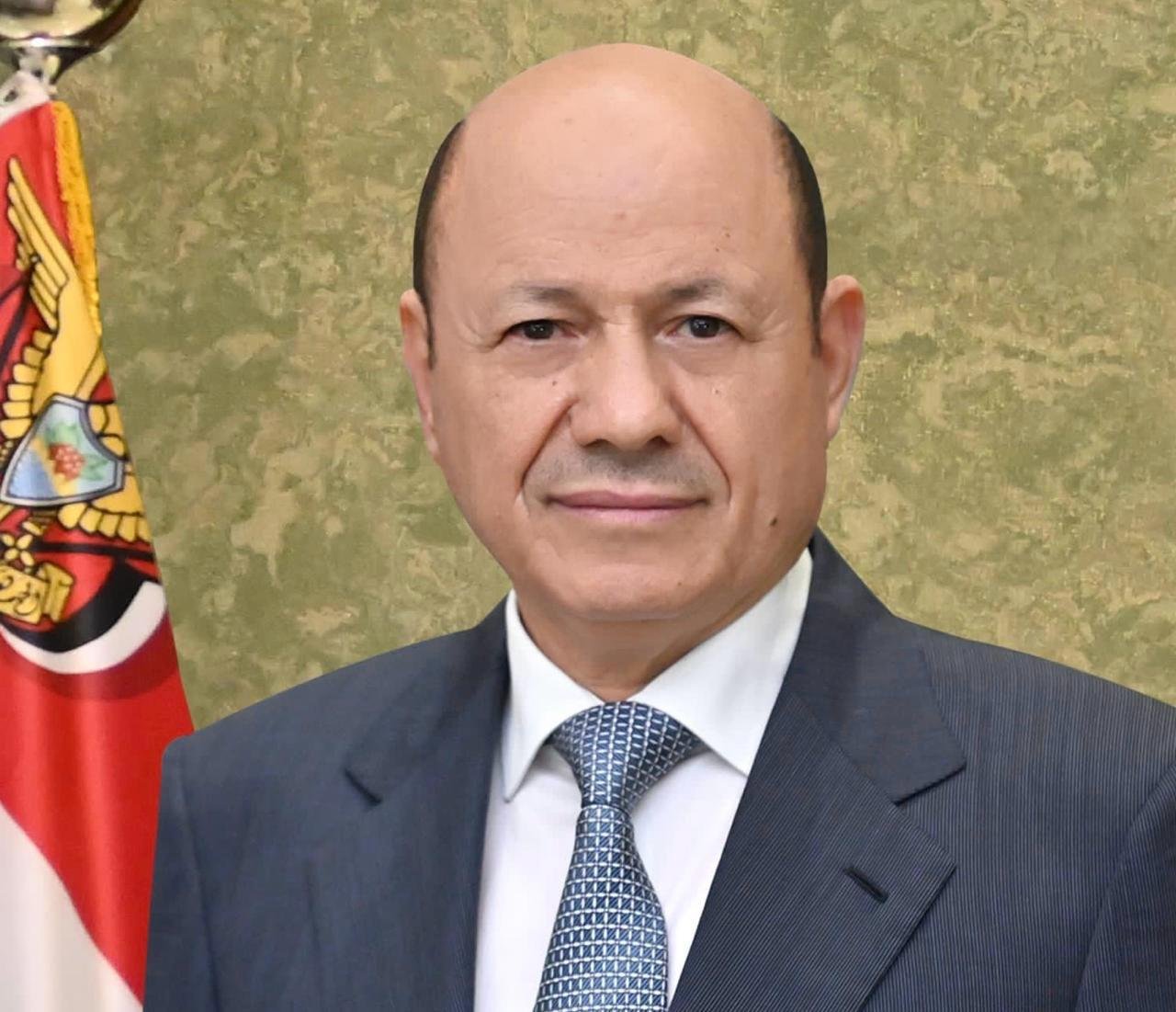
ADEN, Yemen — Yemen’s president briefed UK Foreign Secretary Ed Miliband on the government’s offensive and the situation in Taiz by telephone on Friday, the state news agency said.
Rashad al-Alimi, chairman of the Presidential Leadership Council, took the call from the British minister, according to Saba.
Al-Alimi set out military and field developments in the operation the government calls Dawn of Yemen, which it says is intended to restore state institutions.
He described conditions in Taiz governorate and what Saba called the steadfastness of residents and the armed forces against Houthi attacks, along with the humanitarian consequences.
Miliband affirmed Britain’s “full support for the Presidential Leadership Council and the Yemeni government at all levels,” the agency reported.
He said Britain would work with partners to tighten measures against the smuggling of weapons and dual-use technology to the Houthis, according to Saba.
Dual-use goods are items with both civilian and military applications. Their control is a recurring theme in Security Council measures on Yemen.
Britain holds the pen on Yemen at the United Nations Security Council, meaning it drafts the Council’s texts on the country.
Miliband said Britain is preparing an international conference to mobilise political, economic and humanitarian support for Yemen, Saba said.
The agency said the conference would seek funding for humanitarian relief and backing for recovery and stability efforts.
It did not give a date or venue for the conference, or name the states expected to attend.
Al-Alimi praised Saudi Arabia’s support for the Yemeni government and welcomed British efforts against the Houthi movement, according to the same account.
Miliband also praised Saudi Arabia’s role, Saba said.
This account of the call rests on Saba, the news agency of the internationally recognised government. No independent readout has been published, and Yemen Herald could not verify the conversation separately.
The British Foreign, Commonwealth and Development Office has not published its own account of the call.
Miliband has been foreign secretary since 20 July, when he was appointed by Prime Minister Andy Burnham.
He held the energy brief in the previous cabinet and led the Labour Party between 2010 and 2015.
The Security Council this week adopted a presidential statement condemning what it called escalating Houthi attacks against Saudi Arabia.
It was the Council’s first such statement on Yemen in several years.
Presidential statements are agreed by consensus among the Council’s 15 members.
The statement followed attacks on Saudi airports, including King Khalid International Airport in Riyadh.
Miliband discussed holding Iran to account with US Secretary of State Marco Rubio after that attack, according to news reports.
Government forces launched the Dawn of Yemen operation in the first half of October.
A military spokesman, Col. Majid al-Nuzaili, said this week that the operation had involved 1,879 strikes and destroyed 380 military vehicles.
He said 950 Houthi fighters had been “neutralised,” the military’s term. Those figures come from the government and have not been independently verified. The Houthi authorities have not published their own count.
Government forces say they have taken ground in Marib governorate, including heights around the Maas camp in Medghal district and positions north of Harib.
Those claims rest on military sources and are contested by the Houthi side, which disputes government accounts of territorial gains.
Al-Alimi has said the operation aims to retake all territory held by the Houthis, including the capital, Sanaa.
The Houthi movement has controlled Sanaa since 2014.
Fighting has also intensified around Taiz, Yemen’s third-largest city.
Government sources said troops captured 81 Houthi fighters at al-Dhabab, west of the city, and reported fighting at Hathran and Jabal Han.
The Yemeni government and the European Union have both described the situation there as a Houthi siege. The Houthi authorities reject that characterisation.
Yemen’s Ministry of Public Health and Population said on Oct. 10 that medicines, intravenous fluids, medical supplies and fuel at health facilities in Taiz city were nearing depletion.
The Yemeni Network for Rights and Freedoms said it documented 43 violations by Houthi forces in Taiz over 24 hours this month, which it said killed five civilians and wounded 17.
Yemen Herald could not independently confirm that tally.
The International Organization for Migration said more than 217,000 people have left their homes since the fighting escalated.
The World Health Organization said this week that suspected cholera cases had risen at displacement sites, and that it had secured $3.78 million of the $31 million it needs for a 90-day response.
Human Rights Watch said in September that recent Houthi attacks include acts that are likely war crimes. The Houthi authorities dispute those findings.
The United Nations humanitarian response plan for Yemen, published in March, estimated that more than 22 million people needed assistance. Those figures predate the current escalation.
The Presidential Leadership Council was formed in 2022 and is based in Aden.
Al-Alimi has chaired it since its formation.
The council took over from former president Abd Rabbuh Mansour Hadi in April 2022 and brings together several factions aligned against the Houthi movement.
Yemen’s internationally recognised government has operated from Aden since 2015.
Britain was among the states that backed the council’s creation.
Saba did not say how long the call lasted.
About the Author