Al-Alimi Presses Yemen’s State Media to Publish Faster and Back Claims With Evidence
 Yemen Herald News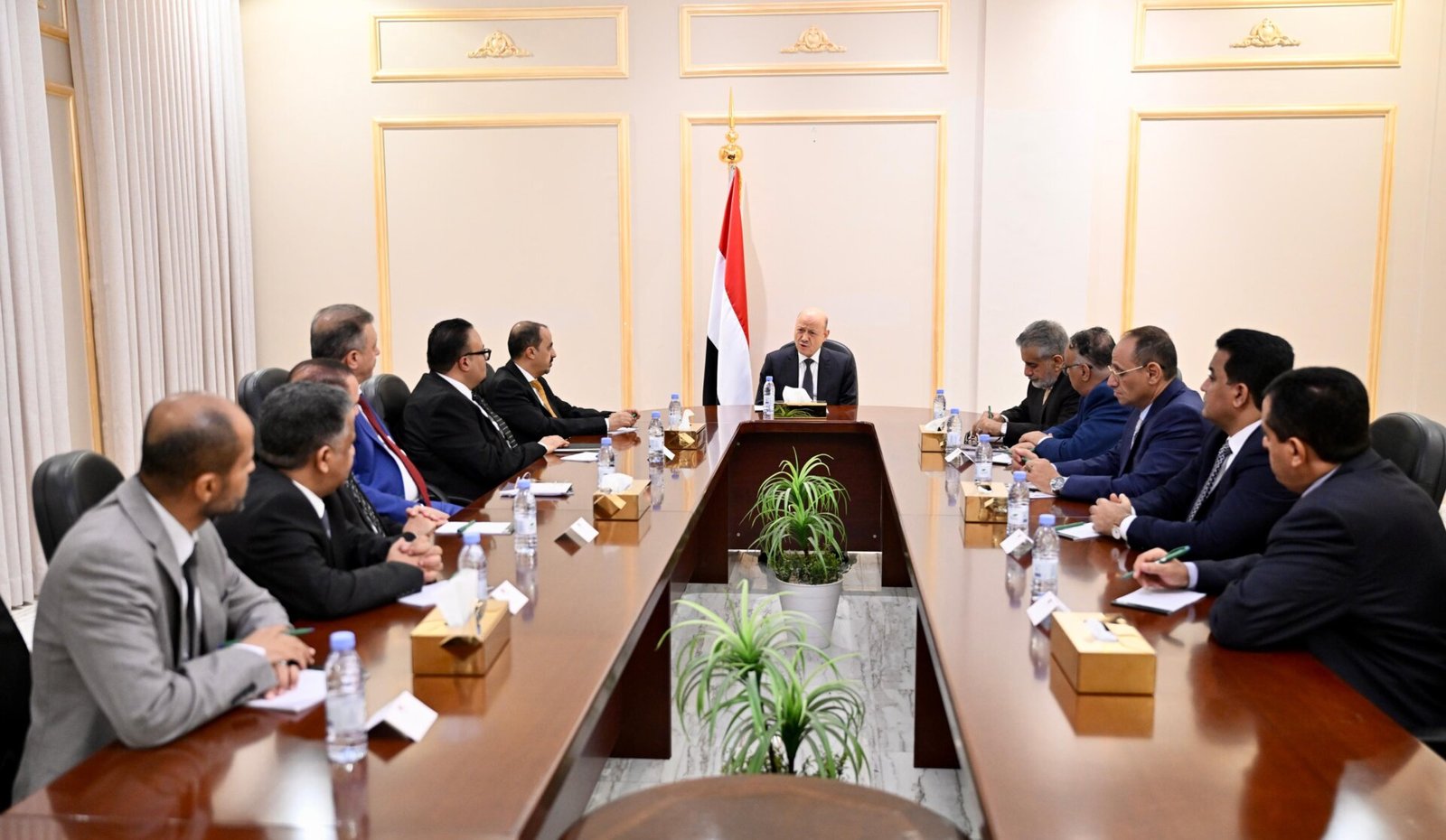
Rashad al-Alimi, chairman of Yemen’s Presidential Leadership Council, told senior media officials this week that national outlets occupy a central place in what he described as a battle for public truth and awareness, and urged them to report faster and to document their claims. He was speaking at a meeting with Information Minister Muammar al-Eryani and the heads of state media institutions, according to the official Saba news agency.
Al-Alimi’s argument was that the conflict is fought on more than one plane. Alongside the fighting itself, he said, there is a contest over how the war is explained: who began it, who sustains it, and what the consequences of stalled peace efforts have been for ordinary Yemenis. That narrative competition, in his account, shapes how Yemenis and outside governments understand issues ranging from the management of public resources to the security of shipping lanes off the country’s coast.
He was direct about where he believes the government has lost ground. When state institutions fail to publish timely and accurate information, he said, the Houthi movement fills the gap with its own version of events. The remedy he proposed was procedural rather than rhetorical: every significant development should be met with prompt, substantiated coverage, supported by documents, figures and first-hand accounts rather than assertion. He contrasted proactive reporting with what he characterised as a reactive habit of responding to claims only after they have circulated.
Al-Alimi also pointed to the number of outlets aligned with the republican camp, arguing that their spread is an asset only if their output is coordinated rather than duplicated. He acknowledged that the sector operates with limited resources, a constraint that has affected state broadcasters and newspapers throughout the war as budgets, transmission facilities and printing capacity have been disrupted.
The president raised the media dimension of Yemen’s relationship with Saudi Arabia as well, saying that the strategic partnership between the two governments should extend to the information sector through closer coordination, information-sharing, fact-checking and joint work against misinformation. Saudi Arabia leads the coalition that intervened in Yemen in 2015 and hosts much of the Yemeni leadership, and its state-linked broadcasters carry a substantial share of Arabic-language coverage of the conflict.
Alongside those instructions, al-Alimi said press freedom and the protection of journalists would remain a commitment of the state leadership and government, framing it as part of the rule of law and of institution-building rather than as a concession. That pledge sits against a difficult record for anyone practising journalism in Yemen, and the pressures are not confined to one side of the front line.
Press freedom organisations have documented detentions by several authorities. Reporters Without Borders recorded nine journalists imprisoned in Yemen, most of them held by the Houthi authorities, and rights groups have called for the release of reporters detained by the Houthis and by the Southern Transitional Council alike. Waheed al-Sufi and Nabil al-Sadawi have been held since 2015. Six journalists and media workers were reported abducted in Hodeidah governorate in May. Four journalists sentenced to death by a Houthi court on espionage charges were freed in 2023 under an exchange that followed the Saudi-Iranian rapprochement.
Journalists have also been detained and killed in areas under the recognised government. Security forces in Marib held the reporter Hamoud Hazza while he was covering a public event, releasing him after he signed an undertaking not to criticise the government or the information minister. In June, Muhammad Aidha, who had reported for the Saudi-owned Al Arabiya and Al Hadath channels since 2019, was killed in Mukalla by an explosive device planted in his car. Human Rights Watch has pressed for an end to impunity for crimes against journalists in Yemen, noting that few such cases have produced prosecutions.
That record is the practical test of the commitment al-Alimi restated. Government-aligned media have been asked to work to a higher evidentiary standard at the same time as reporters working outside official structures continue to face detention and, in some cases, violence, in territory the government controls. Media freedom groups have argued that the credibility the president says he wants for state outlets is difficult to build while independent reporting is constrained.
Muammar al-Eryani has held the information portfolio for several years and has been among the government’s most visible officials internationally, focusing much of his messaging on the Houthis’ conduct and on Yemen’s humanitarian conditions. The ministry has been working to survey national media institutions and to define their role in the campaign to restore state authority, an effort that the meeting appeared intended to advance. The Presidential Leadership Council, formed in April 2022, has repeatedly identified communications as a weakness, and successive officials have complained that government statements reach Yemeni audiences later than competing accounts do.
Saba’s account of the session did not set out specific measures, funding commitments or deadlines, and no reorganisation of state media was announced. What emerged was a statement of expectation, that outlets should publish first and prove what they publish, and that the government regards the framing of the conflict as a field it cannot afford to leave uncontested. Whether that translates into changed practice will depend on resources the sector does not currently have and on the protections extended to journalists working outside it.
About the Author