Al-Alimi Tells Yemen’s Diplomats the State Will Not Permit Flights Outside Its Authority
 Yemen Herald News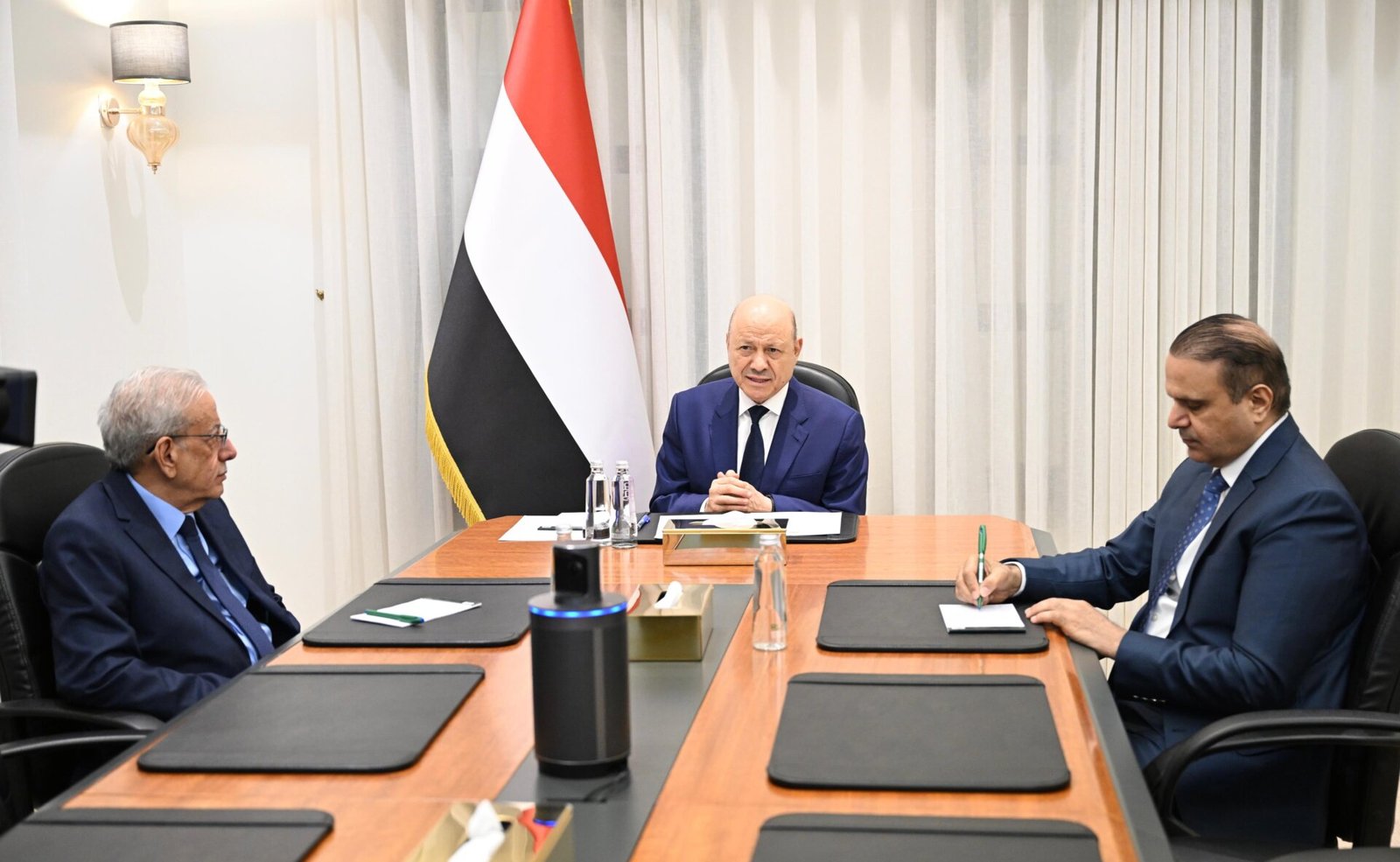
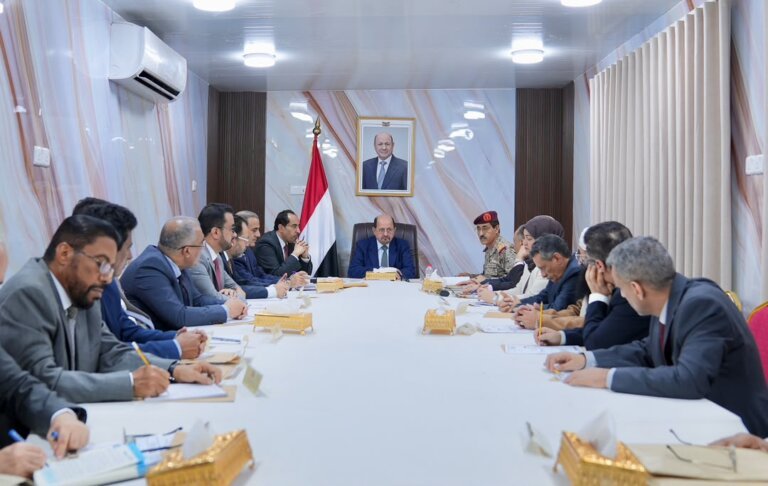
President Rashad al-Alimi, chairman of Yemen’s Presidential Leadership Council, told a meeting of the country’s ambassadors and heads of diplomatic missions abroad that the state will not allow any flights to operate outside its exclusive jurisdiction, and that the Houthi militia has no alternative but to accept the humanitarian initiatives already announced. The meeting was attended by Shayea Al-Zindani, who serves as both Prime Minister and Minister of Foreign Affairs and Expatriates.
The president commended the Foreign Ministry and Yemen’s diplomatic missions for their work in defending the rights of Yemeni citizens abroad and safeguarding national interests through a difficult period. The responsibilities of those missions, he said, have evolved well beyond traditional representation: they are now central to the defense of the Republic of Yemen, its sovereignty and its legitimate institutions against sustained external pressure.
Al-Alimi observed that contemporary conflicts are rarely decided on battlefields alone. They increasingly unfold in international arenas, where public opinion and diplomatic influence carry decisive weight. He urged the diplomats to work systematically to secure global support for Yemen’s cause and to amplify the state’s narrative against what he described as the disinformation campaigns waged by its adversaries, chief among them the Houthi movement.
Addressing the confrontation with the militia directly, the president outlined a strategy that combines diplomatic, military and political measures intended to deter the Houthis from imposing an agenda that, in his words, disregards the welfare of the Yemeni people. He noted that recent international discussions have begun to reframe the crisis: what was once treated primarily as a humanitarian file is increasingly recognized as a direct challenge to the sovereignty of Yemen as a member state of the United Nations.
That shift in perception, al-Alimi suggested, is beginning to yield results. He acknowledged a growing recognition of Yemen’s position among friendly nations and expressed hope that the momentum would continue to build, appealing for stronger international support to help the country move toward the security, stability and peace its people have been denied for more than a decade of war and division.
Looking ahead, the president set out the priorities he expects Yemen’s diplomatic missions to pursue. These include intensifying international pressure on the Houthi militia through coordinated efforts, firmly upholding Yemen’s sovereignty and legal standing in every forum, and ensuring that the humanitarian needs of the Yemeni people and respect for their rights remain at the center of any diplomatic discussion about the country’s future.
Al-Alimi reiterated his long-standing position that restoring the authority and functioning of state institutions is the only viable path to an enduring peace. In that context, he pointed to the government’s openness to humanitarian efforts, including the initiative Jordan announced on July 17, under which Royal Jordanian Airlines is preparing to operate regular commercial flights between Amman and Sanaa, as evidence of its willingness to support any initiative that reduces the suffering of citizens, provided such initiatives respect the sovereignty of the state and its legitimate institutions.
On the question of flights, however, the president left no room for ambiguity. The Yemeni state, he said, will not permit any air operations outside its jurisdiction, and the Houthis must place the wellbeing of the Yemeni people above their narrow interests. The remarks reflect the government’s determination to assert control over the country’s airspace and to resist unilateral actions it views as an erosion of national authority.
In his closing instructions, al-Alimi directed the diplomatic missions to confront and refute the misleading narratives propagated by the Houthi movement, using factual evidence and international law as their tools. He asked them to keep international attention focused on the militia’s violations of human rights, which he described as a threat to the foundations of a just and equitable Yemeni state.
The president’s remarks follow a week of exceptional tension over who controls Yemen’s skies. The armed forces said they struck the runway of Sanaa International Airport to prevent an Iranian aircraft carrying a senior Houthi delegation from landing without the state’s authorization, and the government briefly closed the airports under its control before reopening them the same day. The government also accused the Houthis of detaining an aircraft operated by the International Committee of the Red Cross at Sanaa airport along with its crew; the ICRC said its staff and the crew were safe, while the Houthis did not publicly respond to the allegation.
The dispute over flights is rooted in Yemen’s divided map. Since the Houthis seized the capital in late 2014, prompting the intervention of a Saudi-led coalition in support of the internationally recognized government, rival administrations have claimed authority over the same national airspace. The government’s civil aviation authority has reinforced its insistence that every operator obtain prior permission before entering Yemeni airspace, even as it cautiously expands civilian aviation through Aden International Airport and the reopened Riyan Airport near Mukalla.
For a government that holds international legitimacy but not the capital, diplomacy is a front line in its own right. The stakes extend beyond politics: with more than 18 million people in need of humanitarian assistance, according to United Nations estimates, the credibility of state institutions and the rules governing access to the country will shape how, and how quickly, help reaches those who need it most.
About the Author