Al-Aradah opens IT college building at University of Saba Region in Marib
 Yemen Herald News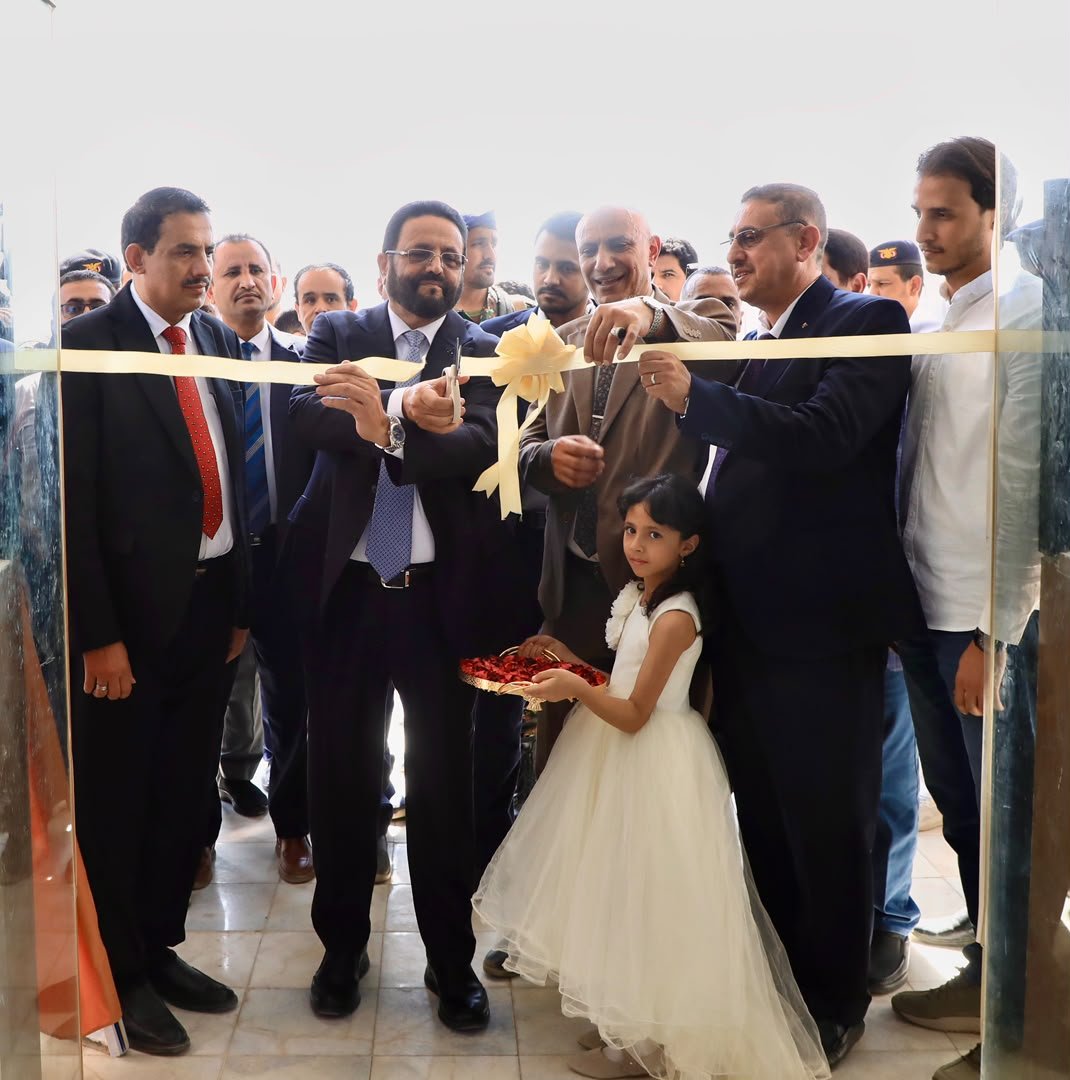
MARIB, Yemen — A member of Yemen’s Presidential Leadership Council opened a computer science college building at the University of Saba Region on Tuesday and laid a foundation stone for a second.
Sultan al-Aradah, who is also governor of Marib, carried out both steps at the university’s new campus, the state news agency Saba reported.
The completed building houses the College of Information Technology and Computer Science.
It contains a large hall, 14 classrooms, seven laboratories and a number of administrative offices, according to the agency.
Al-Aradah then laid the foundation stone for a building for the College of Administrative Sciences.
Saba said that second building is meant to expand the university’s infrastructure and take in more students and academic disciplines.
Al-Aradah credited the funding to the State of Kuwait — its emir, government and people — and to the Global Charity Organization.
He thanked both for what he called their role in supporting educational and humanitarian projects, the agency said.
The account of the ceremony rests on Saba, the news agency of the internationally recognised government. Yemen Herald could not independently confirm it, and no other record of the opening has been published.
Saba named no other official as attending. It gave no cost for either building and no completion date for the second.
The university has taken in outside construction money before.
The Saudi Development and Reconstruction Program is adding two buildings at the same campus, with 16 classrooms and an administrative office between them, Arab News reported.
The program has also laid foundations for a college of medicine there, according to the same report.
It runs a transport scheme to help female students reach the university, the outlet said.
Mohammed al-Qudsi, the university’s president, praised the program’s work, Arab News reported.
The Saudi program supports 56 projects and initiatives in general, higher and vocational education across 11 Yemeni governorates, according to the same report.
The Saudi program displayed 265 projects and initiatives carried out in Yemeni governorates across eight sectors, including education, health, water and energy, at the Future Projects Forum held in Riyadh in September 2025, Arab News reported.
Kuwait has been restoring development funding of its own to Yemen.
Wa’ed Batheeb, then Yemen’s minister of planning and international cooperation, signed an agreement with the Kuwait Fund for Arab Economic Development in February 2025 covering the resumption of Kuwaiti development projects and the rescheduling of arrears, Yemen Monitor reported.
Walid Shamlan al-Bahr, the fund’s acting director general, signed for the Kuwaiti side, according to the report.
The funding covers electricity and energy, education and public works, the outlet said. It gave no amounts.
Al-Aradah has governed Marib since 2012.
He joined the Presidential Leadership Council when it was formed in April 2022, after President Abed Rabbo Mansour Hadi transferred his powers to the eight-member body.
The governorate he runs has absorbed a large displaced population over the war.
Marib held 299,880 displaced families, or 2,087,573 people, at the end of December 2024, according to a report by the governorate’s executive unit for camp management obtained by Barran Press.
More than 400,000 of them were living in 208 camps, the report said.
It counted 38,721 families in makeshift shelters and 125 camps with no health services.
The report said 87,447 families needed food assistance, 24,445 of them urgently.
The Marib camp report also counted 36,564 children needing nutritional support and 19,715 pregnant and breastfeeding women among the displaced.
It listed 10,715 people with chronic illnesses, 9,232 people over 60 and 8,021 with impaired mobility.
The report recorded 3,111 children serving as heads of their families.
Yemen’s school system has lost ground across the same years.
About 2 million Yemeni children remain out of school, according to UNICEF.
The agency says 2,916 schools, or at least one in four, were destroyed, partially damaged or put to non-educational use in the seven years after the conflict began in March 2015.
Nearly 172,000 teachers, two-thirds of the total, have been paid irregularly since 2016 or left the profession for other income, according to UNICEF.
The agency puts the school-age population at 10.6 million.
Two of every five Yemeni children no longer attend school, according to a report by the German development magazine D+C.
Mahmoud Tarmoom, headmaster of al-Andalus School in Marib, told the magazine that about 4.5 million students have dropped out.
Abdulaziz Sultan, an adviser to Yemen’s education minister, said more than 84,000 students in Taiz governorate sit in severely overcrowded classrooms, according to the same report.
He said more than 45,000 teachers work in Taiz, and that the number is still short of what the governorate needs.
The average teacher’s salary in Yemen is 60 dollars, Sultan said.
Nine schools in Taiz have closed because of their proximity to Houthi weapons, he said.
More than 22 million Yemenis need humanitarian assistance, according to the United Nations humanitarian needs and response plan published in March 2026.
The plan seeks 2.16 billion dollars to reach 12 million of them.
It reports 18.3 million people acutely food insecure.
It counts more than 2.2 million children under five acutely malnourished, 516,157 of them severely.
The plan puts the number of internally displaced Yemenis at 5.2 million.
About the Author