Al-Aradah presses Yemeni commanders in Marib to raise combat readiness
 Yemen Herald News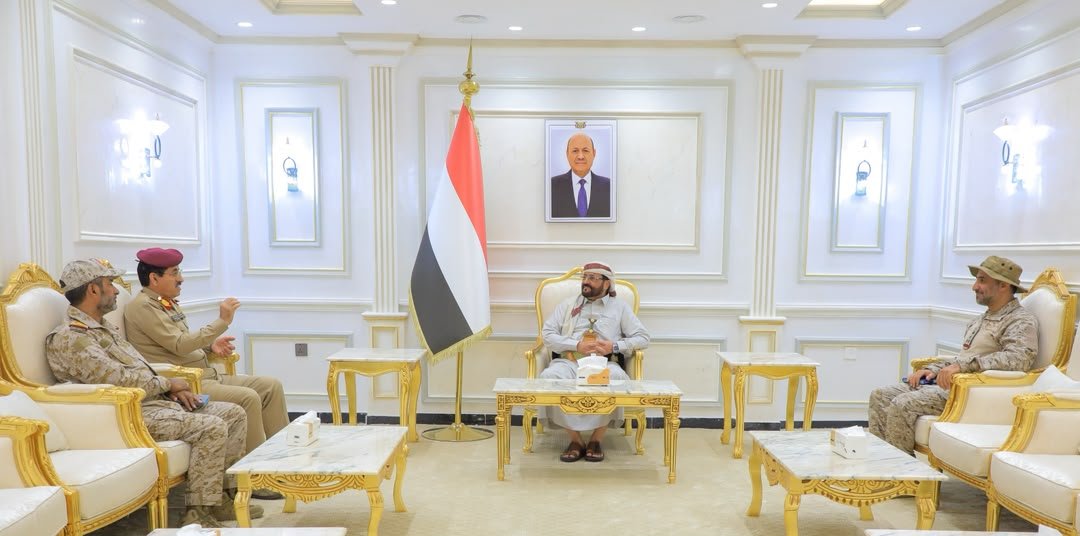
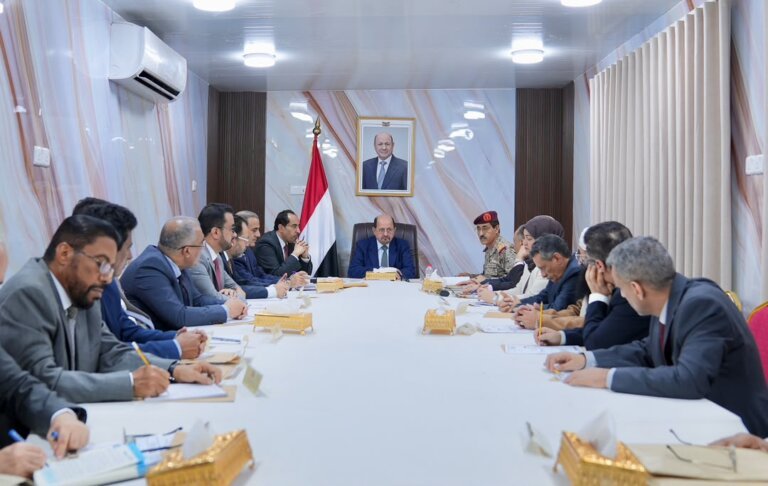
Sultan al-Aradah, a member of Yemen’s Presidential Leadership Council, has told senior commanders that defending the republic is a national obligation and that combat readiness must be raised across every front. He delivered the message in Marib at a meeting with Defence Minister Lieutenant General Taher al-Aqili and Lieutenant General Sagheer bin Aziz, the chief of the general staff and joint operations commander. Brigadier General Fares al-Shammari, who commands Saudi-led coalition forces in Marib, also attended.
The officials reviewed developments along the front lines, assessed the state of army and security units, and examined how far operational plans had been carried out in different sectors. Al-Aradah pressed for closer coordination between the various formations that make up the government’s armed forces, a long-standing weakness in a military assembled from regular units, tribal levies and factional brigades with separate chains of command and separate foreign patrons.
The meeting came at a moment of visible escalation. Yemeni state television reported that government aircraft struck Houthi positions in Marib and al-Jawf in late July, hitting reinforcements in the districts of al-Jubah, Majzar and al-Safra and targeting missile launchers, a Katyusha rocket base and weapons stores. Officials described the operations as pre-emptive rather than reactive. If that characterisation holds, it marks a shift for a government that has spent most of the past four years absorbing attacks rather than initiating them, and it reflects the collapse of the informal truce brokered through the United Nations that had held since 2022.
Al-Aradah also addressed civilians in Houthi-controlled territory directly, urging them to refuse the movement’s recruitment drives. The Houthis have expanded mobilisation campaigns in areas they administer, drawing heavily on young men through mosques, schools and summer camps. United Nations bodies and human rights organisations have documented the recruitment of children into the group’s ranks, a practice the Houthis deny. For the government, each new cohort of fighters raises the cost of any future ground offensive, which is why the appeal was framed as a matter of protecting families rather than as a purely military argument.
He acknowledged continuing support from the Saudi-led coalition, which supplies training, logistics, air power and much of the funding that keeps the armed forces in the field. That relationship remains the single largest external factor in the government’s military position. It has also narrowed over time, as Riyadh has pursued a negotiated exit from the war and shown limited appetite for a renewed ground campaign. Whether the coalition is prepared to underwrite a sustained offensive, as opposed to defensive support and periodic air strikes, is the question that shapes everything the commanders in Marib can realistically plan.
Al-Aqili and bin Aziz reiterated their commitment to building the armed forces into a professional national institution and said they were ready to confront the threats facing the country. Both men have made restructuring a public theme, arguing that military decision-making has been unified and that units previously answering to competing authorities have been brought under a single command. Independent assessments are more cautious. The Southern Transitional Council maintains its own forces, and several coastal and Red Sea formations operate with substantial autonomy, arrangements that survived earlier attempts at consolidation.
The government describes the Houthis as an Iran-aligned force, and Western governments and UN expert panels have documented transfers of weapons components and technical assistance from Iran. The Houthis reject the proxy label and insist their decisions are made in Sanaa. Whatever the balance, the group has demonstrated a capacity to strike Saudi territory, Israeli targets and shipping in the Red Sea, which gives it leverage that its opponents on the ground do not possess.
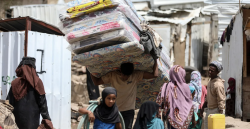
The humanitarian consequences of renewed fighting are severe and immediate. The United Nations estimates that 22.3 million people in Yemen, more than two thirds of the population, need humanitarian assistance this year, including 5.2 million people displaced inside the country. Acute food insecurity affects 18.3 million. Cholera, measles and diphtheria continue to circulate in districts where water and sanitation systems have broken down, and aid agencies have appealed for 2.16 billion dollars that they are unlikely to receive in full. Marib itself hosts one of the largest displaced populations in the country, much of it in camps within range of the front.
There is also an economic dimension that no amount of readiness can resolve. Government revenues collapsed after Houthi drone strikes closed the oil export terminals in late 2022, and although the Presidential Leadership Council announced a resumption of crude exports on 20 July, it will take time before any income reaches the treasury. Salaries for soldiers and civil servants have been paid late and irregularly, which erodes discipline more effectively than any enemy operation.
Al-Aradah’s message was aimed at least partly inward, at an armed force that needs to believe its command structure functions. The strikes in Marib and al-Jawf suggest the government is willing to test that proposition. What remains unclear is whether it has the manpower, the money and the external backing to convert air operations into territorial change, or whether this phase will end as previous ones have, with the front lines close to where they started and the civilian population absorbing the cost.
About the Author