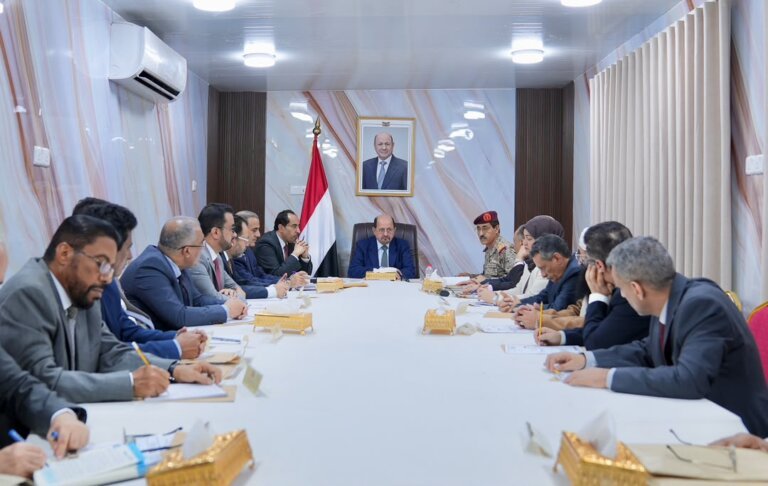
Dr. Abdullah al-Alimi Briefs Arab Ambassadors in London on Yemen’s Political and Security Situation
 Yemen Herald News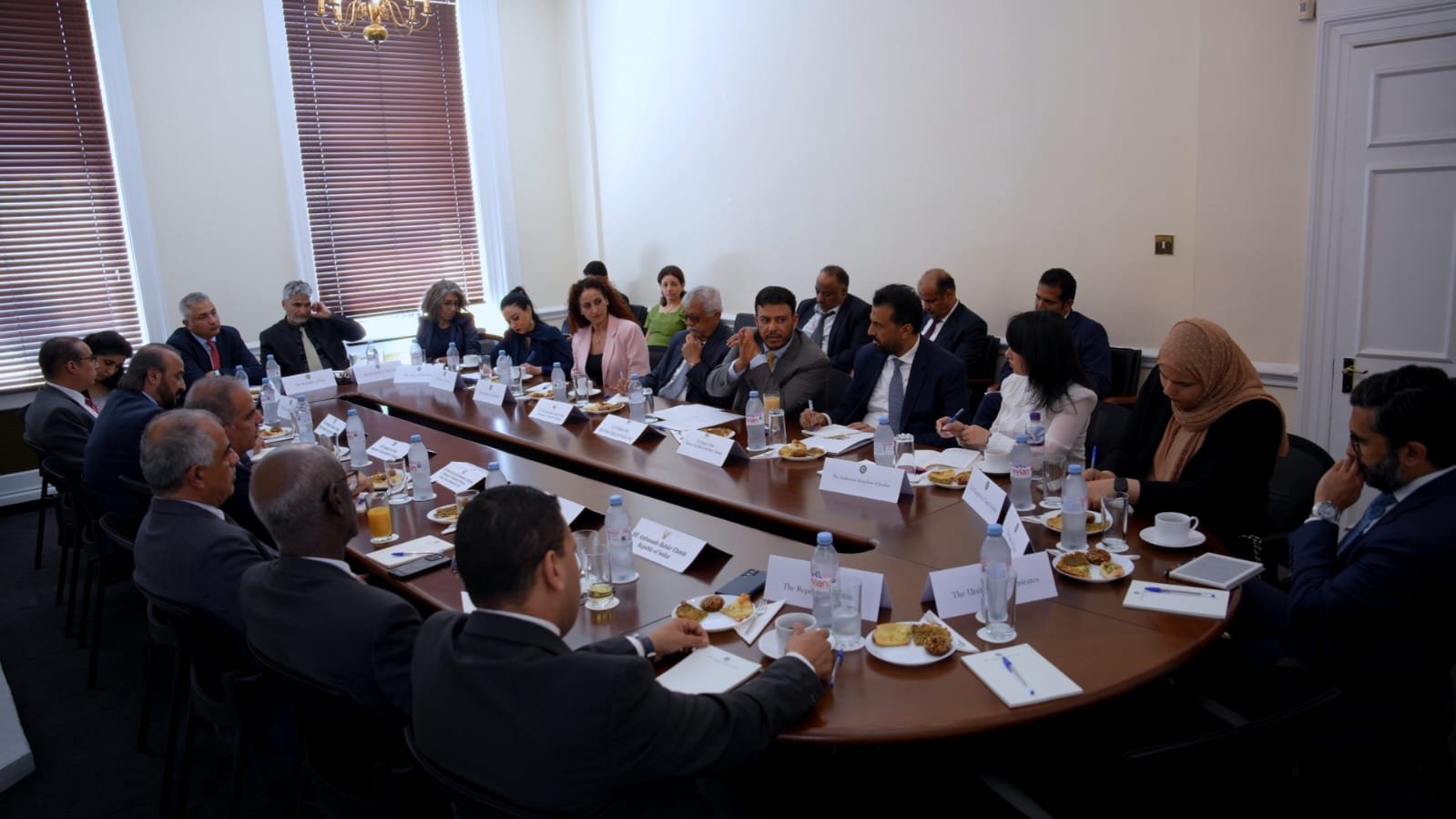
Dr. Abdullah al-Alimi, a member of Yemen’s Presidential Leadership Council, briefed a group of Arab ambassadors accredited to the United Kingdom on the latest political and security developments in his country during a working visit to London. The meeting formed part of a broader diplomatic push by the internationally recognized government to keep Yemen’s crisis on the agenda of Arab and Western capitals at a moment when the war’s economic and humanitarian toll continues to deepen.
Al-Alimi’s presence in the British capital coincided with the London 2026 conference convened by Chatham House, the Royal Institute of International Affairs, an annual gathering that draws senior officials, diplomats and business leaders from around the world. He was accompanied during his engagements by Dr. Yasin Saeed Noman, Yemen’s ambassador to the United Kingdom, who has represented the government in London throughout the conflict. The visit gave the council member a platform to press Yemen’s case before an influential international audience and to coordinate positions with partners who help underwrite the political process.
On the sidelines of his visit, al-Alimi met Hamish Falconer, the British minister of state for the Middle East and North Africa, to discuss strengthening bilateral relations between Yemen and the United Kingdom. The two sides reviewed ways to deepen cooperation across political, economic and humanitarian tracks, and al-Alimi used the exchange to underline the government’s reform priorities and its appeals for sustained donor support. The United Kingdom, a permanent member of the UN Security Council and the pen-holder on Yemen, retains a prominent role in shaping international policy toward the country.
In his briefing to the Arab envoys, al-Alimi set out an overview of conditions inside Yemen, dwelling on the economic hardship and humanitarian distress endured by millions of people. United Nations agencies estimate that well over 18 million Yemenis require some form of assistance, while more than four and a half million remain internally displaced after years of fighting. A collapsing currency, disrupted public services and the periodic outbreak of preventable diseases such as cholera have compounded the strain on households already pushed to the margins by the war.
Al-Alimi reiterated what he described as the government’s commitment to a comprehensive and durable peace, saying it remains willing to engage constructively with any serious proposal aimed at ending the conflict. Officials in the recognized government have consistently maintained that a settlement must rest on the agreed national, regional and international terms of reference that have framed mediation efforts, including the Gulf initiative, the outcomes of the national dialogue and relevant Security Council resolutions. Those benchmarks, in the government’s telling, are essential to any credible and lasting resolution.
Turning to the obstacles, al-Alimi directed pointed criticism at the Houthi movement, which the government says is backed by Iran and has repeatedly rebuffed peace initiatives. He argued that the group’s rejection of successive proposals has stalled progress toward a negotiated end to the war and prolonged the suffering of civilians. The council member tied that intransigence to what the government characterizes as growing external interference in Yemeni affairs, an accusation Tehran and the Houthis reject.
Al-Alimi’s talks unfolded against fresh friction over Sana’a International Airport, which lies in territory the Houthis have held since 2014. In early July, the government protested the arrival of a direct Iranian flight at the airport, saying the landing violated Yemeni sovereignty and UN Security Council resolutions and demanding an international investigation. The leadership council has insisted that any air links to Sana’a must operate through the national carrier and the legitimate civil aviation authority, and al-Alimi echoed those concerns in London as evidence, in the government’s view, of the external meddling he urged Arab and Western states to help curb.
The humanitarian consequences of the impasse, al-Alimi warned, are severe. Relief organizations continue to seek expanded and reliable access to the worst-affected areas, but delivery remains precarious where hostilities persist and where authorities on the ground restrict the movement of aid. Health systems weakened by years of conflict have struggled to contain recurring epidemics, and aid agencies have repeatedly cautioned that funding shortfalls threaten to curtail life-saving programs for the most vulnerable Yemenis.
The meetings in London also underscored the wider regional stakes of the Yemeni conflict. Yemen sits astride the Bab al-Mandab strait, a narrow maritime chokepoint linking the Red Sea to the Gulf of Aden through which a substantial share of global trade passes. Instability along that corridor carries implications for international shipping and security well beyond Yemen’s borders, a concern that has sharpened as attacks on vessels in the surrounding waters have drawn in outside naval forces.
Analysts note that Yemen’s war has long been entangled with broader rivalries in the Middle East, with the Saudi-led coalition supporting the recognized government and Iran aligned with the Houthis. Against that backdrop, al-Alimi’s appeals in London reflected a consistent government message: that a unified international stance, sustained humanitarian funding and firm backing for state institutions offer the surest path toward de-escalation.
Looking ahead, the council member expressed cautious optimism that renewed dialogue with international partners could widen humanitarian access and revive momentum toward a political settlement. That outlook, he acknowledged, depends on a genuine reduction in outside interference and on a willingness among Yemen’s factions to choose negotiation over further escalation, a prospect that, for now, remains uncertain.
About the Author