Yemen’s Minister for Women’s Affairs and Women National Committee Discuss Boosting Women in Civil Service
 Yemen Herald News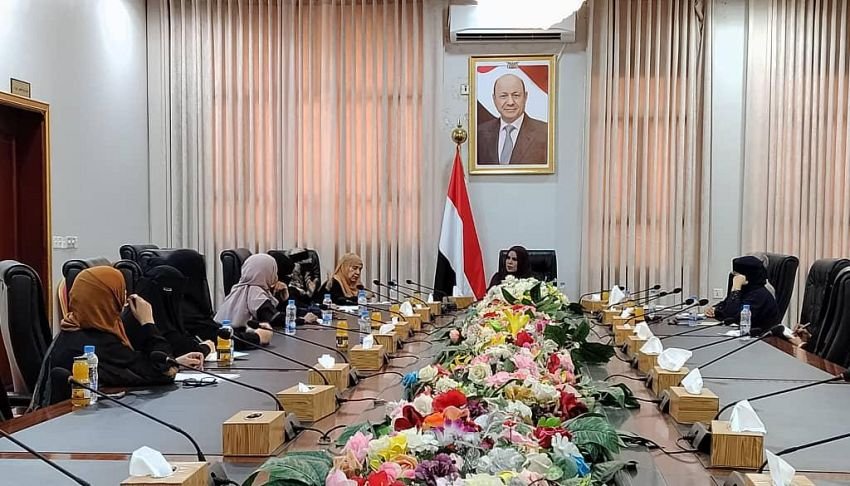
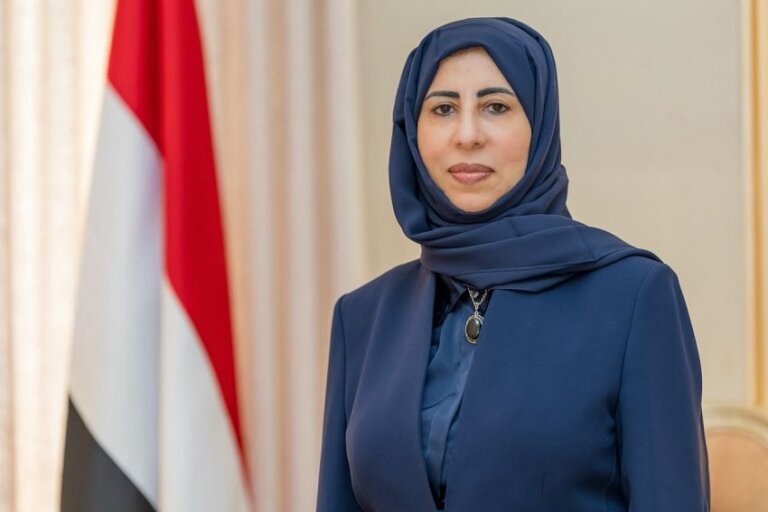
In Aden, Yemen’s Minister of State for Women’s Affairs, Dr. Ahd Jassous, has called for a concerted national effort to strengthen the empowerment of women across the country. Her remarks came during a meeting with the chairperson of the Women National Committee, Dr. Shafiqa Saeed, at which the two officials reviewed ways to increase women’s participation in the reform of the civil service and their representation within state institutions.
The discussion reflected a stated priority of the current government, which has presented the integration of women into national development as a matter of policy rather than symbolism. Jassous and Saeed emphasised the importance of ensuring that women occupy meaningful roles in government bodies and local authorities, arguing that their involvement is essential to effective governance and to the broader project of rebuilding the state.
Women’s participation in Yemen’s public life has deep roots but has often been constrained. The country’s 2013–14 National Dialogue Conference, convened during an earlier political transition, recommended measures to expand women’s representation in state institutions, including a target for their inclusion in decision-making. Advocates continue to cite those outcomes as a benchmark against which current efforts should be measured.
The Women National Committee, a government-affiliated body established to promote women’s rights, brings together representatives from ministries, state institutions and civil society. Its role in coordinating between officials and organisations makes it a natural partner for the ministry in pursuing reforms, and its chairperson’s involvement in the Aden talks underscored the committee’s place at the centre of these efforts.
The formation of the present government gave the issue renewed prominence. Its cabinet included several women in ministerial positions, a development widely interpreted as a practical step toward the goals set out during the national dialogue. For campaigners, such appointments matter both for the authority they confer and for the example they set, signalling that women can hold senior roles even amid the disruptions of conflict.
Central to the Aden meeting was the reform of the civil service, a sector seen as critical to restoring functional governance. Bringing more women into the administration, the ministers argued, would not only advance equity but also widen the pool of talent available to a state that can ill afford to overlook the capabilities of half its population. Integrating women’s perspectives into policymaking, they suggested, tends to produce more responsive institutions.
The two officials also discussed the coordination of international support. They raised the idea of establishing a centralised unit to manage donor engagement, with the aim of streamlining efforts across the many organisations working on women’s issues, directing assistance to where it is most needed and reducing duplication. In an environment of scarce resources and competing demands, they said, effective coordination has become increasingly important.
Among the priorities identified were initiatives closely aligned with national objectives, particularly in women’s education, health and economic empowerment. Saeed noted that the active participation of international partners would be valuable in advancing these goals, and both officials framed such cooperation as a way to translate broad commitments into concrete programmes that reach women and girls directly.
The context for these discussions is a humanitarian crisis that has fallen especially hard on women. Years of conflict have increased the burdens they carry, from managing households amid displacement to navigating collapsed services, while also exposing many to heightened risks. Aid agencies have repeatedly noted that women and girls are among the most vulnerable groups in Yemen’s emergency, making their empowerment both a matter of rights and of protection.
At the same time, the war has, in some respects, reshaped women’s roles. With many men drawn into the fighting or forced to seek work elsewhere, women have increasingly taken on responsibilities as breadwinners and community leaders. Advocates argue that this shift, though born of hardship, has demonstrated women’s capabilities and created an opening to press for their fuller inclusion once the country begins to rebuild.
Economic empowerment featured as a particular focus. Access to income, credit and markets can transform the circumstances of women and their families, and initiatives that support female entrepreneurship or employment are seen as among the most effective tools for advancing both gender equity and household resilience. In a country where poverty is widespread, such programmes carry practical as well as symbolic weight.
Education, too, was highlighted as foundational. The disruption of schooling during the war has affected girls disproportionately in some areas, and officials and advocates alike stress that sustaining and expanding girls’ access to education is essential to any long-term strategy for women’s empowerment. Without it, they warn, the gains sought in governance and the economy will be difficult to sustain across generations.
Organisations such as UN Women and a range of local groups have long worked to support Yemeni women through the conflict, and the ministers’ emphasis on coordination reflects a desire to make the most of that engagement. By aligning government priorities with the efforts of development partners, they hope to build a more coherent framework for advancing women’s participation across sectors.
Whether these aspirations translate into lasting change will depend on political will, security and funding, all of which remain uncertain in a country still divided by war. Yet the meeting in Aden signalled an intention to keep women’s participation on the national agenda, and to treat their inclusion not as a peripheral concern but as an integral part of Yemen’s efforts to rebuild its institutions.
About the Author