Israel Intercepts Houthi Drone Over Eilat as Yemen’s Rebels Renew Attacks
 Yemen Herald News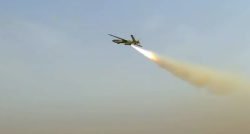
Israel’s air defences shot down a drone launched from Yemen toward the Red Sea resort city of Eilat shortly after midnight on 9 June 2026, sending residents to shelters as sirens sounded across the city. The military reported no casualties or damage from the intercept, but the incident underscored how Yemen’s Houthi movement has revived its long-range campaign against Israeli territory after a period of relative calm. For Eilat, a southern port that sits closer to Yemen than to Israel’s main population centres, it was the latest in a string of aerial threats that have repeatedly tested the country’s layered defences.
The alert triggered by the drone sent the city’s roughly 53,000 residents, along with thousands of tourists, into bomb shelters in the early hours of the morning. Israeli officials described it as the first attack on Eilat since a ceasefire had paused the most intense fighting involving Iran, giving the episode added significance as a marker of renewed hostilities. Though the drone was destroyed before it could cause harm, the disruption to a city that depends heavily on tourism illustrated how even an intercepted strike can inflict a cost.
The drone was part of a broader pattern of Houthi attacks that gathered pace through the spring of 2026. In late March, the group fired a ballistic missile toward Beersheba that Israeli interceptors brought down, signalling the resumption of strikes after months in which the front had quieted. The June episode fit squarely within that trajectory, confirming the group’s intent to keep pressure on Israel’s southern flank even as the wider regional picture shifted.
The attacks have unfolded against the backdrop of a wider regional confrontation. The drone downed on 9 June came only hours after the Houthis fired two ballistic missiles at Israel the previous day; one was intercepted and the second failed to reach its target. That salvo followed a sharp escalation involving Iran and its allied forces. Each incident, though limited in physical effect, has carried an outsized psychological weight for a population repeatedly forced into shelters, and it has kept southern Israel on edge.
The Houthis, who call themselves Ansar Allah, have controlled Yemen’s capital, Sanaa, and much of the country’s north since seizing power in 2014 and 2015. They have been locked in a civil war against a Saudi-led coalition and Yemen’s internationally recognised government, and they have framed their strikes on Israel as acts of solidarity with Palestinians in Gaza. That framing has helped the movement project influence far beyond Yemen’s borders and present itself as a regional actor rather than a purely domestic faction.
Eilat has become a recurring target precisely because of its geography. Lying at the head of the Gulf of Aqaba, the city is a hub for tourism and maritime trade, and it falls within range of the long-distance drones and missiles the Houthis have fielded. Repeated alerts have weighed on its economy, compounding the disruption the group has already caused to Red Sea shipping through attacks on commercial vessels. Even when interceptions succeed, the threat alone raises insurance costs, unsettles travellers and forces southern Israel into a constant state of readiness.
The group’s reach has extended well beyond aerial strikes on Israel. Since late 2023 the Houthis have attacked dozens of merchant ships in the Red Sea and the Gulf of Aden, prompting many operators to reroute vessels around the southern tip of Africa and drawing international naval deployments intended to protect commercial traffic. That maritime campaign, waged in the name of the Palestinian cause, has turned a domestic Yemeni faction into a disruptor of global commerce and a fixture of international security concern.
Observers see the launches as one strand of a coordinated network of Iran-aligned forces stretched across the region. Tehran’s relationships with armed groups in several countries have allowed pressure to be applied on multiple fronts at once, and the Houthis’ willingness to strike Israel directly has made Yemen an unexpected node in that system. The danger, analysts caution, is that a miscalculation — an intercept that fails or a strike that causes casualties — could draw a heavier Israeli response and widen a conflict that already spans several theatres.
Israel has responded to earlier Houthi attacks with strikes of its own on targets in Yemen, including ports and infrastructure under the group’s control, signalling that it is prepared to reach across the region to answer threats to its territory. Each exchange raises the stakes, and the prospect of a cycle of retaliation between two adversaries separated by more than a thousand miles has become a defining feature of this phase of the wider war, one that neither side appears willing to abandon.
For Yemen itself, the military posturing sits atop one of the world’s gravest humanitarian emergencies. The United Nations has estimated that more than two-thirds of the population require some form of humanitarian assistance, with millions internally displaced and large numbers facing acute food insecurity after more than a decade of conflict. The Houthis’ external campaigns have brought them prominence and drawn foreign strikes onto Yemeni soil, even as ordinary Yemenis continue to bear the consequences of a war whose end remains out of sight. The intercept over Eilat, harmless in immediate terms, was a reminder of how far that conflict now reaches.
About the Author