Dutch ambassador announces added funding as Yemen’s displacement minister cites 200,000 uprooted
 Yemen Herald News

ADEN, Yemen — Yemen’s state minister for displacement briefed the Netherlands ambassador on Thursday, and she announced further funding for the country’s humanitarian response plan.
Walid al-Abara, state minister in charge of displacement and irregular migration affairs, held the talks by videoconference with Ambassador Jeannette Seppen, according to the state news agency Saba. The agency reported the meeting on Thursday morning.
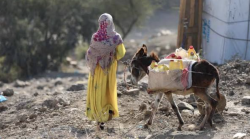
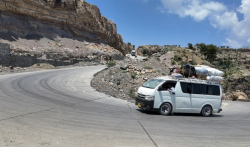
Al-Abara said recent waves of displacement had affected nearly 200,000 people, most of them from areas around Bab al-Mandab.
Government bodies had delivered an emergency response to about 90,000 of them, he said.
The International Organization for Migration gave a comparable count from its own tracking. It said on Wednesday that more than 200,000 people, or over 33,700 households, had been displaced, nearly all of them since Sept. 1.
The displacement spanned 10 governorates, the agency said. Taiz accounted for 57 percent of those uprooted, followed by Lahij, Aden, Abyan and Hudaydah.
Its figures rose steeply through September. About 76,000 people were recorded in the middle of the month, and more than 145,000 by its end.
More than 3,700 people had left Yemen by sea for Djibouti, according to the agency. The UN refugee agency had put that number at about 3,000 in late September.
“Our teams are on the ground, but the funding is not,” the organization’s director general, Amy Pope, said.
Al-Abara said government institutions had come under strain providing shelter, camps and emergency supplies, particularly during the first week of the crisis.
International organizations had faced difficulties reaching people affected by the fighting, he said.
He described a gap in funding and aid, and said it was widest in shelter and food.
Al-Abara said more than 3.5 million people in Taiz were at risk, and pointed to displaced populations in Marib. He warned that expanding military operations would widen the humanitarian crisis.
Seppen reaffirmed the Netherlands’ support for the internationally recognized government and announced additional funding for the humanitarian response plan, Saba reported. The agency did not give an amount.
The minister attributed the displacement to forced displacement he said the Houthi movement had carried out against residents near Bab al-Mandab. That characterization is the Yemeni government’s, and Yemen Herald found no published Houthi response to it.
The account of the meeting rests on Saba, the government’s own news agency. Yemen Herald found no independent confirmation that the talks took place, and no second origin for the figures al-Abara gave. The migration agency’s numbers are its own reporting and are not a confirmation of the meeting.
The displacement follows an escalation that the Security Council Report assessed as the collapse of the 2022 UN-mediated truce between the Houthis and the Saudi-led coalition.
Houthi grievances over the coalition’s air and sea blockade of territory the movement holds resurfaced in July, according to that assessment, and reciprocal strikes and clashes followed from early August.
Houthi missile and drone attacks on southern Saudi Arabia on Sept. 8 injured 73 people and damaged energy facilities, the assessment said. The Houthis described the attacks as retaliation for a Saudi strike on a prison in Al-Jawf that they said killed seven people.
The Houthis seized the port city of Mokha on Sept. 10. They captured Perim Island, in the Bab al-Mandab Strait, the following day.
The internationally recognized government is based in Aden. The Houthis have held Sanaa since 2014.
Volker Turk, the UN human rights chief, reported at least 125 civilians killed and wounded and 125,000 people displaced since early August in a statement on Sept. 24.
Turk also repeated calls for the release of 73 UN staff members detained by the Houthis.
The Security Council condemned Houthi attacks on Saudi Arabia and on shipping in a press statement on Sept. 18, and called for an end to the escalation. It had held an emergency meeting on the Houthi advance on the west coast three days earlier.
The council had expressed concern over the heightened tensions in a press statement on Aug. 7, and called on the Houthis to de-escalate.
Grundberg briefed an emergency meeting of the council on Sept. 10, requested by Bahrain and the United Kingdom.
The committee that oversees the Yemen sanctions regime met on Aug. 31 to hear briefings from its panel of experts.
The secretary-general’s monthly report on attacks against vessels in the Red Sea was dated Sept. 10.
Hans Grundberg, the UN special envoy for Yemen, and an OCHA official are expected to brief the council again in October. The final report of the council’s panel of experts on Yemen is due Oct. 15, and the sanctions regime it reports to expires Nov. 14.
The UN humanitarian plan for 2026 estimates more than 22 million people in Yemen need assistance. It lists 18.3 million as acutely food insecure and more than 2.2 million children under five as acutely malnourished, 516,157 of them severely.
The plan records 5.2 million displaced people and seeks 2.16 billion dollars to reach 12 million of those in need.
The Netherlands closed its embassy in Sanaa and runs its Yemen mission from Amman, according to the Dutch foreign ministry.
Seppen was named ambassador to Yemen in 2023, according to Yemen’s foreign ministry.
About the Author