European Union calls on Houthis to lift siege of Taiz and let in food and fuel
 Yemen Herald News
BRUSSELS, Belgium — The European Union called on Yemen’s Houthi movement to lift its siege of Taiz and allow food, water, medicine and fuel into the city.
The bloc made the demand in a post on the social media platform X, Yemen’s state news agency said.
“We are following the situation in Taiz with grave concern and call on the Houthis to lift the siege imposed on the city and allow food, water, medicine and fuel to enter,” the European Union said, according to the agency, Saba.
The bloc added that civilians and civilian infrastructure must be protected. It said partners must be allowed to deliver essential goods.
Middle East Eye reported the same statement on Wednesday.
The wording of the European Union position rests on the bloc’s own post. Yemen Herald could not independently verify the accounts of conditions inside the city set out below, and the Houthi administration has not responded publicly to the statement.
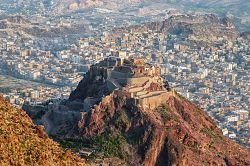
Taiz governorate has been split between the internationally recognised government and the Houthis since 2015.
The routes into the government-held districts narrowed through the autumn.
Houthi forces opened an offensive along the governorate’s Red Sea coast in early September, Al Jazeera reported. They took the port city of Mocha and Dhubab district.
Government forces, backed by Saudi Arabia, began a counteroffensive in early October and regained some ground, the network said. Houthi units pressed on in the Taiz countryside.
On Oct. 4 the Houthis captured al-Turbah, Al Jazeera reported. That severed the last main road between Taiz city and government-held areas.
Fuel had reached the city along that road from Aden.
The eastern crossing toward Sanaa also closed, after what unnamed security sources described to Al Jazeera as attempted Houthi incursions. The Houthis had agreed to reopen that crossing in 2024. Much of the city’s food had arrived through it.
Al Jazeera reported that city streets were almost deserted within a week of the al-Turbah road closing, because of the fuel shortage.
Prices moved with the closures. A 20-litre container of black-market petrol rose to 90,000 riyals, about 58 dollars, from 30,000 riyals, about 19 dollars, according to the network.
Vegetable and fruit prices doubled, Taiz resident Wafiq Saleh told Al Jazeera. He said wheat and flour prices also rose, and that traders held stock for several months but began raising prices as the fighting intensified.
About 2.8 million people live in the government-held parts of the governorate, said Nabil Jamil, director-general of the Taiz governorate planning and development office. He put the number of recently displaced at about 200,000.
Jamil said the current siege is “more comprehensive and its impact more severe than in 2015”.
Local authorities wrote to the United Nations asking for help, he said. “We are still waiting for a response or intervention on the ground,” Jamil said.
Iskandar Abdullah, a 37-year-old resident, told the network the siege of 2015 and 2016 had been very difficult.
Salman al-Maqrami, a journalist who covers Houthi affairs, said he believed the closures were meant to undermine the cohesion of anti-Houthi forces in Taiz.
Nabil Sharyan, a lawyer who heads the Justice for Rights and Development Organization, warned of harm to patients, children, women and older residents.
Fifteen Yemeni and international rights organisations issued a joint statement on Sunday calling for an end to the siege and a halt to indiscriminate attacks, Middle East Monitor reported, citing Al Arabiya.
The organisations said road closures in the governorate were worsening humanitarian conditions. They put the population of the affected districts at about 4.35 million, alongside a large number of displaced people.
They said the closures had disrupted the transport of goods, run down food stocks and pushed up the prices of basic commodities. Families were finding it harder to obtain food, water and medical treatment, they said.
The organisations estimated Taiz needs about 12.35 million litres of petrol and 9.72 million litres of diesel a month for transport and essential facilities. Running the city’s water wells and pumping systems takes about 20,000 litres of diesel a month, they said.
Fuel shortages could force hospitals, health centres and water pumping stations to suspend work, the organisations said. They said that could limit deliveries by tanker truck and raise the risk of disease outbreaks in crowded districts.
The organisations dated the escalation in military operations to Sept. 3.
The World Food Programme has recorded some of Yemen’s highest levels of food insecurity in Taiz, Middle East Eye reported.
Across the country, the United Nations humanitarian plan published in March counted more than 22 million people in need of assistance. It recorded 18.3 million as acutely food insecure.
The plan counted more than 2.2 million children under five as acutely malnourished, including 516,157 with severe acute malnutrition. It listed 5.2 million internally displaced people and sought 2.16 billion dollars to reach 12 million of them.
The Yemeni Network for Rights and Freedoms documented 43 violations in Taiz over 24 hours and put displacement from the governorate at 172,000, Al Arabiya reported on Tuesday.
The European Union did not say in the post what it would do if the siege continued.
It did not name the partners it referred to.
About the Author